This resolution presents recommendations of the European Economic and Social Committee to the legislature 2024-2029. They are based on discussions with social partners and civil society organizations from all walks of life, including young people during the first EESC Civil Society Week, and contain a comprehensive set of actionable steps to strengthen and safeguard democratic principles.
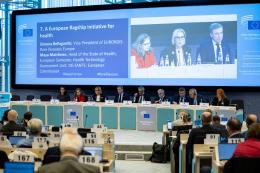
The European Economic and Social Committee (EESC) calls for a European flagship initiative for health, aiming to build a cross-cutting health architecture within the European Union. It also calls on the European Commission to publish an Action Plan on Rare Diseases with clearly achievable targets.
launch the proposal for a comprehensive European Action Plan on Rare Diseases (APRD) with SMART targets that can be achieved by 2030 to enable the diagnosis of rare disease patients within one year;
set up a Steering Group for the European APRD composed of experts from Member States, EURORDIS members and the EESC to ensure coordination and cooperation, monitoring and supervision of the APRD;
encourage agreements with Member States on the content, updating, application and monitoring of national plans for RD.
In this opinion, the EESC presents its view on the impact of new technologies and AI both in terms of facilitating the inclusion of people with disabilities but also as potential cause of discrimination. Among its recommendations:
Persons with disabilities should be included throughout the process of designing, developing, assessing and implementing new technologies and AI-based applications. This involvement is key to mitigating potential discriminatory risks.
Member States and the EU should carry out an evaluation of existing AI applications to assess their inclusivity in critical fields, including employment and recruitment.
Goods and services that apply new technologies and AI‑based solutions should comply with EU accessibility standards.
Download — Stellungnahme des Ausschusses: Including persons with disabilities in the development of new technologies and AI – possibilities, challenges, risks and opportunities
Download — Stellungnahme des Ausschusses: Working time, the efficiency of the economy, and the well-being of workers (including in the context of digital change and work automation): a legal and comparative analysis of the situation in the EU Member States
The opinion focuses on the importance of a human-centric approach in addressing occupational safety and health (OSH) challenges in an increasingly digitalised work environment. It stresses that new technologies can both enhance and introduce workplace hazards, necessitating a proactive regulatory framework. The opinion underlines the need for OSH training, particularly when AI-driven systems and digital tools are introduced, ensuring that workers have the necessary skills to navigate evolving work environments safely. It calls for transparent AI deployment to prevent bias and discrimination and encourages social partners to actively engage in shaping AI regulation through collective agreements. Furthermore, the opinion demands that the European Commission provide resources for social partners, enabling them to address digitalisation challenges effectively while maintaining social cohesion and worker rights in a rapidly changing labour market.
Download — Stellungnahme des Ausschusses: Health and safety at work – current and future challenges in light of traditional and new technologies, with a focus on AI