Die Partnerschaft Europa-Mittelmeer

This page is also available in:

Die Beziehungen zwischen der EU und ihren südlichen Nachbarstaaten zählen zu den Prioritäten des EWSA. Dessen Arbeit umfasst ein breites Spektrum von Bereichen, wie die Beteiligung der Zivilgesellschaft am politischen und zivilen Dialog, den demokratischen Übergang, Jugendarbeitslosigkeit, nachhaltige Entwicklung, Mobilität und Zuwanderung, Handel, erneuerbare Energien und Unternehmensentwicklung.

Der EWSA setzt sich seit 1995 mit diesen Themen auseinander. Nach den Veränderungen in der Region im Jahr 2010 wurde eine Anpassung der Zielsetzungen vorgenommen:

  • Unterstützung der organisierten Zivilgesellschaft in den Ländern, die sich im Übergangsprozess befinden, wobei sich diese Unterstützung insbesondere an Gewerkschaften und Arbeitgeberorganisationen sowie Frauen-, Jugend- und Landwirtschaftsverbände richtet;
  • Pflege bilateraler Beziehungen mit den nationalen Wirtschafts- und Sozialräten in der Region sowie Schaffung der erforderlichen Voraussetzungen für die Einbindung der Zivilgesellschaft in den politischen Dialog in den südlichen Partnerländern;
  • Erarbeitung von Stellungnahmen und gemeinsamen Berichten zu den zentralen politischen Herausforderungen in der Region;
  • Veranstaltung regelmäßiger Treffen mit EU-Institutionen und internationalen Organisationen, um die Politik in Bezug auf die Zivilgesellschaft in der Region zu erörtern;
  • Organisation eines jährlichen Gipfels der Wirtschafts- und Sozialräte und vergleichbaren Institutionen, auf dem Empfehlungen für wichtige Maßnahmen im Zusammenhang mit den größten Herausforderungen der Region an die politischen Entscheidungsträger der nationalen Regierungen und der EU ausgesprochen werden.

Euromed Follow-Up Committee

EU-Morocco Joint Advisory Group

  • 2026 Euromed Summit
    -

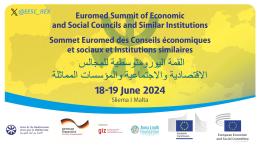
    The annual Euro-Mediterranean Summit of Economic and Social Councils and Similar Institutions provides civil society organisations (CSOs) from the UfM Member States with a platform to debate common challenges and opportunities and to exchange best practices.

  • Published in
    Study
    72 pages

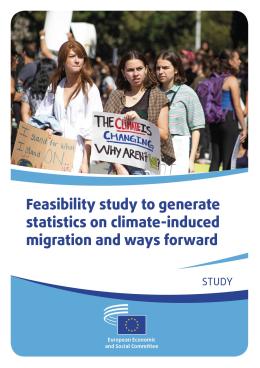
    This feasibility study to generate statistics on climate-induced migration and ways forward sought to gather and review existing data on climate-induced migration, focussing on five Member States (France, Germany, Greece, Italy and Spain) and one candidate country (Türkiye), to inform an effective EU response. There is no universally agreed definition of climate-induced migration. The majority of population movements as a result of rapid onset events takes place within a country as opposed to across borders.

  • Published in
    Study
    42 pages

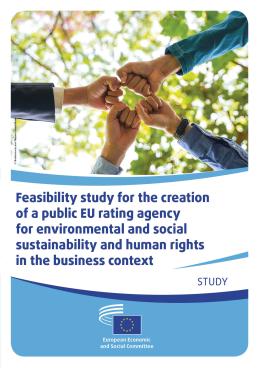
    This report proposes the creation of a Public EU Rating Agency focused on environmental and social sustainability and human rights, aiming to support EU sustainability efforts by setting standards, accrediting auditors, and centralizing data

  • In an opinion adopted at the September plenary session, the European Economic and Social Committee (EESC) identifies that fostering entrepreneurship and quality job creation in the Mediterranean region is the answer to high unemployment rates. Leveraging the potential of women and young people can promote inclusive, resilient growth.

  • Auf seiner September-Plenartagung verabschiedete der Europäische Wirtschafts- und Sozialausschuss (EWSA) eine Stellungnahme zum neuen Pakt für den Mittelmeerraum, den die Europäische Kommission im nächsten Monat offiziell besiegeln wird. Der EWSA fordert Bottom-up-Prozesse, um sicherzustellen, dass sich der Pakt unmittelbar und positiv auf alle Menschen und insbesondere auf die Jugend auswirkt. 

  • Reference number
    1/2025

    Young people in the Mediterranean region must be included in every step of the way, from policy-making to implementation. They shape not only policies but also life, as highlighted in the debate held by the European Economic and Social Committee (EESC).

  • 2024 Euromed Summit
    -

    The annual Euro-Mediterranean Summit of Economic and Social Councils and Similar Institutions provides civil society organisations (CSOs) from the UfM Member States with a platform to debate common challenges and opportunities and to exchange best practices.

  • Joint EESC and ESC of Spain
    -

    The EESC and the Spanish Economic and Social Council (CES) are organising this joint conference in the context of the Spanish Presidency of the Council of the EU, dedicated to "The impact of the climate crisis on migration flows in the Mediterranean region". This event will contribute to the EESC's mandate to establish and reinforce a Euro-Mediterranean network of Economic and Social Councils and Similar Institutions. It will provide CSOs with an opportunity to meet, exchange best practices and discuss an issue of importance
    throughout the Mediterranean region. 

  • Speaker
    EESC President Oliver Röpke
    Organisation
    European Economic and Social Committee

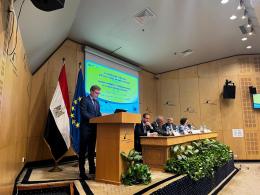
    On 5 July President Röpke participated in the 2023 Euromed Summit organised in cooperation with the Union for the Mediterranean Secretariat, the Anna Lindh Foundation and Bibliotheca Alexandrina. This year's summit focused on water scarcity and desertification as well as on digital and energy transitions in the Euro-Mediterranean region.

    • Oliver Röpke's speech at the 2023 Euromed summit
    • Oliver Röpke's speech at the 2023 Euromed summit
  • Published in
    8 pages

    The External Relations Section (REX) of the European Economic and Social Committee (EESC) is responsible for dialogue between European civil society organisations and their homologues from the countries with which the European Union has formal relations (e.g. under the form of a Free Trade Agreement). Through this dialogue, made possible by a series of bilateral bodies, and through specialized opinions and information reports, the Committee is able to concretely contribute to EU foreign policy.