
European Economic
and Social Committee
Unsere wichtigste Aufgabe besteht nun darin, die ukrainischen Kriegsflüchtlinge in die europäische Gesellschaft zu integrieren!
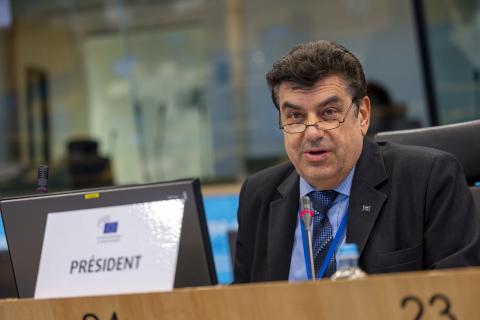
Als Ko-Vorsitzendem der Plattform der Zivilgesellschaft EU-Ukraine geht es mir darum, dass die Beziehungen zwischen den Mitgliedern der Plattform, die Arbeitgeber, Arbeitnehmer und NRO vertreten, wiederhergestellt und aufrechterhalten werden. In diesen dramatischen Kriegstagen in der Ukraine müssen wir den Kontakt zu den ukrainischen Teilnehmern der Plattform der Zivilgesellschaft aufrechthalten.
Wenn es uns gelingt, die dynamischen Verbindungen und das Funktionieren der Plattform aufrechtzuerhalten, können wir auch Fortschritte bei den Prioritäten machen. Vordringlich geht es nun darum, die praktischen Bedürfnisse der Menschen in der Ukraine zu ermitteln und zu sehen, wie wir als EU-seitige Mitglieder der Plattform der Zivilgesellschaft unsere ukrainischen Partner in dieser äußerst schwierigen Situation solidarisch unterstützen können.
Unsere wichtigste Aufgabe besteht meiner Ansicht nach aber darin, die Integration der ukrainischen Kriegsflüchtlinge zu unterstützen, denn mehr als fünf Millionen Menschen sind in die Nachbarländer und in andere europäische Länder geflohen. Ganz oben auf der Tagesordnung der bevorstehenden Sitzung der Plattform der Zivilgesellschaft EU-Ukraine sollte die soziale und wirtschaftliche Integration der ukrainischen Flüchtlinge stehen. Wir müssen Wege finden, wie Erwachsene und Kinder aus der Ukraine in die sozialen und wirtschaftlichen Strukturen der Aufnahmeländer integriert werden können, damit sie ihr Kriegstrauma überwinden können. Wenn der Krieg vorbei ist, wird unser nächster Schritt natürlich darin bestehen, diesen Menschen bei der Wiedereingliederung in der Ukraine zu helfen.
Wir stehen an der Seite des ukrainischen Volks, mit dem wir uns als Plattform der Zivilgesellschaft uneingeschränkt solidarisch erklären.
Veselin Mitov, Ko-Vorsitzender der Plattform der Zivilgesellschaft EU-Ukraine