
European Economic
and Social Committee
Measuring and embedding intergenerational fairness in EU policymaking
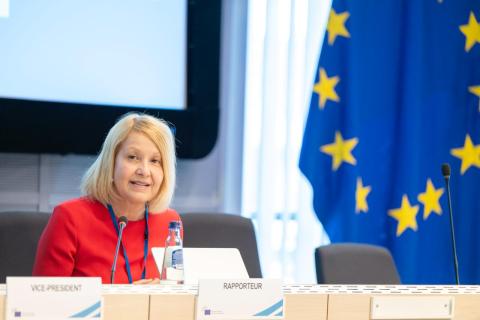
The European Union must ensure that today’s political choices do not lead to further inequalities or leave future generations carrying an unfair share of the costs. This is the central message of an opinion adopted by the European Economic and Social Committee (EESC), which calls for intergenerational fairness to become a measurable principle embedded across all EU policies.
Europe’s generations face different but connected difficulties. Young people are struggling with insecure employment, unaffordable housing and difficult transitions into independent life, while many older persons face poverty, digital exclusion and inadequate access to care and essential services. In its opinion on the Strategy on Intergenerational Fairness, drafted by rapporteur María del Carmen Barrera Chamorro and co-rapporteur Krzysztof Balon, the EESC argues that these challenges must be addressed together, rather than by setting one generation against another.
'The central objective for the Intergenerational fairness Strategy is to reduce social, economic, gender, age and territorial inequalities between generations, and to strengthen solidarity and social cohesion across generations to achieve democratic, resilient, inclusive and sustainable societies,’ declared the rapporteur following the opinion's adoption during the EESC September plenary session.
Making intergenerational fairness measurable
The European Commission’s strategy proposes a new intergenerational ‘contract’ based on fair policymaking, fair opportunities and fair places. The EESC supports this aim but insists that intergenerational fairness should become a cross-cutting principle applying to every EU policy and age group, with particular attention to people facing poverty, insecurity, discrimination or territorial disadvantage.
The Committee calls for long-term objectives, measurable targets and indicators, clear accountability and formal arrangements for incorporating intergenerational fairness into EU policymaking. A transparent dashboard within the European Semester should track areas such as child and old-age poverty, youth employment, education, housing, care and mental health support.
European youth empowerment package
Housing, employment and access to essential services are among the clearest tests of solidarity between generations. High housing costs, low starting salaries and insecure jobs are delaying many young people’s independence, with greater barriers for those facing poverty, discrimination, disability or geographical disadvantage. The Committee therefore calls for a European youth empowerment package covering education, quality employment, decent wages, entrepreneurship, affordable housing, mental health, social protection and the fight against precariousness. It also seeks a stronger Youth Guarantee, an EU instrument for access to housing and support during the transition from education to stable employment.
Housing should be recognised as a structural intergenerational challenge, with action to expand affordable and social housing, support multigenerational models and address overstretched markets. Rural and remote areas need investment in services, connectivity and infrastructure. Affordable, accessible and high-quality essential services must also remain available through non-digital channels.
Intergenerational budgeting and complementing the Youth Check
The EESC also calls for an intergenerational fairness assessment to complement the Youth Check and examine how investment, reforms and transition costs are shared among young people, older people and vulnerable regions. It also proposes a principle of no social regression: reforms to employment, pensions, social protection, housing, care or essential services should not increase inequalities or place a disproportionate burden on any generation.
The same long-term approach should guide EU spending. The Committee recommends intergenerational budgeting for the EU’s multiannual financial framework, including a systematic assessment of how resources affect different generations.
Creating a European Council for Intergenerational Solidarity
The EESC wants young and older people to be fully recognised as full-fledged stakeholders in EU civil dialogue. It calls for structures that enable meaningful youth participation in decision-making, with the EESC Youth Test providing a concrete model. Dedicated mechanisms should also ensure the effective participation of older people..
The Committee also proposes a European Council for Intergenerational Solidarity bringing together social partners, youth organisations, civil society, independent experts and representatives of the EU’s advisory bodies. It would oversee implementation, make recommendations and ensure structured participation.
In the Committee's view, intergenerational fairness should not be about choosing between young and old: it should rather ensure that no generation advances at the expense of another.
Work organisation
Recommended for you
Az egészségügyi ágazatbeli közszolgáltatások közös létrehozása erősíteni fogja a demokrácia részvételi jellegét az EU-ban
News
Az Európai Gazdasági és Szociális Bizottság (EGSZB) és a Debreceni Egyetem által szervezett rendezvény rávilágított, mennyire fontos az általános érdekű szolgáltatások közös létrehozása az…
YEYS! 2023: A fiatalok átláthatóbb, digitalizált és egyszerűbb EU-t szeretnének
News
Március 23-án és 24-én az Európai Gazdasági és Szociális Bizottság (EGSZB) immár 14. alkalommal adott otthont a „Your Europe, Your Say!” (A Te Európád, a Te szavad! – YEYS!) című rendezvénynek. Erre…
Az EGSZB megnyitja a jelentkezést civil társadalmi díjára, melynek témája a mentális egészség
News
Civil társadalmi szervezetek, magánszemélyek és magánvállalkozások mostantól nevezhetik nonprofit projektjeiket az európai polgárok mentális jólétének támogatásának szentelt EGSZB-díjra. Az Európai…
Az EGSZB felhívása: 2024 júniusában szavazzunk egy egységes és demokratikus Európai Unióra!
News
A demokrácia világszerte hanyatlik, a növekvő infláció és a háború fenyegető veszélye közepette a dezinformáció térnyerése és egyre nagyobb elégedetlenség tapasztalható. Nagy tehát a tétje az új…
Az Európai Gazdasági és Szociális Bizottság készen áll arra, hogy együttműködjön az EU Tanácsának magyar elnökségével
News
Az Európai Gazdasági és Szociális Bizottság (EGSZB) júliusi plenáris ülésén Oliver Röpke EGSZB-elnök vitát tartott Bóka János európai uniós ügyekért felelős miniszterrel, aki ismertette az EU Tanácsa…