
European Economic
and Social Committee
Measuring and embedding intergenerational fairness in EU policymaking
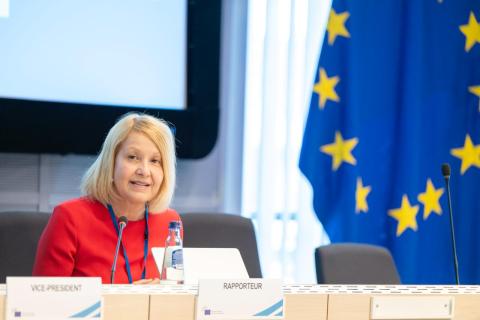
The European Union must ensure that today’s political choices do not lead to further inequalities or leave future generations carrying an unfair share of the costs. This is the central message of an opinion adopted by the European Economic and Social Committee (EESC), which calls for intergenerational fairness to become a measurable principle embedded across all EU policies.
Europe’s generations face different but connected difficulties. Young people are struggling with insecure employment, unaffordable housing and difficult transitions into independent life, while many older persons face poverty, digital exclusion and inadequate access to care and essential services. In its opinion on the Strategy on Intergenerational Fairness, drafted by rapporteur María del Carmen Barrera Chamorro and co-rapporteur Krzysztof Balon, the EESC argues that these challenges must be addressed together, rather than by setting one generation against another.
'The central objective for the Intergenerational fairness Strategy is to reduce social, economic, gender, age and territorial inequalities between generations, and to strengthen solidarity and social cohesion across generations to achieve democratic, resilient, inclusive and sustainable societies,’ declared the rapporteur following the opinion's adoption during the EESC September plenary session.
Making intergenerational fairness measurable
The European Commission’s strategy proposes a new intergenerational ‘contract’ based on fair policymaking, fair opportunities and fair places. The EESC supports this aim but insists that intergenerational fairness should become a cross-cutting principle applying to every EU policy and age group, with particular attention to people facing poverty, insecurity, discrimination or territorial disadvantage.
The Committee calls for long-term objectives, measurable targets and indicators, clear accountability and formal arrangements for incorporating intergenerational fairness into EU policymaking. A transparent dashboard within the European Semester should track areas such as child and old-age poverty, youth employment, education, housing, care and mental health support.
European youth empowerment package
Housing, employment and access to essential services are among the clearest tests of solidarity between generations. High housing costs, low starting salaries and insecure jobs are delaying many young people’s independence, with greater barriers for those facing poverty, discrimination, disability or geographical disadvantage. The Committee therefore calls for a European youth empowerment package covering education, quality employment, decent wages, entrepreneurship, affordable housing, mental health, social protection and the fight against precariousness. It also seeks a stronger Youth Guarantee, an EU instrument for access to housing and support during the transition from education to stable employment.
Housing should be recognised as a structural intergenerational challenge, with action to expand affordable and social housing, support multigenerational models and address overstretched markets. Rural and remote areas need investment in services, connectivity and infrastructure. Affordable, accessible and high-quality essential services must also remain available through non-digital channels.
Intergenerational budgeting and complementing the Youth Check
The EESC also calls for an intergenerational fairness assessment to complement the Youth Check and examine how investment, reforms and transition costs are shared among young people, older people and vulnerable regions. It also proposes a principle of no social regression: reforms to employment, pensions, social protection, housing, care or essential services should not increase inequalities or place a disproportionate burden on any generation.
The same long-term approach should guide EU spending. The Committee recommends intergenerational budgeting for the EU’s multiannual financial framework, including a systematic assessment of how resources affect different generations.
Creating a European Council for Intergenerational Solidarity
The EESC wants young and older people to be fully recognised as full-fledged stakeholders in EU civil dialogue. It calls for structures that enable meaningful youth participation in decision-making, with the EESC Youth Test providing a concrete model. Dedicated mechanisms should also ensure the effective participation of older people..
The Committee also proposes a European Council for Intergenerational Solidarity bringing together social partners, youth organisations, civil society, independent experts and representatives of the EU’s advisory bodies. It would oversee implementation, make recommendations and ensure structured participation.
In the Committee's view, intergenerational fairness should not be about choosing between young and old: it should rather ensure that no generation advances at the expense of another.
Work organisation
Recommended for you
La creazione condivisa di servizi pubblici nel settore sanitario contribuirà a una democrazia più partecipativa nell'UE
News
L'evento organizzato dal Comitato economico e sociale europeo (CESE) in collaborazione con l'Università di Debrecen ha posto in evidenza l'importanza cruciale della creazione condivisa di servizi di…
Per combattere i cambiamenti climatici, l'UE ha bisogno di maggiori investimenti pubblici nelle infrastrutture energetiche
News
In un parere adottato nella sessione plenaria di settembre, il Comitato economico e sociale europeo (CESE) avverte che, per realizzare gli obiettivi climatici e di transizione energetica, sono…
Energia - Il CESE mette in guardia di fronte al rischio di nuove dipendenze
News
Il Comitato economico e sociale europeo (CESE) assume una posizione ferma in materia di energia in un parere adottato nella sessione plenaria di settembre. La proposta della Commissione, infatti, è…
La transizione digitale deve essere equa: i diritti umani e il controllo umano devono rimanere pilastri fondamentali
News
Il Comitato economico e sociale europeo (CESE) sottolinea le opportunità offerte dalla rivoluzione digitale, ma mette anche in guardia dai rischi: se attuate troppo rapidamente, le soluzioni digitali…
L'UE ha bisogno di un piano d'azione per fornire alloggi dignitosi e a prezzi accessibili
News
Il convegno ad alto livello organizzato a Riga dal Comitato economico e sociale europeo (CESE) ha lanciato l'allarme per la crisi degli alloggi a prezzi accessibili, sottolineando che è il momento…