
European Economic
and Social Committee
The economic dimension of the rule of law

The Union is founded on the values enshrined in Article 2 of the Treaty on European Union (TEU): respect for human dignity, freedom, democracy, equality, the rule of law and respect for human rights, including the rights of persons belonging to minorities. These values are common to the Member States in a society in which pluralism, non-discrimination, tolerance, justice, solidarity and equality between women and men prevail.
Respect for the rule of law is intrinsically linked to respect for both democracy and fundamental rights. There can be no democracy or respect for fundamental rights without respect for the rule of law and vice versa.
The rule of law requires that public powers act within the constraints set out by law and under the control of independent and impartial courts. It comprises a transparent, accountable, democratic and pluralistic legislative process and the protection, implementation and enforcement of fundamental human and social rights.
Respecting and enforcing fundamental rights and the rule of law are key elements in mutual trust between Member States. Investment and trade within the internal market can only work if all economic operators abide by the law and can rely on structures and behaviors by public authorities that respect the rule of law.
The European Economic and Social Committee (EESC) has repeatedly pointed out that respect for the rule of law also ensures legal certainty and a level playing field for business initiatives, innovation, investments and fair competition across the internal market for the benefit of consumers and citizens.
The rule of law is therefore a key prerequisite for economic activity, and thus a factor in a location’s attractiveness to businesses. Protectionist measures that treat domestic companies more favourably than those from EU countries go against the principle of equal treatment. If protection for cross-border investments in the internal market is weak, this may have an adverse effect on the freedom to conduct a business (Article 16 of the Charter of Fundamental Rights of the EU) and the right to property (Article 17 of the Charter of Fundamental Rights of the EU)
According to the judgment of the Court of Justice of the European Union (CJEU) in the Achmea case, the arbitration clauses included in bilateral investment treaties between Member States are invalid, because only the CJEU has jurisdiction to interpret EU law. The EESC believes that the removal of bilateral arbitration clauses between Member States leaves a gap in the rule of law, that should be solved by e.g. making greater use of EU Pilot procedures.
Currently the existing instruments for law enforcement, such as infringement proceedings, take up to 49 months instead of the European Commission's benchmark of 36 months. Therefore, existing European Commission instruments for dealing with internal market infringements should be speeded up. A strong and independent judiciary, well-resourced public services, and bodies for monitoring and reporting all breaches of the law are the only way of guaranteeing effective legal protection and are therefore fundamentally important for the rule of law. Moreover, the economic dimension of the rule of law is not adequately reflected in the European Commission’s Rule of Law Report, which is why the EESC advocates the inclusion of a fifth pillar.
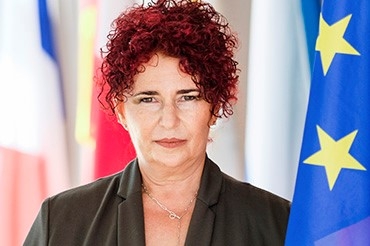
Christa Schweng, EESC Employers' Group member and Rapporteur of Opinion INT/1076 The eco nomic dimension of the Rule of Law.
Recommended for you
Az egészségügyi ágazatbeli közszolgáltatások közös létrehozása erősíteni fogja a demokrácia részvételi jellegét az EU-ban
News
Az Európai Gazdasági és Szociális Bizottság (EGSZB) és a Debreceni Egyetem által szervezett rendezvény rávilágított, mennyire fontos az általános érdekű szolgáltatások közös létrehozása az…
YEYS! 2023: A fiatalok átláthatóbb, digitalizált és egyszerűbb EU-t szeretnének
News
Március 23-án és 24-én az Európai Gazdasági és Szociális Bizottság (EGSZB) immár 14. alkalommal adott otthont a „Your Europe, Your Say!” (A Te Európád, a Te szavad! – YEYS!) című rendezvénynek. Erre…
Az EGSZB megnyitja a jelentkezést civil társadalmi díjára, melynek témája a mentális egészség
News
Civil társadalmi szervezetek, magánszemélyek és magánvállalkozások mostantól nevezhetik nonprofit projektjeiket az európai polgárok mentális jólétének támogatásának szentelt EGSZB-díjra. Az Európai…
Az EGSZB felhívása: 2024 júniusában szavazzunk egy egységes és demokratikus Európai Unióra!
News
A demokrácia világszerte hanyatlik, a növekvő infláció és a háború fenyegető veszélye közepette a dezinformáció térnyerése és egyre nagyobb elégedetlenség tapasztalható. Nagy tehát a tétje az új…
Az Európai Gazdasági és Szociális Bizottság készen áll arra, hogy együttműködjön az EU Tanácsának magyar elnökségével
News
Az Európai Gazdasági és Szociális Bizottság (EGSZB) júliusi plenáris ülésén Oliver Röpke EGSZB-elnök vitát tartott Bóka János európai uniós ügyekért felelős miniszterrel, aki ismertette az EU Tanácsa…