Luca Jahier, EESC President and Dilyana Slavova, President of the REX Section
The EESC strongly defends the democratic right to vote, the right of free speech and the right of expression and has been following closely the developments after the presidential elections in Belarus.
As the voice of EU civil society, we strongly condemn the military and police repression of peaceful protesters. The multiple beating, use of tear gas, rubber bullets and sound grenades is completely shocking and in fact illegal.
Luca Jahier, EESC President, and Stefano Palmieri, President of the ECO section of the EESC
Organisation
European Economic and Social Committee
After five days of tough negotiations, the EU has reached a deal to bounce back from the COVID-19 pandemic. This is an unprecedented decision for volume, content and key elements of innovation. Europe, today, is stronger than ever.
Nevertheless, the needed extra-mile came at a sour price. For the first time, the Multiannual Financial Framework (MFF) has decreased, also in real terms. The governance of the Resilience and Recovery Facility is all but consistent, with the European Parliament cut off, and the rebates increased, despite the UK's departure.
Luca Jahier, EESC President, and Stefano Palmieri, President of the ECO section of the EESC
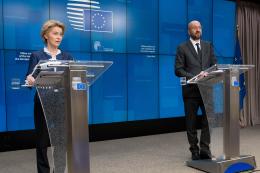
The new proposal presented last Friday by the President of the European Council, Charles Michel, ahead of the European Council of 16-17 July contains highly critical issues, even though it maintains the initial volume grants/loans of the Recovery fund.
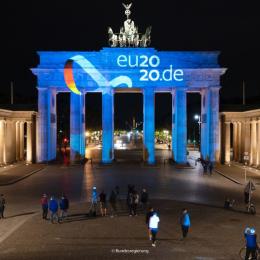
Today starts the German Presidency of the Council of the European Union. The European agenda could hardly have been more challenging: the adoption of the Recovery plan to repair the consequences of the Covid 19 pandemic, the crucial Brexit negotiations and the launch of the Conference on the future of Europe.
While the agenda is heavy, there is no doubt that the German Presidency is fully equipped to transform each of these challenges into concrete and successful results to deliver a stronger, more innovative, inclusive and sustainable Europe.