Building talent partnerships with countries of origin and transit is a key policy in addressing migration. Europe has to shift the focus of migration policy's external dimension and make it part of a broader geopolitical and geo-economic agenda that will be given its rightful place other policies. Otherwise, the new pact will be too weak to deal with the rising numbers of migration flows.
The Commission's initiatives on a European child guarantee and an EU Strategy on the rights of the child call on European and national policy-makers to work toward the common good of all children growing up in the EU. Ambitious and bold in their approach to ensuring a life free from any discrimination for each and every child, both initiatives have won the EESC's approval.
Rapidly developed to cushion the severe effects the pandemic was expected to have on businesses and workers, SURE has helped Member States to protect employment and keep EU economies afloat. With an evaluation of the scheme underway, there is an ongoing debate as to whether SURE should be here to stay as an ad hoc system of protection to help prevent job losses and provide income support during future serious crises
According to a Deloitte study, there are conflicting opinions on the new 5G technology. Further study is therefore needed, and the debate held at the European Economic and Social Committee (EESC) addressed civil society organisations' concerns surrounding the issue.
The European Economic and Social Committee (EESC) welcomes the proposed EU Action Plan on Synergies between the civil, defence and space industries. The Action plan can enhance Europe's strategic autonomy and technological sovereignty, improve the security of citizens and boost competitiveness, economic growth and employment. Therefore, the EESC calls for rapid, forceful and ambitious implementation of the11 actions set out in the Plan.
The new trade strategy launched by the Commission in February brings engaging principles to the table that will support the EU in achieving its domestic and external policy objectives. The European Economic and Social Committee (EESC) welcomes this trade strategy as a way of improving market access and levelling the playing field. Alongside this, the modernisation of the World Trade Organization (WTO) will be the key to delivering for future generations.
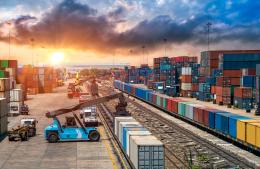
The European Economic and Social Committee (EESC) points out that efficient and sustainable multimodal transport and logistics can become a reality only by dealing with the problems that make them more expensive, slower and less reliable than unimodal road transport. Merely introducing a new regulatory framework on the subject or injecting additional funding will not help.
The European Economic and Social Committee (EESC) opinion on structured youth engagement on climate and sustainability in the EU decision-making process is gaining momentum. When adopted in September 2020, it proposed, among other recommendations, the establishment of a Youth Climate and Sustainability Round Table, to be hosted by the EESC in conjunction with the European Commission, European Parliament and youth organisations.
According to the EESC, the Commission's Action Plan on the European Pillar of Social Rights is both timely and necessary to thwart the threat of inequalities deepening across Europe in the aftermath of the pandemic.
The European Economic and Social Committee (EESC) hails the new EU Disability Rights Strategy as a step forward in implementing the UN Convention on the Rights of Persons with Disabilities (UNCRPD). The Strategy has taken on board many of the suggestions proposed by the EESC, the European disability movement and civil society. The proposals include full harmonisation of the new agenda and strengthened EU-level supervision of its application. The EESC is, however, concerned about the watering down of the binding measures and hard law implementing the Strategy.