The European Economic and Social Committee (EESC) has given a cautious green light to Europe’s revamped defence strategy in three opinions, all emphasising the need for a long-term, strategic approach. However, concerns linger about its financial viability and public buy-in.
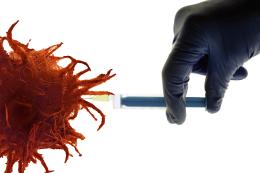
Unió-szerte aggasztó mértékben növekszik a rákos megbetegedések és a rákkal összefüggő halálesetek száma, ezért az Európai Gazdasági és Szociális Bizottság (EGSZB) sürgeti, hogy fordítsanak kellő figyelmet a rákmegelőzési intézkedésekre, mivel a rákos megbetegedések mintegy 40%-a megelőzhető lenne.
The EU must reduce its strategic dependencies in sensitive sectors such as health and critical technologies in order to enable a growing number of patients across Europe to use nuclear medicine to diagnose and treat cancer.
With just a month to go until the European elections, the European Economic and Social Committee (EESC) warns European authorities of the urgent need to fight disinformation in order to safeguard democracy. Quality, independent journalism in a thriving pluralistic system remains the first bulwark against malicious campaigns and fake news.
On 9 May, President Röpke celebrated Europe Day in Madrid at an event on "The future of the EU social agenda". Organised by the Spanish Minister of Labour and Social Economy, Yolanda Díaz, the event gathered many prominent speakers. In his intervention, President Röpke underlined that social dialogue is a cornerstone of our European social model and democratic values.
The EESC has adopted an opinion on the new Reform and Growth Facility for the Western Balkans, at the Commission's request. The plan will support the Western Balkans to speed up regional economic cooperation. This is the first time the EU has focused on economic development and socioeconomic convergence in the region.
Strengthening ties between young people and youth organisations in the European Union and the United Kingdom will have tangible positive effects on a generation of Europeans disproportionately affected by the consequences of Brexit, according to the European Economic and Social Committee (EESC).
Stakeholders want systematic consultation as a driver of growth-led approaches
Strengthening national ownership requires both the close involvement of national parliaments, regional and local authorities, the social partners and civil society, and clearer provisions in EU and national procedures. Together, this will ensure that the new EU economic governance framework and the future European Semester are implemented as effectively as possible. It will also guarantee transparent and inclusive policy making.
Amid an unprecedented surge in illicit drugs available on European streets, the EESC is asking for strategic action to strengthen Europe’s response to drug trafficking