
European Economic
and Social Committee
Meet our members | Cillian LOHAN: We are the voice of our many and varied organisations and networks
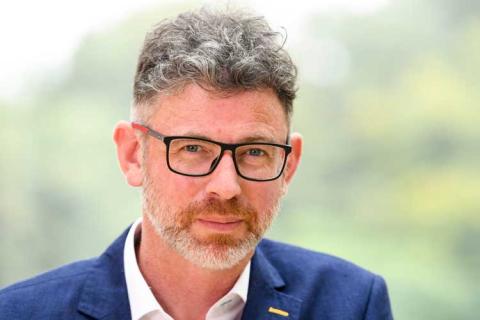
Cillian Lohan has been Vice-President for Communications of the European Economic and Social Committee (EESC) since October 2020 and an active member of the institution since 2015. He has worked extensively in the corporate and environmental sectors. He is a leader in the field of the circular economy and was the inaugural chair of the European Circular Economy Stakeholder Platform, which he helped to establish.
What drives you to be an active and engaged EESC and NAT section member? How do you link it to your work (and your life) back home?
I see the sections as the engine room of the EESC. That is where we do the real work, drafting opinions, sharing ideas, having debates, preparing opinions for plenary sessions. The NAT section feels like my home in the Committee. There I launched own-initiative opinions that led to the establishment of the Youth Climate and Sustainability Round Tables that we now have. It was in NAT that I did my first opinion on the circular economy, and I saw how our opinions can make a tangible difference – not only through influencing the Parliament but also by establishing the European Circular Economy Stakeholder Platform, which continues to go from strength to strength.
I live on a farm in a rural farming community and I am a member of the Irish Environmental Network; those two interests combine very well with the topics we focus on in NAT.
You are currently the EESC Vice-President in charge of Communication. The new Communication Strategy, prepared during your term of office, has the potential to substantially increase the impact and visibility of the EESC's work. Where do you see the biggest challenge and the biggest opportunity in the implementation of the strategy?
The biggest challenge that we face as the EESC is to be part of the conversation when the institutions are making final decisions. We actually do this successfully quite often, for example an exploratory opinion request from the Commission is really a recognition that our input is important before anything can be drafted. We need a cultural shift in the EESC to realise that, although we can set the agenda, this is the exception. Usually the agenda is set by the outside world, by the public, by legislative proposals, by external political events. We need to adapt our communication to focus on topics that are already being discussed.
For example, during the High-Level Political Forum on Sustainable Development taking place in the summer, the EESC needs to be at the centre of the conversations. We do ground-breaking work in this space. We bring together all the parties who are affected by Sustainable Development Goal policies. We sit in a room with each other and find ways to listen and to understand, and we find a way to move forward together.
That is our added value. Ensuring we share the valuable results of our hard work with those outside our building is the challenge. But I am confident that we have enough examples of the EESC, and specifically of NAT, doing this well that we can build on that – let's make our best practice, common practice.
As you know, the NAT section's remit is very large and includes sectoral competences related to agriculture, sustainable food systems, the environment and rural development along with more cross-cutting topics such as climate action, the circular economy and sustainable development. In your double role as Communication Vice-President and active NAT member, how do you think the NAT section can better amplify the voices of stakeholders, including less represented groups and communities, in the coming years?
At NAT we are privileged to be members. We have a highly skilled secretariat, excellent facilities and support systems such as interpretation. We have the right, bestowed upon us by the Treaties, to be consulted. We have a representative role as the voice of our many and varied organisations and networks. The EU can seem like a bureaucratic echo chamber lacking real voices and real-life perspectives. That is where NAT is so valuable. With a variety of portfolios, we can organise our section work to be inclusive and to give space to voices, such as those of youth, that usually do not have the resources or connections to reach the decision-makers in Brussels.
The EU can seem like a bureaucratic echo chamber lacking real voices and real-life perspectives. That is where NAT is so valuable. With a variety of portfolios, we can organise our section work to be inclusive and to give space to voices, such as those of youth, that usually do not have the resources or connections to reach the decision-makers in Brussels.
Our tools like hearings, appointing experts and inviting speakers to debates and section meetings allow us to ensure that we give space to a wide variety of views. We do this well in NAT and I expect that we will continue to build on this.
Work organisation
Recommended for you
Az egészségügyi ágazatbeli közszolgáltatások közös létrehozása erősíteni fogja a demokrácia részvételi jellegét az EU-ban
News
Az Európai Gazdasági és Szociális Bizottság (EGSZB) és a Debreceni Egyetem által szervezett rendezvény rávilágított, mennyire fontos az általános érdekű szolgáltatások közös létrehozása az…
YEYS! 2023: A fiatalok átláthatóbb, digitalizált és egyszerűbb EU-t szeretnének
News
Március 23-án és 24-én az Európai Gazdasági és Szociális Bizottság (EGSZB) immár 14. alkalommal adott otthont a „Your Europe, Your Say!” (A Te Európád, a Te szavad! – YEYS!) című rendezvénynek. Erre…
Az EGSZB megnyitja a jelentkezést civil társadalmi díjára, melynek témája a mentális egészség
News
Civil társadalmi szervezetek, magánszemélyek és magánvállalkozások mostantól nevezhetik nonprofit projektjeiket az európai polgárok mentális jólétének támogatásának szentelt EGSZB-díjra. Az Európai…
Az EGSZB felhívása: 2024 júniusában szavazzunk egy egységes és demokratikus Európai Unióra!
News
A demokrácia világszerte hanyatlik, a növekvő infláció és a háború fenyegető veszélye közepette a dezinformáció térnyerése és egyre nagyobb elégedetlenség tapasztalható. Nagy tehát a tétje az új…
Az Európai Gazdasági és Szociális Bizottság készen áll arra, hogy együttműködjön az EU Tanácsának magyar elnökségével
News
Az Európai Gazdasági és Szociális Bizottság (EGSZB) júliusi plenáris ülésén Oliver Röpke EGSZB-elnök vitát tartott Bóka János európai uniós ügyekért felelős miniszterrel, aki ismertette az EU Tanácsa…