
European Economic
and Social Committee
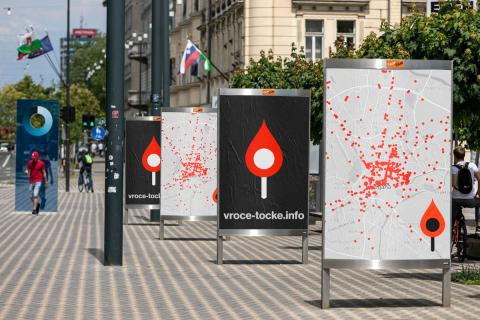
Curious to learn how Ljubljana residents felt about the overheating of their city and frustrated by the inaction of municipal authorities to do something about it, urban studio Prostorož launched the project Hot Spots, inviting people to pinpoint the city's hottest locations on a digital map. The project received a surprisingly huge response from residents and the media, with concrete proposals on how urban overheating should be tackled. Prostorož's Zala Velkavrh shares with us the secret of the project's success as well as the studio's future plans.
EESC info: What prompted you to launch your project or initiative?
Zala Velkavrh: 50% of our initiative was born out of frustration and 50% out of curiosity. Despite the fact that the effects of climate change and urban heat islands were well known by the municipal government, few measures have been taken. On the other hand, we were curious to see if and how the people of Ljubljana experience urban heat during summer.
How was your project received? Did you have any feedback from the people you helped? (Can you give an example if you have?)
We built a very simple web app and were expecting a modest response. To our surprise, the residents of Ljubljana as well as the media showed interest and joined the initiative. People added 700 hot spots (hot locations around city) in less than three weeks!
How do you intend to use this specific funding to provide more help to the community? Are you already planning new projects?
We will invest it back into the city of Ljubljana. One of the areas where urban heat islands are particularly problematic is the university clinical centre, the largest medical centre in the country. Because of COVID, public space around the clinics has taken on a new role - it has become a waiting space, a space where workers spend their breaks and, in times when the number of COVID infections were lower than today it was also a space where patients met their relatives. We want to work with the city of Ljubljana, representatives of the clinics, patients and health workers to improve at least some microspaces for the cooler and the better.
What advice would you give to other organisations to get results in activities and programmes of this type?
Instead of talking about the future, we tried to understand how people experience the effects of climate change today. We used common language and focused on the everyday (lived) experience of pedestrians, cyclists and other users of public space, and the response was very good. Climate change is not an abstract threat anymore.
How optimistic are you about the prospects for the EU to achieve the Green Deal targets?
Very pessimistic, regarding the new year's developments around green energy and regarding the fact that no EU country achieved goals set by the Paris Agreement.