European Economic
and Social Committee
European Economic
and Social Committee
The European Economic and Social Committee (EESC) is the voice of organised civil society in Europe.
Find out more about its role and structure at http://www.eesc.europa.eu/en/about
The EESC issues between 160 and 190 opinions, evaluation and information reports a year.
It also organises several annual initiatives and events with a focus on civil society and citizens’ participation such as the Civil Society Prize, the Civil Society Days, the Your Europe, Your Say youth plenary and the ECI Day.
Find the latest EESC opinions and publications at http://www.eesc.europa.eu/en/our-work/opinions-information-reports/opinions and http://www.eesc.europa.eu/en/our-work/publications-other-work/publications respectively.
The EESC is active in a wide range of areas, from social affairs to economy, energy and sustainability.
Learn more about our policy areas and policy highlights at http://www.eesc.europa.eu/en/policies
The EESC holds nine plenary sessions per year. It also organises many conferences, public hearings and high-level debates related to its work.
Find out more about our upcoming events at http://www.eesc.europa.eu/en/agenda/our-events/upcoming-events
Here you can find news and information about the EESC'swork, including its social media accounts, the EESC Info newsletter, photo galleries and videos.
Read the latest EESC news http://www.eesc.europa.eu/en/news-media/news and press releases http://www.eesc.europa.eu/en/news-media/press-releases
The EESC brings together representatives from all areas of organised civil society, who give their independent advice on EU policies and legislation. The EESC's326 Members are organised into three groups: Employers, Workers and Various Interests.
Find out more about our Members and groups at http://www.eesc.europa.eu/en/members-groups
The EESC has six sections, specialising in concrete topics of relevance to the citizens of the European Union, ranging from social to economic affairs, energy, environment, external relations or the internal market.
Find out more at http://www.eesc.europa.eu/en/sections-other-bodies
A tagok testközelből figyelhettek meg egy olyan kifinomult ökoszisztémát, amely egyszerre védi a környezetet, támogatja a gazdasági sikert, ösztönzi a körforgásos gazdasági gyakorlatokat a mezőgazdaságban és előmozdítja a társadalmi kohéziót.
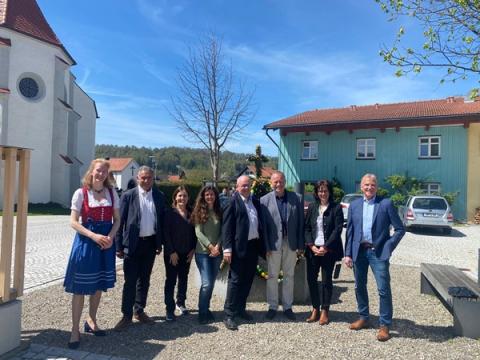
Május 5-én az Európai Gazdasági és Szociális Bizottság tagjainak egy küldöttsége ellátogatott Wildpoldsriedbe, a németországi Allgäu-vidék egyik, a fenntarthatóenergia-használatról híres falujába.
A település arról nevezetes, hogy sikeresen valósította meg a helyileg, megújuló erőforrásból történő energiatermelést, valamint hogy ebben a lakosság is oroszlánrészt vállal.
Az EGSZB-tagokat lenyűgözte a falu infrastruktúrája, amely egyaránt tartalmaz szélturbinákat, egy biogázüzemet, egy helyi fűtési hálózattal összekötött kapcsolt energiatermelő létesítményt, valamint egy akkumulátorral is felszerelt fotovoltaikus rendszert.
A wildpoldsriedi lakosok által alkalmazott innovatív és fenntartható megközelítés kitűnő példája egy olyan kifinomult ökoszisztémának, amely a polgárok részvételének köszönhetően egyszerre védi a környezetet, támogatja a gazdasági sikert, ösztönzi a körforgásos gazdasági gyakorlatokat a mezőgazdaságban és előmozdítja a társadalmi kohéziót.
A látogatás azért is különösen érdekes volt az EGSZB számára, mivel feladata, hogy a civil társadalmi ügyekben tanácsokkal lássa el az uniós intézményeket, és törekedjen a társadalmi szerepvállalás és az uniós szakpolitikák közötti szakadék áthidalására. (ks)