Östliche Nachbarstaaten

This page is also available in:

Die Tätigkeiten des EWSA in Bezug auf die östlichen Nachbarstaaten erstrecken sich auf Armenien, Aserbaidschan, Belarus, Georgien, Republik Moldau und die Ukraine. Hauptziel des EWSA mit Blick auf die östlichen Nachbarstaaten ist die Verbesserung der Beziehungen zu den Organisationen der Zivilgesellschaft in der Region sowie deren Einbeziehung in den Dialog mit den jeweiligen nationalen politischen Entscheidungsträgern und den Organisationen der Zivilgesellschaft der EU.

Die wichtigsten Mechanismen der Zusammenarbeit mit Georgien, der Republik Moldau und der Ukraine sind die Plattformen der Zivilgesellschaft, die die im Rahmen der Assoziierungsabkommen der EU mit diesen Ländern bestehenden politischen Gremien ergänzen. Mithilfe der Plattformen können die zivilgesellschaftlichen Organisationen sowohl aus der EU als auch aus den Partnerländern den Umsetzungsprozess überwachen und ihre Empfehlungen an die zuständigen Behörden ausarbeiten.

Auf der EU-Seite gehören diesen Plattformen EWSA-Mitglieder und Vertreter großer europäischer Netze der Zivilgesellschaft an. Auf Seiten der Partnerländer vertreten sie ein breites Spektrum zivilgesellschaftlicher Organisationen. Im Rahmen der Plattformen wird eine ausgewogene Vertretung aller Interessenträger (Arbeitgeberverbände, Gewerkschaften und diverse Interessengruppen) angestrebt.

Im EWSA wurde der Begleitausschuss Östliche Nachbarstaaten im Jahr 2004 eingerichtet, der für die Beziehungen zur Zivilgesellschaft in den osteuropäischen Nachbarstaaten zuständig ist. Der Begleitausschuss kommt in der Regel viermal im Jahr zusammen, und seine Mitglieder wirken aktiv an den Tätigkeiten im Rahmen der Östlichen Partnerschaft – wie den multilateralen Plattformen und dem Forum der Zivilgesellschaft der Östlichen Partnerschaft – mit.
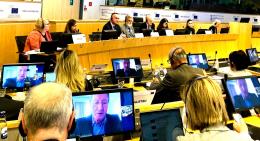
  • The External Relations Section (REX) of the European Economic and Social Committee (EESC) held a debate on 23 February 2026 to address the alarming deterioration of trade union freedoms in Belarus. Despite sustained international pressure and the appointment of an International Labour Organization (ILO) Special Envoy in June 2025, the Belarusian authorities continue to refuse any dialogue aimed at restoring compliance with fundamental labour standards. Around twenty trade unionists remain imprisoned.

  • On the occasion of the fifth anniversary of the ratification of the Enhanced Partnership and Cooperation Agreement (EPCA) between Kazakhstan and the EU, the European Economic and Social Committee (EESC) adopted at its March plenary session an action plan for enhancing cooperation between civil society organisations in the European Union and Kazakhstan. 

  • Civil society for an open democratic debate
    Event type
    Conference

    This conference in Lisbon is the fourth event on disinformation being hosted by the European Economic and Social Committee (EESC) as part of its ongoing project aiming to fight disinformation with the help of civil society.

  • verabschiedet on 17/07/2025 - Bureau decision date: 23/01/2025
    Referenz
    REX/598-EESC-2025
    Plenary session number
    598
    -
    • Follow-up from the Commission REX/598
    Download format:
    Download — Stellungnahme des Ausschusses: The importance of institutionalising civil and social dialogue in EU candidate and partner countries
  • The fifth meeting of the EU-Armenia Civil Society Platform (CSP) is scheduled to be held on 15 October 2024 in Brussels.

    The meeting will focus on assessing progress in the implementation of the EU-Armenia Comprehensive and Enhanced Partnership Agreement (CEPA), with a strong emphasis on its impact in the Areas of Democracy, Rule of Law, Anti-Corruption, and Human Rights.


  • Civil society for an open democratic debate
    Event type
    Conference

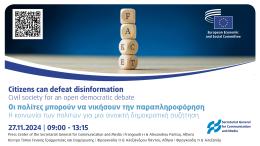
    This conference in Athens is the third event on disinformation being hosted by the European Economic and Social Committee (EESC) as part of its ongoing project aiming to fight disinformation with the help of civil society.

  • The 14th meeting of the EU-Ukraine Civil Society Platform (CSP) took place on 15 December 2023. During the meeting, a debate focused on assessing the implementation of the European Commission's opinion and the state of play of the implementation of the EU-Ukraine Association Agreement.

    In addition, the CSP discussed the initiatives for Ukraine's green recovery, economic integration of Ukraine to the EU, as well as current challenges related to labour market.

    A joint declaration, prepared by both sides, was discussed and adopted.

  • Published in
    8 pages

    The External Relations Section (REX) of the European Economic and Social Committee (EESC) is responsible for dialogue between European civil society organisations and their homologues from the countries with which the European Union has formal relations (e.g. under the form of a Free Trade Agreement). Through this dialogue, made possible by a series of bilateral bodies, and through specialized opinions and information reports, the Committee is able to concretely contribute to EU foreign policy.

  • Document type
    Joint declaration
    Latest update
    • Joint declaration - 7th joint meeting of the EU-Moldova Domestic Advisory Groups
  • verabschiedet on 26/10/2022 - Bureau decision date: 20/09/2022
    Referenz
    REX/564-EESC-2022
    Civil Society Organisations - GR III
    Download format:
    Download — Stellungnahme des Ausschusses: Specific provisions for the 2014-2020 cooperation programmes supported by the European Neighbourhood Instrument and under the European territorial cooperation goal, following programme implementation disruption