
European Economic
and Social Committee
Harnessing the potential of vulnerable groups in sustainable water management
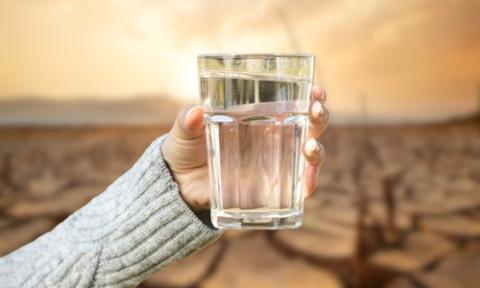
The EESC calls on the EU to focus on water as a driver for peace and stability. In turn, empowering young people, women and indigenous and local communities will lead to greater water security. The EESC's Declaration for an EU Blue Deal therefore calls for water management to be acknowledged as a key concern across all sectors and mainstreamed into all policies.
Without water there is no life. It is an indispensable component of all the Sustainable Development Goals. However, global water stress and the related problems and risks are increasing due to unsustainable water management, the climate crisis and the soaring population.
With its own-initiative opinion on Water politics: Empowering Youth, Women, and Indigenous and Local Communities adopted at the December plenary, the EESC tackles the issue of water-related challenges for the most vulnerable populations on the planet and proposes solutions for their empowerment. Access to clean water, education, employment and participation in policymaking are key elements of empowerment. Better access to water, sanitation and hygiene (WASH) services is crucial.
Milena Angelova, EESC member and rapporteur for the opinion, stressed: ‘Proper WASH services are fundamental for women's empowerment, as in most of the heavily water‑stressed areas women and young girls are burdened with finding solutions at the expense of their education, job opportunities and personal development’.
Figures reveal that, as those responsible for 72% of daily household water supplies, women around the world spend a total of 200 million hours collecting water. Girls under 15 are twice as likely to be responsible for collecting water for the household as boys, exposing them to attacks and preventing them from attending school.
Scientific evidence shows that better access to water, sanitation and hygiene (WASH) services enables women to take greater control of their own, their households' and their communities' lives. This contributes to higher GDP, which in turn improves communities' standard of living.
The Committee calls on the EU to cater properly for these groups in its external relations and international cooperation. It suggests a flagship partnership programme to empower them in an integrated way. Initially, a partnership programme should be established for at least one case area in Africa to cover the various elements of empowerment.
That should be followed by measures such as development of water and wastewater infrastructure, cooperation on blue technologies, provision of the electricity technologies needed to improve access to WASH services, and making it easier to set up local businesses. This will promote entrepreneurship and employment with decent working conditions.
Young people are of crucial importance as both targets and changemakers in water politics. Young people have the potential to challenge existing structures and procedures and bring new ideas. They are willing to network across borders and thus strengthen international cooperation. However, knowledge and skills barriers, language barriers, piecemeal youth initiatives and limited opportunities for capacity‑building often prevent them engaging with water-related activities.
The EESC opinion highlights the water-related problems facing indigenous and local communities, including migrants and people with disabilities. It is imperative that these groups be empowered. Indigenous communities have a long-lasting relationship with water, land and wetlands and a unique knowledge of how to preserve, protect and use these resources in a sustainable way. Thus, it is essential to protect the intellectual property rights of these people more effectively.
There is a clear need for proactive platforms where indigenous communities and local, national and international authorities can engage meaningfully on water practices.
Ioannis Vardakastanis, EESC member and co-rapporteur for the opinion, pointed out that these vulnerable groups can play a leading role in water crisis migration efforts, as water scarcity and related conflicts are likely to generate massive migration flows from Africa to the EU. Additionally, significant migration flows can also impact existing water‑stressed areas in Africa and in the Middle East/North Africa region, increasing the pressure.
Indigenous people must be systematically involved in international cooperation in order to ensure that their human rights are respected and their potential is fully harnessed.
Work organisation
Downloads
-
Harnessing the potential of vulnerable groups in sustainable water management
Recommended for you
Decision repealing Directive 89/629/EEC
Opinion
KERNAUSSAGEN: Der EWSA stimmt dem Inhalt des Vorschlags zu und hat keine Bemerkungen dazu vorzubringen und beschloss, eine befürwortende Stellungnahme zu diesem Vorschlag abzugeben.
EWSA: Die EU muss die soziale Nachhaltigkeit stärker ins Blickfeld rücken
News
Der Europäische Wirtschafts- und Sozialausschuss (EWSA) fordert die Europäische Kommission auf, einen längst überfälligen Bericht zu veröffentlichen und die Ausweitung des Anwendungsbereichs der EU…
Ko-Kreation von Dienstleistungen von allgemeinem Interesse im Bereich Gesundheit als Beitrag zur Stärkung der partizipativen Demokratie in der EU
News
Bei dieser vom Europäischen Wirtschafts- und Sozialausschuss (EWSA) und der Universität Debrecen organisierten Veranstaltung wurde hervorgehoben, wie wichtig die Ko-Kreation von Dienstleistungen von…
Zur Bekämpfung des Klimawandels werden mehr öffentliche Investitionen in die Energieinfrastruktur in der EU gebraucht
News
In einer auf der Plenartagung im September verabschiedeten Stellungnahme erläutert der Europäische Wirtschafts- und Sozialausschuss (EWSA), dass zur Verwirklichung der Energiewende und der Klimaziele…
Energie – EWSA warnt vor neuen Abhängigkeiten
News
Der Europäische Wirtschafts- und Sozialausschuss (EWSA) bezieht in einer auf seiner September-Plenartagung verabschiedeten Stellungnahme klar Stellung zum Thema Energie: Der Vorschlag der Kommission…