
European Economic
and Social Committee
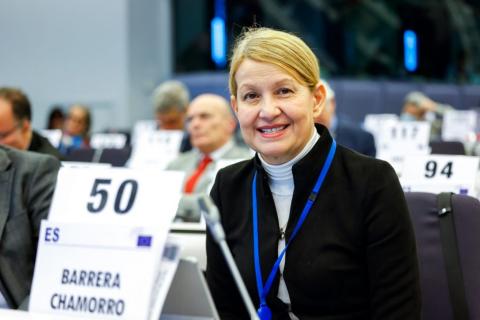
EESC Info: What is the impact of the energy transition on employment in regions undergoing the transition and what are the EESC's proposals to address them?
Maria del Carmen Barrera Chamorro: Experiences so far have varied widely, with some successes and many failures. But ensuring the success of the energy transition when it comes to jobs is paramount. Without guarantees of sustainable employment, social protection and business support for the transition, there will be no competitive and healthy future in Europe.
The EESC believes that territorial energy transition plans should be accompanied by appropriate arrangements or agreements for fair social consultation, in which creating, preserving and safeguarding sustainable quality employment and support for people are necessary conditions in the design, implementation and evaluation of the measures planned, including the funds received to promote the energy transition.
We also need to better integrate labour market policies into environmental and energy legislation and policies, offering incentives for sustainable quality employment. Funds will be needed to share the costs of temporary or permanent restructuring processes and professional retraining programmes to improve employability in a decarbonised economy.
This should be backed up by social welfare policies such as guarantees of universal access to energy services, replacement income, adequate minimum income, etc. The integration of these policies, as part of the development plan of the European Pillar of Social Rights, should always be achieved through social dialogue and collective bargaining.
Stronger public and private investment and social compensation policies are also vital, given the negative effects on the competitiveness of EU businesses and SMEs, as well as on the most vulnerable households.
Finally, we need a renewed cohesion policy that prioritises the mutual links between the energy transition, labour markets and regional development. This requires monitoring and evaluation mechanisms on the sound use of funds in order to enhance the role of local and regional authorities and the social partners.