
European Economic
and Social Committee
Transport – The EESC recommends improving protection for railway passengers
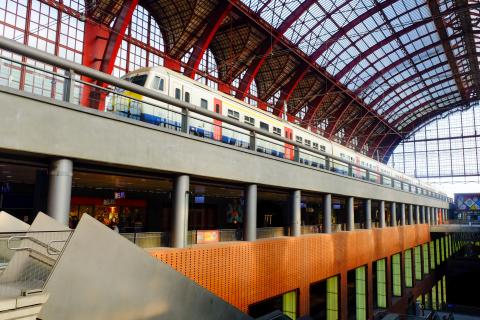
At its September plenary, the European Economic and Social Committee (EESC) adopted key opinions on the European Commission’s long-awaited railway Passenger Package. The Committee recommends focusing on protection, transparency and inclusiveness for passengers, backing the establishment of a single digital booking system and multimodal mobility platforms.
Ensuring better protection for rail passengers for the entire duration of their journeys must be a prime concern for the European Commission and its proposed Passenger Package. The EESC took a firm stand on this at its September plenary session, adopting comprehensive recommendations with a focus on protecting passengers, ensuring transparency and making accessibility and inclusiveness a reality. A single booking system and multimodal platforms can also further increase convenience for passengers.
Protecting passengers with single tickets
In the opinion on the Protection of passengers with single tickets drafted by Baiba Miltoviča, the EESC welcomes the initiative to introduce a more integrated protection system for rail passengers that have a single ticket for a journey across several operators and a set final destination. However, the Committee calls for further improvements and clarifications when it comes to definitions and terms of implementation, arguing that the new Regulation must not weaken existing national rules or protections for passengers in the Member States.
The first priority must be passengers. The Committee notes that the new proposal fundamentally seeks to protect the rights of rail passengers, especially those with single tickets. The objective is to ensure that when passengers purchase a journey consisting of several rail services through a single commercial transaction, they benefit from protection for the whole journey, rather than for each individual leg.
More specifically, the EESC suggests that in the event of missed connections and subsequent delays, passengers should be allowed to use rail services without restriction for the three hours following the missed connection to ensure the next leg of their trip, or using the first subsequent similar connection. Providers should ensure the availability of seats, even if this means upgrading to a higher class. An effective universal insurance mechanism should be applied across the board.
The second priority is transparency. Passengers should know from the very beginning the final price and who is responsible in case of problems. In the event of delays which might have an impact on the duration, connectability or quality of their trip, it is key for passengers to have a single point of reference.
On this matter, the Committee supports the introduction of automatic compensation and reimbursement mechanisms for passengers affected by delays, cancellations or missed connections when the trip concerned is covered by a single ticket. Where railway undertakings, ticket vendors or digital platforms already possess the necessary operational data, passengers should not be required to submit additional documentation or go through complex claims procedures.
The third priority is about accessibility and inclusiveness. The transition towards digital ticketing and the increased use of automated tools and artificial intelligence should not degrade services. Human assistance remains important for all passengers, including older people, people with disabilities or reduced mobility, people with limited digital skills, those from vulnerable groups and travellers facing unexpected disruptions or complex multimodal journeys. Information about delays, cancellations, alternative routes, compensation procedures and passenger rights should be provided in real time, through accessible digital and non-digital channels.
Setting up a single digital rail booking system
To allow passengers to purchase seamless cross-border rail journeys involving multiple operators, it is important to set up a single, interoperable European booking and ticketing framework for rail transport.
In the opinion on Rail ticketing drawn up by Dumitru Fornea, the EESC welcomes this Commission initiative and considers it essential for a genuine EU railway area.
‘This initiative would break down the current barriers that passengers face when dealing with fragmented national booking systems,’ said Mr Fornea. ‘It would also increase citizens’ confidence in rail transport. Digital simplification would contribute towards making integrated EU mobility a reality and should be developed to this end, and not simply to digitalise/connect different online national systems.’
Developing multimodal mobility platforms
Passengers should be able to use online platforms to combine different transport modes when planning, booking and paying for journeys. It is more convenient, cost efficient and offers wider journey options.
‘The development of these tools should be promoted as they can offer multimodality, inclusiveness and sustainability throughout the EU, both within Member States and in cross-border travel,’ added Mateusz Szymański, rapporteur of the opinion on Multimodal booking.
However, the Commission’s proposal does not address the key problem of the very limited availability of multimodal journeys purchasable through a single ticket, and this is why the EESC calls for more far-reaching measures to ensure effective multimodal booking.
Background – The Passenger Package
In May 2026 the European Commission unveiled the Passenger Package, which includes three proposals: the ‘Protection of passengers with single tickets’, ‘Rail ticketing’ and ‘Multimodal booking’.
The package seeks to make it easier for passengers to find, compare and book journeys involving multiple operators and different modes of transport, while strengthening passenger protection for rail journeys booked as a single commercial transaction.
Currently, rail passengers may lack full protection for the whole journey. With the revision, the Commission aims to close this protection gap by introducing the concept of a single ticket, which covers journeys consisting of two or more transport contracts purchased in a single commercial transaction.
Work organisation
Recommended for you
EWSA: Die EU muss die soziale Nachhaltigkeit stärker ins Blickfeld rücken
News
Der Europäische Wirtschafts- und Sozialausschuss (EWSA) fordert die Europäische Kommission auf, einen längst überfälligen Bericht zu veröffentlichen und die Ausweitung des Anwendungsbereichs der EU…
Ko-Kreation von Dienstleistungen von allgemeinem Interesse im Bereich Gesundheit als Beitrag zur Stärkung der partizipativen Demokratie in der EU
News
Bei dieser vom Europäischen Wirtschafts- und Sozialausschuss (EWSA) und der Universität Debrecen organisierten Veranstaltung wurde hervorgehoben, wie wichtig die Ko-Kreation von Dienstleistungen von…
Zur Bekämpfung des Klimawandels werden mehr öffentliche Investitionen in die Energieinfrastruktur in der EU gebraucht
News
In einer auf der Plenartagung im September verabschiedeten Stellungnahme erläutert der Europäische Wirtschafts- und Sozialausschuss (EWSA), dass zur Verwirklichung der Energiewende und der Klimaziele…
Energie – EWSA warnt vor neuen Abhängigkeiten
News
Der Europäische Wirtschafts- und Sozialausschuss (EWSA) bezieht in einer auf seiner September-Plenartagung verabschiedeten Stellungnahme klar Stellung zum Thema Energie: Der Vorschlag der Kommission…
Der EU-US-Handels- und Technologierat muss die Dynamik nutzen, um ein Wegweiser für Handel, Technologie und Innovation zu werden
News
Auf seiner Juli-Plenartagung zeigte sich der Europäische Wirtschafts- und Sozialausschuss (EWSA) optimistisch, dass der neue Handels- und Technologierat (TTC) ein innovatives Instrument für die EU…