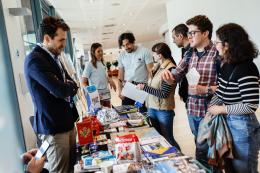
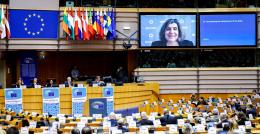
For the first time since the pandemic, the European Economic and Social Committee (EESC) opened its doors to the public onSaturday 6 May to celebrate Europe and discuss the future of the European Union.
On the World Day for Safety and Health at Work 2023, the European Economic and Social Committee is calling upon the European Commission to adopt binding legislation to prevent psychosocial risks in the workplace. There is mounting evidence pointing to the fact that precarious work is taking a significant toll on workers' mental health. The call was made during yesterday’s EESC’s plenary session, chaired for the first time by the newly elected president, Oliver Röpke.
In an opinion debated and adopted in plenary, the European Economic and Social Committee renewed its request for reform of the European Semester. The opinion, which draws on a recent consultation undertaken in 23 different Member States, calls for an EU regulation to make civil society involvement in the cycle mandatory.
A former Polish Minister for Social Policy and current President of the Polish Scouting and Guiding Association (ZHP), Mr Pater was elected to the post today by the plenary assembly of the European Economic and Social Committee (EESC), of which he has been a very active member since 2006.
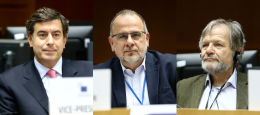
The April plenary session of the European Economic and Social Committee (EESC) saw the election of the new vice-president in charge of communication for 2023‑2025.
Der Präsident will den Europäischen Wirtschafts- und Sozialausschuss zu einem echten Tor der Zivilgesellschaft machen und die Türen für die EU-Beitrittsländer öffnen. Im Vorfeld der Europawahlen 2024 wird sich der Ausschuss noch aktiver für Demokratie einsetzen und für ein widerstandsfähigeres, wohlhabenderes und inklusiveres Europa eintreten.
Speaking at an event marking 30 years of the single market, Mr Monti said this anniversary afforded an opportunity for EU institutions to call out the European Council and expose national governments' attempts to hide behind the imperfections of the single market while paying lip service to it.
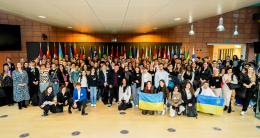
Am 23./24. März veranstaltete der Europäische Wirtschafts- und Sozialausschuss (EWSA) die 14. Jugendplenartagung „Your Europe, Your Say!“ (YEYS!), zu der 105 Schülerinnen und Schüler aus 35 Schulen aller 27 EU-Mitgliedstaaten und der sieben Kandidatenländern nach Brüssel kamen. Angesichts der zahlreichen gesellschaftlichen und wirtschaftlichen Herausforderungen, des schwindenden zivilgesellschaftlichen Raums und der Bedrohung von Frieden und Grundrechten lag der Schwerpunkt der diesjährigen Veranstaltung auf „Jugenddialogen über Demokratie“. Ziel war es, jungen Menschen bei der Gestaltung der Zukunft Europas Gehör zu verschaffen. Die Empfehlungen der Schülerinnen und Schüler werden den europäischen Institutionen sowie hochrangigen politischen Entscheidungsträgern der EU im Juni 2023 vorgelegt.
On 23 March, the European Economic and Social Committee (EESC) held a plenary debate and adopted a resolution entitled "United for Democracy" with concrete proposals to strengthen democracies and democratic values across the European Union. Policymakers, experts, and organised civil society representatives agreed that civic education, better funding to social partners and a focus on the local dimension, are key to democracy in Europe.
At its March plenary session, the European Economic and Social Committee (EESC) hosted Ambassador Lachezara Stoeva, president of the United Nations Economic and Social Council (ECOSOC). Ambassador Stoeva strongly supported the key role civil society must play in implementing the 2030 Agenda.