The European Economic and Social Committee (EESC) tirelessly defends the rights of the LGBTIQ community through a series of strategic actions and initiatives. In alignment with the European Commission’s LGBTIQ Equality Strategy 2020-2025, the EESC has adopted a set of measures to combat discrimination and promote equality across the EU. In the context of Pride Week, here is an overview of the main opinions that fall under the Strategy.
believes it is crucial to include persons with disabilities throughout the process of designing, developing, assessing and implementing new technologies and AI-based applications. This involvement is key to mitigating potential discriminatory risks;
invites the Member States and the EU to audit and evaluate to what extent AI applications are inclusive in critical fields;
believes further follow-up is required to protect persons with disabilities from the harmful application of supposedly limited risk systems, particularly in the field of employment and recruitment;
underlines the importance of ensuring the general accessibility of services and goods that apply new technologies and AI based solutions
Despite progress in gender equality, millions of women across Europe still face violence, discrimination and barriers to equal opportunities. From under-representation in leadership to the alarming rise in gender-based violence, urgent action is needed. The European Economic and Social Committee (EESC) High-Level Forum on Women’s Rights brought together leading voices to address these pressing issues and outline key priorities ahead of the upcoming UN Commission on the Status of Women session.
The European Economic and Social Committee (EESC) has adopted an opinion that aims to safeguard citizens' fundamental rights in the midst of the implementation of AI technology in public services.
adopting digitalisation and AI (artificial intelligence) could revolutionise the way public services are provided, offering innovative solutions for dealing more efficiently and more quickly with people’s needs;
AI can help make these services more accessible, in particular to the most vulnerable people in society;
the possibility to automate complex and repetitive processes could increase efficiency while reducing workload for individual workers.
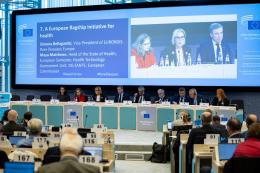
The European Economic and Social Committee (EESC) calls for a European flagship initiative for health, aiming to build a cross-cutting health architecture within the European Union. It also calls on the European Commission to publish an Action Plan on Rare Diseases with clearly achievable targets.
stresses the urgent need to adapt strategies for work-life balance taking into consideration the shifting demographics, new forms of work, flexible working arrangements and rising care demands, in view of the 2027 revision of the Directive (EU) 2019/1158 on work-life balance for parents and carers;
notes that ageing populations require increased resources for care services and recommends the Council ask the Commission to develop a Care Toolbox with indicators for long-term care;
emphasises that needs-based measures should provide affordable, accessible, high-quality services benefiting workers, families, companies, and public authorities.
launch the proposal for a comprehensive European Action Plan on Rare Diseases (APRD) with SMART targets that can be achieved by 2030 to enable the diagnosis of rare disease patients within one year;
set up a Steering Group for the European APRD composed of experts from Member States, EURORDIS members and the EESC to ensure coordination and cooperation, monitoring and supervision of the APRD;
encourage agreements with Member States on the content, updating, application and monitoring of national plans for RD.
welcomes the proposal for updated guidelines on employment policies, aimed at fostering a competitive and sustainable economy, reflecting new labour market needs;
highlights the importance of upward convergence and of enhancing the European Semester’s role in coordinated economic policy responses;
stresses the need to strengthen social partners' roles through social dialogue and collective bargaining and the involvement of civil society in employment reforms and policy-making.