Newsletter Info

EESC info

European Economic and Social Committee A bridge between Europe and organised civil society

MARCH 2021 | EN

GENERATE NEWSLETTER PDF

Available Languages:

  • BG
  • CS
  • DA
  • DE
  • EL
  • EN
  • ES
  • ET
  • FI
  • FR
  • GA
  • HR
  • HU
  • IT
  • LT
  • LV
  • MT
  • NL
  • PL
  • PT
  • RO
  • SK
  • SL
  • SV
The fight for equality is a battle we must all wage together

The fight for equality is a battle we must all wage together

Dear readers,

This month, each year, we celebrate International Women's Day, but this year 8 March is once again a sad reminder of how much work still needs to be done to ensure that women are able to participate fully in society.

Women are under-represented in political and economic decision-making bodies, have lower rates of employment and earn less than men.

Moreover, the current pandemic and the global economic crisis have clearly demonstrated that women, together with young people, are the groups paying the highest price and that many of the hard-won gains made over the past few decades are in danger of being undone. Lastly, women bear the burden of unpaid domestic and care work, and forced cohabitation in times of lockdown often leads to an increase in cases of gender-based violence.

Read more in all languages

Dear readers,

This month, each year, we celebrate International Women's Day, but this year 8 March is once again a sad reminder of how much work still needs to be done to ensure that women are able to participate fully in society.

Women are under-represented in political and economic decision-making bodies, have lower rates of employment and earn less than men.

Moreover, the current pandemic and the global economic crisis have clearly demonstrated that women, together with young people, are the groups paying the highest price and that many of the hard-won gains made over the past few decades are in danger of being undone. Lastly, women bear the burden of unpaid domestic and care work, and forced cohabitation in times of lockdown often leads to an increase in cases of gender-based violence.

This is why the inequalities and discrimination that still exist must be tackled urgently and decisively. We cannot waste any more time and we must ensure that the gender dimension is mainstreamed into all policies through specific measures.

The European Commission, led for the first time by a woman, Ursula von der Leyen, has promised to address gender equality immediately and to adopt measures to close the gaps that still exist between men and women in the labour market, in salaries and wages, in top positions in business and in political representation. The proposal for a directive on wage transparency, published on 4 March, is therefore an important first step in the right direction.

Above all, however, a far-reaching cultural change is needed to break down gender stereotypes and achieve full equality. The EESC is committed to this battle and will contribute to improving the situation through its opinions, with the aim of influencing both the European institutions and the organisations it represents. This is a battle we must all wage together, men and women, to make society truly equal and to pass on a better world to our children.


Giulia Barbucci

EESC Vice-president for budget


Diary Dates

30 March 2021, Brussels (remote)

COVID-19 vaccination rollout and persons with disabilities

15 April 2021 (remote)

Co-creation of the services of general interest: The role of citizens and their organizations

27- 28 April 2021, Brussels (remote)

EESC plenary session

One question to...

One question to…

In our section "One question to…" we ask EESC members to respond to a topical question that seems to us to be particularly relevant.

For the March edition, we asked Baiba Miltoviča, president of the Section for Transport, Energy, Infrastructure and the Information Society, to share her views with EESC info readers on the role of rail transport in connection with the objectives of the European Green Deal, in particular in 2021, which has been declared the European Year of Rail. (ehp)

Read more in all languages

In our section "One question to…" we ask EESC members to respond to a topical question that seems to us to be particularly relevant.

For the March edition, we asked Baiba Miltoviča, president of the Section for Transport, Energy, Infrastructure and the Information Society, to share her views with EESC info readers on the role of rail transport in connection with the objectives of the European Green Deal, in particular in 2021, which has been declared the European Year of Rail. (ehp)

Developing a more resilient and effective rail system

EESC info question: This year has been designated European Year of Rail. The main purpose of this project is to contribute to the achievement of the objectives of the European Green Deal in the field of transport, specifically focusing on the role of rail transport.
With this in mind, what is your view about a dynamic approach to increasing the use of rail transport?


Baiba Miltoviča, TEN section president

The European Union has declared this year the European Year of Rail to encourage citizens to make more use of train services in their daily lives. The main reasons that prevent people from choosing train services on a daily basis differ from one European country to another, the key reasons being uncompetitive ticket prices, a lack of comfort and connections, as well as long travel times...

Read more in all languages

EESC info question: This year has been designated European Year of Rail. The main purpose of this project is to contribute to the achievement of the objectives of the European Green Deal in the field of transport, specifically focusing on the role of rail transport.
With this in mind, what is your view about a dynamic approach to increasing the use of rail transport?

Baiba Miltoviča, TEN section president

The European Union has declared this year the European Year of Rail to encourage citizens to make more use of train services in their daily lives. The main reasons that prevent people from choosing train services on a daily basis differ from one European country to another, the key reasons being uncompetitive ticket prices, a lack of comfort and connections, as well as long travel times.

Despite hopes of rail being central to the green recovery, and the 2021 European Year of Rail, EU decision-makers have made only small improvements in the last few years, and have not granted consumers strong and enforceable rights, applicable to all types of rail services across the EU. Therefore there is much work ahead of us.

For example, according to the European Consumer Organisation BEUC, when passengers buy a combined ticket sold by a railway undertaking or its 100% subsidiaries, they will benefit from passenger rights for the whole journey. This is an improvement, as currently rail operators tend to sell tickets for segments of a journey only, which allows them to bypass obligations relating to compensation, re-routing and assistance, to the detriment of passengers. However, although this is an improvement, its scope will be limited as railway undertakings will benefit from loopholes to exempt themselves from the obligations to provide through-tickets. The new rules state that affiliated undertakings must be 100% owned by the parent company to be subject to this obligation. De facto, this excludes many connected tickets (i.e. a combined journey Lyon>Paris - Paris>Brussels, respectively operated by SNCF and Thalys, will not be covered).

Regarding current national exemptions granted by Member States to rail companies, two thirds of rail services in the EU are exempt from the application of the EU passenger rights legislation, mainly suburban and regional services. These exemptions are unacceptable and a real obstacle to making train travel more attractive.

The COVID-19 crisis has shown that rail can ensure rapid transport of essential goods such as food, medicines and fuel in exceptional circumstances. The sector has been hit hard by the crisis, with passenger numbers going down substantially due to measures restricting travel. The experiences from the COVID-19 crisis must be used to develop a more resilient and effective rail system. Resilience planning needs to be adopted in close consultation with the social partners and civil society organisations.

The European Year of the Rail 2021 provides an excellent opportunity to take stock of developments up until now and set objectives for the future. In this regard, the EESC TEN section is working on an exploratory opinion at the request of the Portuguese presidency on ''The Single European Railway Area'' and is planning a conference at the EESC in the autumn of 2021.

Guess who is our guest..

The surprise guest

Every month we present a surprise guest, a well-known person who gives us their point of view on current events: a breath of fresh air to broaden our horizons, inspire us and make us more aware of today's world. For our March edition we are pleased to welcome Herman van Rompuy, the first president of the European Council, who offers us a perspective on Europe's current challenges.

Herman Van Rompuy, president of the European Policy Centre, is a Belgian and European politician, and a former prime minister of Belgium (2008-2009). In his capacity as president of the European Council (2009-2014), he played a key role in the EU's response to the financial crisis and in strengthening the framework of European economic governance.


Read more in all languages

Every month we present a surprise guest, a well-known person who gives us their point of view on current events: a breath of fresh air to broaden our horizons, inspire us and make us more aware of today's world. For our March edition we are pleased to welcome Herman van Rompuy, the first president of the European Council, who offers us a perspective on Europe's current challenges.

Herman Van Rompuy, president of the European Policy Centre, is a Belgian and European politician, and a former prime minister of Belgium (2008-2009). In his capacity as president of the European Council (2009-2014), he played a key role in the EU's response to the financial crisis and in strengthening the framework of European economic governance.

As president of the European Council, Herman Van Rompuy helped steer the European Union through a period of great challenges: the sovereign debt crisis, threats to the survival of the single currency, international crises, and major debates on the way forward for European integration.

He chaired 28 European Council meetings, 5 informal meetings, and 11 Euro summits, striking a balance between his role as mediator and the need to provide impetus for the necessary reforms. He played an important role in the launch of financial assistance programmes (eight countries) and mechanisms (European Financial Stability Facility and European Financial Stabilisation Mechanism in 2010, European Stability Mechanism in 2012),  the banking union (Single Supervisory Mechanism and Single Resolution Mechanism, both active since 2014), the economic governance framework (European Semester, Six-pack, Treaty on Stability, Coordination and Governance, Two-pack), and the Union's 10-year economic strategy (Europe 2020).

He is the author of nine books, and in one of them, Europe in the storm: promise and prejudice (2014), he recounts his EU experience. He is also the recipient of numerous honours and awards, including the Charlemagne Prize (2014). He is the author of a large number of haiku and, thanks to his kindness, readers of EESC Info will have the opportunity to get to know some of them. (ehp)

Herman van Rompuy: ''This is no time for doomsayers''

Since 2008, we have had one crisis after another - what is known as a "multiple crisis". Many people are simply wondering what will come next, showing how fear and uncertainty have grown. It is true that most crises are imported. But still. The Union overcame all those dangerous hurdles that sometimes threatened its existence. We are good at that. But at the same time we also have positive challenges: are we as good at dealing with those?

When I see how the Union is using the Recovery Fund designed to combat the social and economic impact of the pandemic in order to accelerate the environmental and digital transitions, I have hope! We are combining crisis management with a long-term vision, and this is the hardest thing to do in today's politics, which is obsessed with short-term thinking and action.

Read more in all languages

Since 2008, we have had one crisis after another - what is known as a "multiple crisis". Many people are simply wondering what will come next, showing how fear and uncertainty have grown. It is true that most crises are imported. But still. The Union overcame all those dangerous hurdles that sometimes threatened its existence. We are good at that. But at the same time we also have positive challenges: are we as good at dealing with those?

When I see how the Union is using the Recovery Fund designed to combat the social and economic impact of the pandemic in order to accelerate the environmental and digital transitions, I have hope! We are combining crisis management with a long-term vision, and this is the hardest thing to do in today's politics, which is obsessed with short-term thinking and action.

Achieving carbon neutrality by 2050 is not just literally vital for our survival, it should also help us keep our economy competitive. We must not make the same mistakes we made with the digital revolution. We almost missed that train.

A real climate policy will also help us achieve another central objective: the strategic autonomy of the Union or some form of European sovereignty. A climate policy will enable us to reduce and avoid fossil fuel imports like Russian gas. The Green Deal will help with climate and economic issues and will make the EU more autonomous. None of these aspects stands alone: they are all dependent on the others.

I'll go one step further. If the Union wants to play a geopolitical role, it has to be competitive, because the economy determines the balance of power in the world. That is why the environmental and digital transition is so important. That is why we must continue to speak with one voice on trade - as we did with Brexit, with the series of Free Trade Agreements that we have concluded such as the one with Japan, and with China on investment. Even during the Trump era, the Comission president was able to avoid a trade war because we were united. But geopolitically we can only be really relevant if we become much less dependent on other global actors in many areas: digital technology, energy, migration, financial services (and this includes being less dependent on the City and the US dollar), food, public health, etc. We can only do this if we join forces at industrial level. Size matters. Scale matters. We are making progress in all these areas but sometimes that progress is too slow. We need to think more strategically, less naively and more European.

I hope that the Conference on the Future of Europe will also focus on our internal challenges. We live in a new world technologically, demographically, economically, environmentally and geopolitically. All these developments are happening faster than we thought or feared. Yes, everything has become urgent.

Within the Union, we must take care to remain or regain social and political stability. The pandemic has created new inequalities and exacerbated old ones. Labour markets are increasingly split between people who are less and more educated and so some groups risk feeling abandoned, especially now that the digital revolution seems to have begun. The Recovery Fund and joint purchasing of vaccines show that European solidarity exists. At national level too, there is much work to be done to improve social cohesion.  The pandemic caused a spectacular increase in the number of poor people, just as extreme poverty increased again worldwide after decades of decline. Social cohesion is rightly so dear to the European Economic and Social Committee. Politically, actions in a number of countries have undermined the rule of law and the freedom of speech and of the media and thus of elections themselves. This has triggered a reaction.

We are certainly not short of challenges so we must make sure we are ready, willing and able to face them together. This is no time for doomsayers but for people, governments and organisations of hope.

Herman van Rompuy
President of the European Policy Centre

The old poet speaks softly

We are pleased to present to you a series of haikus, grouped under the title “The old poet speaks softly”, originally written in French language, offered to us by their author, Herman van Rompuy.

Read more in all languages

We are pleased to present to you a series of haikus, grouped under the title “The old poet speaks softly”, originally written in French language, offered to us by their author, Herman van Rompuy.

The old poet speaks softly     

The sunlight in the puddle
The tree reflected in it
A double life

***

A leaf the size of a hand
In the hand of a child
Life holds death

***

The sea is silent
The old poet speaks softly
Even the camellias listen

Herman van Rompuy

Le vieux poète parle doucement

Nous avons le plaisir de vous présenter une série de haïkus, sous le titre commun "Le vieux poète parle doucement", que nous a offerts leur auteur, Herman van Rompuy.

Read more in all languages

Nous avons le plaisir de vous présenter une série de haïkus, sous le titre commun "Le vieux poète parle doucement", que nous a offerts leur auteur, Herman van Rompuy.

Le vieux poète parle doucement
 

La lumière du soleil dans la flaque

L'arbre qui s'y reflète

Une double vie

***

Une feuille de la taille d'une main

Dans la main d'un enfant

La vie tient la mort

***

La mer se tait

Le vieux poète parle doucement

Même les camélias écoutent

Herman van Rompuy

EESC News

Conference on the Future of Europe: EESC committed to actively contributing to success of Conference

Statement by EESC president Christa Schweng

I welcome the signature of the joint declaration between the European Commission, the European Parliament and the Council that sets out the Conference on the Future of Europe. The European Economic and Social Committee is looking forward to actively contributing to the debate, being invited as an observer.

Read more in all languages

Statement by EESC president Christa Schweng

I welcome the signature of the joint declaration between the European Commission, the European Parliament and the Council that sets out the Conference on the Future of Europe. The European Economic and Social Committee is looking forward to actively contributing to the debate, being invited as an observer.

I am pleased that the important role and involvement of organised civil society in the conference was confirmed. The EESC is looking forward to preparing a substantial and valuable contribution, working closely with hundreds of organisations that our members represent. We are ready to bring our bottom-up expertise to enrich the work on a new, convincing narrative for the EU.

The Conference on the Future of Europe is a unique opportunity for societies in the European Union. Businesses, workers, farmers, consumers and NGOs are finally able to engage in a structured way and have their say in shaping future EU policies. This is urgently needed to give them a sense of ownership of their European Union. The goal of shaping the future of a European Union emerging even stronger from the COVID-19 crisis can only be achieved through active engagement with citizens and other stakeholders coming from all walks of life.

The pandemic has made the discussion about the future of Europe and its challenges more important and timely than ever. We have to draw lessons from this crisis and further reflect on how to increase the resilience of our societies and economies. Other major topics could, in particular, cover: a vision of a resilient post-COVID-19 Europe that prospers economically, is socially inclusive and economically sustainable and responds to the dilemma of national sovereignty versus the need to find common European solutions.

Not just green and digital: the future of Europe must also be more democratic

Reconstruction after the pandemic must be an opportunity to rebuild Europe on a new foundation of democratic participation. It would be a huge mistake if the fate and future of so many were to be decided by so few, the EESC 2021 Civil Society Days heard.

The EESC Civil Society Days, entitled "A Sustainable Recovery for the Future of Europe's Citizens'', took place on 1-5 March, offering  five days of interactive online debates involving over 1 400 people, with viewers connecting from as far afield as Africa, Asia, and North and South America.

Read more in all languages

Reconstruction after the pandemic must be an opportunity to rebuild Europe on a new foundation of democratic participation. It would be a huge mistake if the fate and future of so many were to be decided by so few, the EESC 2021 Civil Society Days heard.

The EESC Civil Society Days, entitled "A Sustainable Recovery for the Future of Europe's Citizens'', took place on 1-5 March, offering  five days of interactive online debates involving over 1 400 people, with viewers connecting from as far afield as Africa, Asia, and North and South America.

Speakers saw a silver lining in the pandemic since, despite forcing the Conference on the Future of Europe to be deferred, it had brought to the fore civil society organisations as the mainstay of governments struggling to cope with a massive crisis. What better proof was needed, they asked, that civil society deserved a seat at the table that will decide on the future of Europe?

"I am happy that the Commission attaches such importance to citizens' involvement in the Conference on the Future of Europe" said EESC president, Christa Schweng. "You can count on the Committee to make a substantial contribution to the debates by involving workers, employers and organised civil society, and by being multipliers and ambassadors, bringing the debate into our members' organisations."

Reflecting the leading role played by young people's organisations in the workshops, Brikena Xhomaqi, co-chair of the Liaison Group which co-organised the event, closed the proceedings saying: "I invite everyone to make intergenerational solidarity our currency for sustainable recovery for the future of Europe."

The conclusions of the eight workshops traced a path to a better future for Europe's citizens, stressing the need, among other things, to:

  • strengthen intermediary organisations (civil society organisations, parties, trade unions, etc.), boost civic and digital education and create decision-making citizens' assemblies;
  • raise awareness of the social economy as a viable business model for sustainable recovery that goes beyond profit and helps tackle inequalities and climate change, with funds set aside in the Recovery Plan and NextGenerationEU;
  • invest in culture and education to build a more resilient and sustainable future for Europe. Investing in hard infrastructure in not enough: people must be placed at the centre of the recovery;
  • depoliticise and better explore the option of universal basic income and job guarantee schemes as a feasible solution beneficial for people and for the planet; 
  • give young people the chance to meaningfully participate and stay engaged right across Europe, and to have their voices heard not only on issues specific to youth, but in a variety of policy areas;
  • ensure that the European Green Deal contributes more effectively to eradicating poverty, injustice and gender inequality;
  • accelerate building renovation in Europe by raising awareness of the challenges and opportunities it presents and mobilising civil society groups such as representatives of building owners and architects to achieve the goals of the Renovation Wave in Europe;
  • closely involve civil society organisations in the implementation of the national recovery plans, reversing the trend set in the preparation phase where their participation was limited. The value of volunteering must be understood by policymakers not just in terms of the output of hours invested, but as an expression of European values and a change-making example to others about the society based on solidarity, inclusion and democratic principles that we want Europe to be.

The full conclusions of the Civil Society Days are available here. (dm)

The New Migration and Asylum Pact: short on solidarity and weighing heavy on states of first entry

The European Economic and Social Committee has welcomed the new Migration and Asylum Pact but says that  proposals will be hard to implement and cannot be called a clear step towards a resilient and forward-looking common EU strategy on migration and asylum.

In two opinions, in which it analyses several proposals for regulations governing asylum management and asylum procedures, the EESC states that the new pact might not be able to ensure the fair and efficient processing of asylum applications.

Read more in all languages

The European Economic and Social Committee has welcomed the new Migration and Asylum Pact but says that proposals will be hard to implement and cannot be called a clear step towards a resilient and forward-looking common EU strategy on migration and asylum.

In two opinions, in which it analyses several proposals for regulations governing asylum management and asylum procedures, the EESC states that the new pact might not be able to ensure the fair and efficient processing of asylum applications.

On the contrary, the burden of responsibility and inconvenience for the countries of first entry will only increase, since the proposed solidarity mechanism, which is supposed to regulate the control of migration flows at borders, is based on a hypothetical, voluntary system of solidarity.

This means that under the mechanism, Member States will be able to choose whether they wish to participate in the relocation or sponsored return of persons in an irregular situation. However, no mention is made of incentives to encourage countries to take part, or of clear-cut criteria for how much each country should contribute.

Coupled with the Pact's new pre-screening and border control proposals, which are likely to result in complex and lengthy procedures at the EU's external borders, the mechanism may lead to the transformation of first-entry countries into large pre-departure or detention centres, increasing the chances of human rights breaches and of pressure on host communities.

"We are pleased that the regulations proposed in the Pact invoke the principles of solidarity and fair sharing of responsibility, but the solidarity obligations of the states of first entry are disproportionate," says rapporteur of the opinion on asylum management, Dimitris Dimitriadis.

Panagiotis Gkofas, rapporteur for the opinion on asylum procedures, fears that the proposed regulations will ultimately place a huge burden on the Member States of southern Europe: "They will end up being de facto forced to reject many asylum applications, even those that meet the conditions for asylum to be granted, in order to avoid increasing numbers of people being held together in inhumane conditions."

"The inevitable consequence will be that the regulations will be inapplicable and will fail to achieve their intended result," he concluded. (ll)

Civil society is ready to help the EU deal with the challenges posed by digital finance

Digital finance urgently needs to be regulated and the European Commission is on the right track to do so. This is the main message of three EESC opinions adopted at the February plenary session, in which the Committee throws its support behind the Commission's latest proposals for regulation of the digital financial sector.

Read more in all languages

Digital finance urgently needs to be regulated and the European Commission is on the right track to do so. This is the main message of three EESC opinions adopted at the February plenary session, in which the Committee throws its support behind the Commission's latest proposals for regulation of the digital financial sector.

In the opinion drafted by Petru Sorin Dandea and Jörg Freiherr Frank von Fürstenwerth, the Committee endorses the Commission's proposal on the digital finance strategy and stresses that the major challenges in the EU financial sector resulting from digitalisation must be tackled head on. Digitalisation brings major opportunities but also presents risks that cannot be overlooked and require swift action.

On the same wavelength is the opinion written by Giuseppe Guerini, where the EESC backs the Commission's two initiatives on markets in crypto-assets and on a pilot regime for market infrastructure based on distributed ledger technology (DLT). In this area, measures are urgently needed to regulate a technology that is becoming increasingly widespread, whose practical application is growing and which is constantly and rapidly changing.

Finally, in the opinion drawn up by Antonio García del Riego, the Committee supports the Commission's proposal on the Digital Operational Resilience (DORA), as it aims to bring legal clarity to the Information Communication Technologies (ICT) risk provisions, reduce regulatory complexity, establish a common set of standards to mitigate ICT risks and facilitate a harmonised supervisory approach. It also seeks to provide legal certainty and the necessary safeguards for financial firms and ICT providers. (mp)

EU recovery – involvement of organised civil society is key

The National Recovery and Resilience Plans (NRRPs) would be more efficient and effective if civil society organisations were involved more quickly and more extensively.

This is the key message of the Resolution on the Involvement of Organised Civil Society in the National Recovery and Resilience Plans – What works and what does not?, which was adopted at the EESC February plenary session and presented during a debate with Christa Schweng, EESC president and Johannes Hahn, European Commissioner for budget and administration.

Read more in all languages

The National Recovery and Resilience Plans (NRRPs) would be more efficient and effective if civil society organisations were involved more quickly and more extensively.

This is the key message of the Resolution on the Involvement of Organised Civil Society in the National Recovery and Resilience Plans – What works and what does not?, which was adopted at the EESC February plenary session and presented during a debate with Christa Schweng, EESC president and Johannes Hahn, European Commissioner for budget and administration.

Commenting on the result, Ms Schweng said: "This resolution analysing a wide variety of economic and societal aspects allows us to send a strong signal that the involvement of organised civil society is key. The recovery plans need to deliver to really support the recovery from the current crisis and a fair and just green and digital transition. As a second step, once the funds are operational, EESC members are very well placed to assess whether the money is being spent in an effective way and is reaching businesses, workers and civil society organisations in need."

For his part, Mr Hahn said that rules were in place and that the Commission would keep calling for stakeholder involvement in these reform processes: "The Recovery and Resilience Facility regulation encourages broad consultations, strong interactions and communication with local and regional authorities at all stages of implementation. This will generate real ownership of the plans, facilitating their successful implementation. More specifically, Member States need to tell us how your input as civil society representatives is reflected in the plans."

The Resolution was drafted by EESC members Gonçalo Lobo Xavier (Employers' Group), Javier Doz Orrit (Workers' Group) and Luca Jahier (Diversity Europe Group). They coordinated the work of 27 delegations, each with three members, which are monitoring the involvement of organised civil society in the drafting, implementation and assessment of the NRRPs. (mp, na)


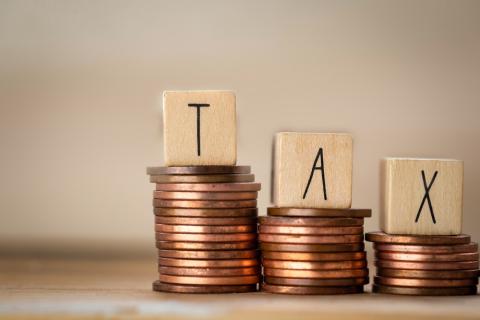
The EESC calls for simpler and fair taxation in the EU and beyond

The European Economic and Social Committee  broadly supports the Commission's legislative proposals on more efficient and fair taxation and praises their coordination at global level.

In its opinion adopted by the plenary assembly on 24 February, the EESC gives full support to the European Commission's package for fair and simple taxation.

Read more in all languages

The European Economic and Social Committee broadly supports the Commission's legislative proposals on more efficient and fair taxation and praises their coordination at global level.

In its opinion adopted by the plenary assembly on 24 February, the EESC gives full support to the European Commission's package for fair and simple taxation. The rapporteur of the opinion, Krister Andersson, says that these proposals should be coordinated with the global discussions carried out at the OECD within the Inclusive Framework on Base Erosion and Profit Shifting. "This is key in order to achieve a global consensus, avoiding unilateral measures," he explained.

The EESC shares the view that achieving fair and efficient taxation is even more important in the aftermath of the COVID-19 crisis. In its opinion, the consultative body delivers its vision on key topics such as good tax governance in the EU, combatting tax fraud and evasion, tax reporting requirements, VAT treatment of financial services, and tax and employment rules for digital platforms. Among other proposals, the EESC puts forward the idea of a European pact to effectively combat tax fraud, evasion and avoidance and money laundering.  (na)

EU economic strategy for 2021 should pay more attention to social issues

The European Economic and Social Committee has adopted its position on the EU's economic priorities for 2021.

It welcomes the steps taken in the strategy to address the challenges of the COVID-19 pandemic in the context of the European Green Deal, but is disappointed that the strategy proposed by the European Commission devotes too little attention to social issues. It also warns against phasing out support measures too early and advocates establishing new fiscal rules that will reflect social and economic realities after the pandemic.

Read more in all languages

The European Economic and Social Committee has adopted its position on the EU's economic priorities for 2021.

It welcomes the steps taken in the strategy to address the challenges of the COVID-19 pandemic in the context of the European Green Deal, but is disappointed that the strategy proposed by the European Commission devotes too little attention to social issues. It also warns against phasing out support measures too early and advocates establishing new fiscal rules that will reflect social and economic realities after the pandemic.

The EESC is disappointed that the economic strategy proposed by the Commission, this year also complemented with guidance on the implementation of the Recovery and Resilience Facility, pays little attention to social issues. On the one hand, this approach will not lead to the consistent and long-awaited implementation of the European Pillar of Social Rights. On the other, it will endanger the just transition towards a green and digital economy. The transition, notes the EESC, must not result in a further increase in poverty and in greater social exclusion.

This concern is reflected in one of the conclusions adopted by the EESC on 24 February in its opinion on The Annual Sustainable Growth Strategy 2021.

Krzysztof Balon, rapporteur for the opinion, said: "It will be crucial to ensure balanced distribution of the benefits of economic recovery, which will contribute not only to improving social justice, but also to stabilising demand as a precondition for economic recovery". (na)


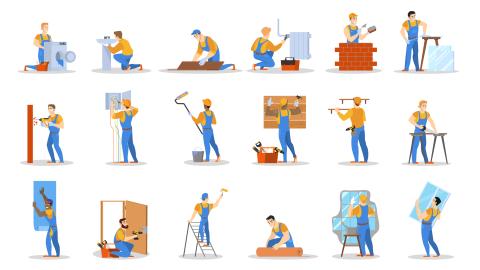
The renovation wave strategy is a win-win-win for the European Union

The European strategy on A Renovation Wave for Europe is an absolute necessity, and is indispensable for the European Union and its citizens. In an opinion drafted by Pierre Jean Coulon and Laurențiu Plosceanu and adopted at the February plenary session, the EESC backs the proposal on building renovation put forward by the European Commission as a way of "greening our buildings, creating jobs, and improving lives".

Read more in all languages

The European strategy on A Renovation Wave for Europe is an absolute necessity, and is indispensable for the European Union and its citizens. In an opinion drafted by Pierre Jean Coulon and Laurențiu Plosceanu and adopted at the February plenary session, the EESC backs the proposal on building renovation put forward by the European Commission as a way of "greening our buildings, creating jobs, and improving lives".

Accounting for 40% of total energy consumption, homes and other buildings across the EU need to undergo renovation. This strategy is part of a holistic approach to long-term public investment, sustainable development, health protection (including the handling of asbestos in renovation work), the green transition and the effective implementation of the European Pillar of Social Rights with regard to sustainable and affordable housing.

Commenting during the debate, Mr Coulon said: "The renovation wave strategy is a "win-win-win" for the European Union – a threefold victory for the climate, for economic recovery through the local jobs created, and finally for the fight against the pandemic and energy poverty, promoting sustainable housing for all, including vulnerable people."

Echoing his words, Mr Plosceanu concluded by saying that "this strategy needs to bring the European Union closer to its citizens and the places where they live, and the Committee will support it and actively feed into it with its reflections and proposals. This begins with an appropriate communication campaign on the renovation schemes in force and how to access them." (mp)


EESC pledges to deliver a substantial contribution on the Commission's new initiatives

Statement on the European Pillar of Social Rights Action Plan, pay transparency and the Strategy for the Rights of Persons with Disabilities 2021-2030
 

We are looking forward to working on the European Commission's three major initiatives: a Communication on the European Pillar of Social Rights Action Plan, a proposal for a Directive to strengthen the application of the principle of equal pay for equal work or work of equal value between men and women through pay transparency and enforcement mechanisms and the Strategy for the Rights of Persons with Disabilities 2021-2030.

Read more in all languages

Statement on the European Pillar of Social Rights Action Plan, pay transparency and the Strategy for the Rights of Persons with Disabilities 2021-2030
 

We are looking forward to working on the European Commission's three major initiatives: a Communication on the European Pillar of Social Rights Action Plan, a proposal for a Directive to strengthen the application of the principle of equal pay for equal work or work of equal value between men and women through pay transparency and enforcement mechanisms, and the Strategy for the Rights of Persons with Disabilities 2021-2030.

Europe stands for the most equal societies in the world, the highest standards in working conditions and broad social protection. A strong Social Europe is the foundation of our citizens' prosperity and wellbeing as well as of a competitive, resilient, green and digital economy based on a skilled innovative workforce.

The European Economic and Social Committee is fully committed to supporting the EU institutions and Member States at a time when everybody – decision-makers and all relevant stakeholders – needs to unite their efforts so that Europe can recover from the pandemic and become stronger and more resilient in the future, while making the most of the green and digital transitions and leaving no one behind.  

The European Economic and Social Committee will work to deliver a substantial contribution on the new Commission initiatives, reflecting the common position of its members, who come from employers', workers' and other civil society organisations in all the 27 EU Member States. The EESC will prepare a resolution, to be adopted at its April plenary session, contributing to the Porto Social Summit that will take place in May 2021.  The Committee will also draft opinions on the proposal for a Directive on Pay Transparency and on the Strategy for the Rights of Persons with Disabilities.

Christa Schweng, president of the European Economic and Social Committee and  
Laurenţiu Plosceanu, president of the Section for Employment, Social Affairs and Citizenship (SOC)

News from the Groups

Europe is well equipped to fulfil its industrial ambitions

 By the EESC Employers' Group
 

The COVID-19 pandemic has highlighted that genuine resilience is dependent on securing a fully functioning Single Market.

This was the main message of EU Commissioner for the Internal Market, Thierry Breton, who joined the extraordinary meeting Employers' Group on 1 March to discuss a wide range of topics from the vaccine roll-out to the revised EU Industrial Strategy and Europe's sustainable recovery.

Read more in all languages

By the EESC Employers' Group
 

The COVID-19 pandemic has highlighted that genuine resilience is dependent on securing a fully functioning Single Market.

This was the main message of EU Commissioner for the Internal Market, Thierry Breton, who joined the extraordinary meeting of the Employers' Group on 1 March to discuss a wide range of topics from the vaccine roll-out to the revised EU Industrial Strategy and Europe's sustainable recovery.

Mr Breton said that COVID-19 has highlighted a number of needs facing our economy, for example that Europe has to strengthen its industrial autonomy. Europe has to form strategic synergies that will enable us to be more industrially sustainable. The revised Industrial Strategy also needs to help businesses to make progress, even in these difficult times.

Furthermore, NextGenerationEU has unprecedented amounts of funding that can be deployed to build the industrial Europe of tomorrow. The twin transitions, resilience and a sound value chain are among the most important areas for reconstruction.

In conclusion, the EESC Employers' Group and Mr Breton were in broad agreement on the topics discussed and the same business-oriented language was spoken regarding the need to constructively forge the right legislative environment, allowing companies to operate with certainty, flexibility and security. The EESC Employers' Group believes that business and enterprises are the vital partner in the process of adapting our societies to the future and should be given the opportunity to play a constructive role.

Read the full article here: https://europa.eu/!PX67QK (kr)


International Women’s Day: Why it is still necessary

By Maria Nikolopoulou, member of the EESC Workers' Group
 

Does it make sense nowadays to celebrate International Women's Day?

It's been over 110 years since Clara Zetkin proposed the establishment of Working Women's Day, and more than 40 years since the United Nations declared the International Day for Women's Rights and International Peace. Societies have evolved in the past century.

Read more in all languages

By Maria Nikolopoulou, member of the EESC Workers' Group
 

Does it make sense nowadays to celebrate International Women's Day?

It's been over 110 years since Clara Zetkin proposed the establishment of Working Women's Day, and more than 40 years since the United Nations declared 8 March International Day for Women's Rights and International Peace. Societies have evolved in the past century.

Women can vote, have their own passports, study, become prime ministers, go to the moon, decide if and when to get married and/or have kids; women and men are equal before the law. So, what's the point? The point is that, even though on the surface everything looks right, we still have underlying social, cultural and legal barriers that prevent women from thriving.

It is a pity that some people cannot see women's potential and block their access to certain jobs or high-level positions. This is why we want to work together on the UN's Sustainable Development Goal 5 on Gender Equality.

It is frustrating that women still carry most of the burden of caring for the family and of domestic tasks even though they work as much as their partners do. This is why we fought for a Work-Life Balance Directive.

It is absurd that women earn less than men for the same work. This is why we welcome the idea of an EU Pay Transparency Directive.

It is unethical that, despite the fact that we acknowledged during the COVID-19 pandemic that some of the most essential tasks, like cleaning and caring for the elderly, were carried out by women, many of them undocumented migrants, they are still getting paid miserably low wages and sometimes work under inhumane conditions.  This is why we need an EU Adequate Minimum Wage Directive and countries must ratify ILO convention C189 on domestic workers.

It is unacceptable that some women are asked to "pay" an intimate price in order to get a promotion at work, or get bullied just because some people need to let off steam. This is why it is more urgent than ever for countries to ratify ILO convention C190 on violence and harassment at work.

It is outrageous that women are being killed and raped every day and that there are people who justify it saying "she asked for it" or "imagine what she did to provoke him".  This is why we must fight for a robust education for the youngest boys and girls on equality and respect, agile judicial systems and social schemes to support women who are victims of domestic violence.

It is still very important for feminist women and men to take a stand, advocate and push for policy and cultural changes so as to achieve effective equal opportunities for everyone. Until we are in a position to celebrate "International Gender Equality Day", let us keep commemorating International Women's day.

EESC study on civil society response to COVID-19

By the EESC Diversity Europe Group
 

On 12 March, at its high-level conference on "Civil Society Organisations during and after COVID-19: what challenges and what future?", the Diversity Europe Group launched a new study entitled "The response of civil society organisations to face the COVID-19 pandemic and the consequent restrictive measures adopted in Europe"

Read more in all languages

By the EESC Diversity Europe Group
 

On 12 March, at its high-level conference on "Civil Society Organisations during and after COVID-19: what challenges and what future?", the Diversity Europe Group launched a new study entitled "The response of civil society organisations to face the COVID-19 pandemic and the consequent restrictive measures adopted in Europe"

The EESC commissioned this study at the request of the Diversity Europe Group. Its contributions are twofold: firstly, the study sheds light on the impact of the pandemic on a variety of civil society organisations (CSOs) and their activities across Europe.

Secondly, it analyses and showcases the numerous initiatives taken by CSOs to assist local communities and vulnerable groups in dealing with the pandemic. To collect this data, the authors applied a mixed method combining desk-based research and an in-depth online survey.

The study shows that CSOs have been and continue to be at the forefront of the response to the COVID-19 pandemic, providing essential services and defending the rights of the most vulnerable sections of society. At the same time, it highlights that CSOs have themselves faced profound challenges that may harm their ability to continue playing their role.

On this basis, the authors highlight key topics for the future of CSOs, such as the lack of sustainable funding, legal frameworks and adequate resources and skillsets. These issues will require future reflection and bold political decisions to ensure that CSOs' capacities are maintained and strengthened in the post-COVID-19 recovery phase.

The full study and executive summary are available online. The publication also comes with a "catalogue of good practices", a collection of the manifold successful initiatives implemented by CSOs in response to the pandemic. A press release on the related Diversity Europe Group conference is available on the EESC website. (jk)

Soon in the EESC/Cultural events

8 March: International Women's Day

To mark International Women's Day, the European Economic and Social Committee is staging a 100% virtual exhibition entitled Artivism for Gender Equality.

The exhibition features a series of 25 posters that highlight struggles for gender equality and women's rights and reflect the 2030 Agenda and the UN Sustainable Development Goals, especially SDG 5 on gender equality.

The exhibition is being organised jointly with Women Engage for a Common Future, a non-profit network dedicated to a gender-just and healthy planet for all.

Don't miss the chance to discover it here along with the video from its live launch! (ck)

Read more in all languages

To mark International Women's Day, the European Economic and Social Committee is staging a 100% virtual exhibition entitled Artivism for Gender Equality.

The exhibition features a series of 25 posters that highlight struggles for gender equality and women's rights and reflect the 2030 Agenda and the UN Sustainable Development Goals, especially SDG 5 on gender equality.

The exhibition is being organised jointly with Women Engage for a Common Future, a non-profit network dedicated to a gender-just and healthy planet for all.

Don't miss the chance to discover it here along with the video from its live launch! (ck)

Joint Africa-EU photo exhibition linked to the EU Portuguese presidency

The Portuguese artist Ana Carvalho presents the Africa in Lisbon exhibition, depicting the presence and impact of African culture in Lisbon, while African artist José Pereira, based in Cape Verde, presents the Ubuntu exhibition, promoting a way of peaceful co-existence, acceptance of differences and solidarity.

On 2 March, the EESC launched the joint Africa–EU photography exhibition at a virtual event which included Cillian Lohan, Vice-President for Communication, Carlos Trindade, Chair of the ACP-EU Follow-up Committee, and the two photographers. The launch took place during the meeting of the ACP-EU Follow-up Committee, a permanent body which is part of the EESC External Relations section.

Read more in all languages

The Portuguese artist Ana Carvalho presents the Africa in Lisbon exhibition, depicting the presence and impact of African culture in Lisbon, while African artist José Pereira, based in Cape Verde, presents the Ubuntu exhibition, promoting a way of peaceful co-existence, acceptance of differences and solidarity.

On 2 March, the EESC launched the joint Africa–EU photography exhibition at a virtual event which included Cillian Lohan, Vice-President for Communication, Carlos Trindade, Chair of the ACP-EU Follow-up Committee, and the two photographers.

As Mr Trindade said, "Because culture expresses the shared values and affections of a community with common interests, the purpose of this cultural activity is to highlight the importance attached by the EESC to the upcoming EU-Africa Summit while bringing into the spotlight the deeply-rooted connection between the two continents.''

The joint photography exhibition will be completely virtual and will be accessible online from 1 to 31 March 2021.

The exhibition can be seen here and on the EESC's social media channels. Don't miss it! (ck)

EESC Online Talks – Discover us online!

Did you know that the European Economic and Social Committee ensures that ordinary people across the continent have a say in Europe’s development?

Book your visit online, and find out why consultation, dialogue and consensus are at the heart of our work, representing organised civil society (including employers, trade unions and groups such as professional and community associations, farmers' organisations, youth associations, women's groups, consumers, environmental campaigners and many more..) (cl)

Read more in all languages

Did you know that the European Economic and Social Committee ensures that ordinary people across the continent have a say in Europe’s development?

Book your visit online, and find out why consultation, dialogue and consensus are at the heart of our work, representing organised civil society (including employers, trade unions and groups such as professional and community associations, farmers' organisations, youth associations, women's groups, consumers, environmental campaigners and many more..) (cl)

Editors

Ewa Haczyk-Plumley (editor-in-chief)
Daniela Marangoni (dm)
 

Contributors to this issue

Chloé Lahousse (cl)
Chrysanthi Kokkini (ck)
Daniela Marangoni (dm)
Ewa Haczyk-Plumley (ehp)
Jasmin Kloetzing  (jk)
Katerina Serifi (ks)
Katharina Radler (kr)
Laura Lui (ll)
Marco Pezzani (mp)
Margarita Gavanas (mg)
Nicola Accardo (na)
Pablo Ribera Paya (prp)
 

Coordination

Agata Berdys (ab)
Katerina Serifi (ks)

Technical support
Bernhard Knoblach (bk)
 

Address

European Economic and Social Committee
Jacques Delors Building,
99 Rue Belliard,
B-1040 Brussels, Belgium
Tel. (+32 2) 546.94.76
Email: eescinfo@eesc.europa.eu

EESC info is published nine times a year during EESC plenary sessions. EESC info is available in 23 languages
EESC info is not an official record of the EESC’s proceedings; for this, please refer to the Official Journal of the European Union or to the Committee’s other publications.
Reproduction permitted if EESC info is mentioned as the source and a link  is sent to the editor.
 

March 2021
04/2021

Follow us

  • Facebook
  • Twitter
  • LinkedIn
  • Instagram