An opinion adopted during the October plenary session pointed out that local communities, particularly those close to nuclear installations, and national civil society organisations should have their say, and be given the support needed to do so. The burden of processing nuclear waste should not be left to future generations and recycling techniques should be used wherever possible.
The European Economic and Social Committee (EESC)is urging the European Union to boost its investment in secure connectivity, resilient infrastructure, and supply chains to ensure it stays competitive in the rapidly evolving field of general-purpose AI (GPAI). These measures are seen as essential in maximising the benefits of generative AI in line with European values, needs, and fundamental rights.
Geothermie ist eine bislang nur unzureichend ausgeschöpfte, aber wichtige Energiequelle. Auch wenn noch nicht alle mit der Geothermie verbundenen Vorteile ausgelotet worden sind, steht bereits fest, dass sie eine zuverlässige Energiequelle ist, die zur strategischen Unabhängigkeit und Energieversorgungssicherheit Europas beitragen kann.
In a recent set of recommendations adopted in October, the European Economic and Social Committee (EESC) called for immediate measures to combat climate change, while highlighting the economic opportunities it also presents. By investing in sustainable practices and promoting a collaborative global approach, the EU can mitigate the risks associated with climate change.
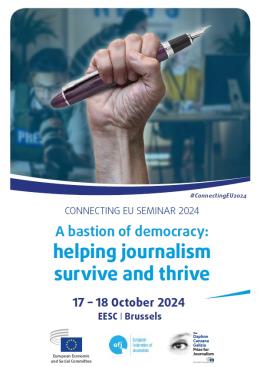
The European Economic and Social Committee will host the 2024 Connecting EU seminaron 17-18 October 2024 , which will this year address the urgent need to preserve independent and impartial journalism in the context of mounting political pressures and the rapid rise of generative AI.
From October 1-2, 2024, the President of the European Economic and Social Committee (EESC), Oliver Röpke, participated in the highly anticipated Athens Democracy Forum (ADF) 2024, an event hosted by the Democracy and Culture Foundation in association with The New York Times. This year’s theme, "A Moment of Truth," addressed pressing global challenges to democracy as more than 50 nations worldwide faced national elections.
Der Europäische Wirtschafts- und Sozialausschuss (EWSA) weist darauf hin, dass grüner Wasserstoff ein wichtiger Baustein beim Übergang zu erneuerbaren Energiequellen ist und dessen Infrastruktur, Finanzierung und Einsatzbereich sorgfältig geplant werden müssen.
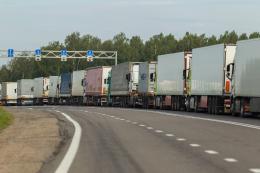
For Bulgaria and Romania, the costs of not being full members of the Schengen area are counted in billions of euros. The transport and tourism sectors of both countries are most affected and checks at land borders create huge barriers for Romanian and Bulgarian companies, restricting their competitiveness and preventing them from fully reaping the benefits of the single market
In a new set of recommendations adopted in September, the European Economic and Social Committee (EESC) called for pressing action to address the critical funding shortfall threatening the EU’s climate and digital transformation goals. By establishing an EU investment fund with a focus on strategic, future-oriented investments, Europe can secure its competitiveness, reduce external dependencies, and create a more resilient single market.