Interactio and Room VMA3, VMA building, Rue Van Maerlant 1, 1040
Brussels
Belgium
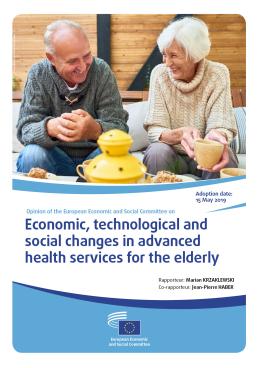
In order to prepare its own-initiative opinion, the EESC is organising a remote public hearing on "Towards a new care model for the elderly: learning from the Covid-19 pandemic" on 27 October 2021.
The aim of the event is to gather input from other EU Institutions and civil society organisations.
We will debate around the following questions:
Which are the structural causes that have led to the elderly care systems to become some of the most contagious and lethal factors of this pandemic?
What are the strengths and weaknesses of the various care models in the EU?
Which are the civil society perspective and proposals for a new care model for the elderly?
This study examines how social partners and civil society organisations in six Member States — Italy, Austria, Hungary, Poland, Portugal and Sweden — view the effectiveness of current policies in raising employment levels and increasing adult participation in training. It also puts forward recommendations for improving policy outcomes.
This study extensively explores what determinants of unique circumstances of vulnerability most affect access to skills, identifying characteristics that can lead to skills poverty
This brochure provides a review of the socio-economic realities of ageing in Europe and the challenges and opportunities that this new "silver economy" entails.