Newsletter Info

EESC info

European Economic and Social Committee A bridge between Europe and organised civil society

JUNE 2022 | GA

GENERATE NEWSLETTER PDF

Available Languages:

  • BG
  • CS
  • DA
  • DE
  • EL
  • EN
  • ES
  • ET
  • FI
  • FR
  • GA
  • HR
  • HU
  • IT
  • LT
  • LV
  • MT
  • NL
  • PL
  • PT
  • RO
  • SK
  • SL
  • SV
Editorial

Editorial

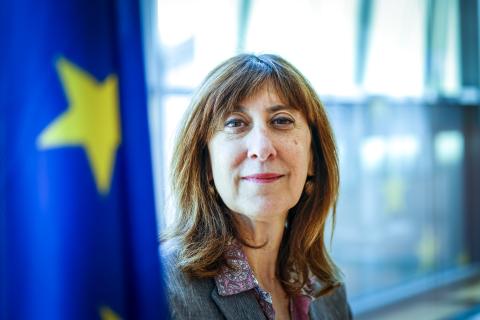
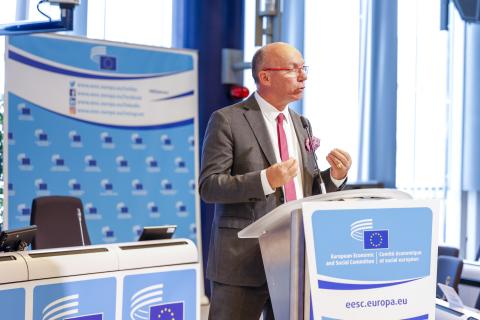
Budgets are not neutral. They can be indicators of the commitment to meeting women's needs, for example, and to achieving gender equality. Therefore, the EESC’s Commission for Financial and Budgetary Affairs, which I preside over, has decided to make an in-depth analysis of Gender Budgeting and look into how it could potentially be applied to the EESC budget in future.

Read more in all languages

Budgets are not neutral. They can be indicators of the commitment to meeting women's needs, for example, and to achieving gender equality. Therefore, the EESC’s Commission for Financial and Budgetary Affairs, which I preside over, has decided to make an in-depth analysis of Gender Budgeting and look into how it could potentially be applied to the EESC budget in future.

But what is this all about? It's about incorporating a gender equality perspective into the drafting and implementation of the budget. This means promoting accountability and transparency regarding the potential gender equality impacts of spending decisions, specifying target groups of beneficiaries, to avoid discrimination or inequalities in the implementation of different policies and actions. This methodology gives a better understanding of how revenues and spending in the policies of different bodies, institutions and governments can have different impacts on women and men. This can also contribute to using public resources in a way that can make budgets and policies more efficient and effective.

Gender budgeting is based on the EU’s commitment to gender mainstreaming, and the European Parliament and the Council have repeatedly called on the Member States to introduce and implement this approach. The European Commission is also highly committed to a methodology that would make it possible to assess the gender impact of expenditure across the whole EU budget.

A study requested by the European Parliament’s BUDG Committee recommended that the EP, the European Commission and the Council take action to incorporate the principle of gender equality into the drafting of the EU budget. A European Parliament Resolution demonstrated its commitment to gender budgeting, also with the aim of influencing other EU institutions in the future.

I believe that the European Economic and Social Committee is very well placed to follow this recommendation. Of course, the European Parliament could use the budgetary and budgetary discharge debates in the plenary to call for this objective. The inclusion of gender budgeting in the budget, and its implementation by the European institutions, will inevitably require political commitment and legislative action. We will give serious consideration as to whether we, as a consultative institution representing civil society organisations, can be part of this strategic and important process.

Giulia Barbucci, EESC Vice-President for Budget


Diary Dates

20 June 2022, Brussels

"One Health" conference

6 July 2022, Bratislava, Slovakia

The rule of law: why should we care?

13-14 July 2022, Brussels

EESC plenary session

31 July 2022 10 a.m. (Brussels time)

Civil Society Prize: creating a better future for young people and helping Ukrainian war victims - deadline for entries

From Ukraine, on the road to...

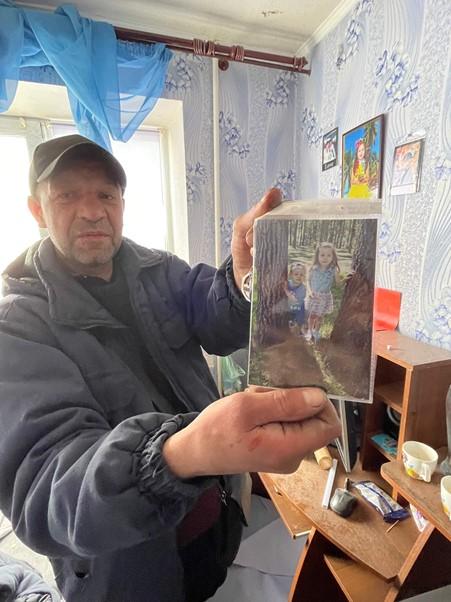
Kolya has been living alone with the family’s cat in his apartment, partly destroyed by Russian Air Strikes right in the centre of Irpin. His family fled to France, but he chose to stay, saying that he had to defend their home and their belongings. He proudly showed us the photographs of his children, their medals in ballet and taekwondo, and told us that he is sure he will reunite with them soon, "once this is all over".

Read more in all languages

Kolya has been living alone with the family’s cat in his apartment, partly destroyed by Russian Air Strikes right in the centre of Irpin. His family fled to France, but he chose to stay, saying that he had to defend their home and their belongings. He proudly showed us the photographs of his children, their medals in ballet and taekwondo, and told us that he is sure he will reunite with them soon, "once this is all over".

Costas Constantinou is editor-in-chief of Politis Newspaper in Cyprus. He travelled to Ukraine in March, and again in April, to cover the war, the refugee crisis and the struggle of ordinary Ukrainians to survive. A big thank you to Mr Constantinou for sharing the moment captured in the frame. (ks)

"To the point"

In our "To the point" column, EESC members share their views on important issues on the European agenda. Alena  Mastantuono is one of the rapporteurs for the opinion on the security of energy supply, REPowerEU: Joint European Action for more affordable, secure and sustainable energy, adopted by the EESC at its May plenary session.

Read more in all languages

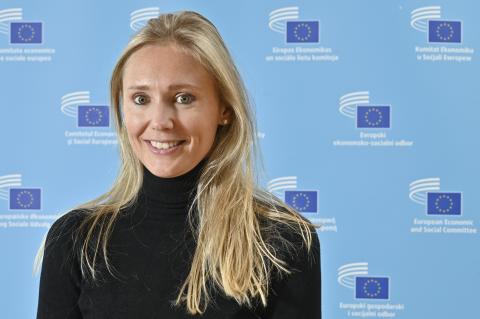
In our "To the point" column, EESC members share their views on important issues on the European agenda. Alena  Mastantuono is one of the rapporteurs for the opinion on the security of energy supply, REPowerEU: Joint European Action for more affordable, secure and sustainable energy, adopted by the EESC at its May plenary session. Today, especially for our readers, Ms Mastanuono talks about the new REPowerEU Plan package, presented by the European Commission on 18 May 2022. (ehp)

Europe on Russian roulette

The Kremlin's threat to cut off Russian gas bypasses Europe. As well as Poland and Bulgaria, Finland, Denmark and the Netherlands have joined the list of countries who have fallen foul of the Russian government and seen their gas supplies cut off.

Read more in all languages

The Kremlin's threat to cut off Russian gas bypasses Europe. As well as Poland and Bulgaria, Finland, Denmark and the Netherlands have joined the list of countries who have fallen foul of the Russian government and seen their gas supplies cut off.

On May 18, the European Commission unveiled its €300 billion REPowerEU plan to eliminate Russian energy imports by 2027. EU governments are looking for solutions as to how to replace Russian energy supplies quickly. They are speeding up the rollout of renewables and digging deep into their coffers to build the infrastructure needed to import liquefied natural gas and fill up gas storage. They are also looking for areas where energy can be saved and gas can be replaced. Meanwhile, the clock is ticking and nobody knows who will be the next target in the game of Russian roulette. There is no doubt - the situation is extremely serious and calls for unprecedented action.

Extra investments in infrastructure and rollout of renewables seem difficult, especially in times when economies are recovering from COVID-19. Each euro spent has to be generated in an economy that is currently facing high inflation, and when borrowed it has its price and contributes to the risk of indebtedness. At the same time, market rules mean that, while there is a higher demand, prices are also increasing. Moreover, additional safety and security costs caused by the war threaten to drive energy prices up even higher. Another challenge we face is the disruption in supply chains that is hampering the rollout of renewables.

To accelerate deployment of clean technologies, the REPowerEU Plan rightly focuses on speeding up permit procedures, with new wind and solar projects being declared a matter of "overriding public interest". It also calls, in line with the EESC opinion on REPowerEU Communication, for "go-to" areas to be introduced at national level in low environmental risk zones. At the same time, it suggests increasing the EU's renewable energy target to 45% by 2030, up from the 40% target tabled last year, and increasing the energy efficiency target from the 9% goal put forward in July 2021 to 13%. It also proposes making solar panels mandatory for public and new residential buildings by 2025 and 2029 respectively. Given the current market situation, it is clear that it is simply not technically possible to achieve these goals. It is good to be ambitious, but we have to think how realistic and trustworthy our aims are.

The Commission also points out in the plan that weaning countries off Russian energy will lead to higher and more volatile energy prices in Europe. The situation requires targeted temporary measures in Member States which will distort the EU market as little as possible, or measures at EU level that will not endanger decarbonisation efforts or energy supply. All in all, market interventions risk working against longer-term objectives as they will cause investment uncertainties and discourage decarbonisation in the energy industry.

The European electricity market has proved that it can operate well in terms of avoiding electricity curtailment or even blackouts in certain areas. Solidarity among Member States on the EU electricity market will be crucial, not only ahead of the next winter but also ahead of the next spin of the wheel in the game of "Russian" roulette.

Alena Mastantuono, EESC member


One question to…

In this section we invite EESC members to answer a question on a subject they consider to be high on the European agenda.

Read more in all languages

In this section we invite EESC members to answer a question on a subject they consider to be high on the European agenda.

At its May plenary session, the Committee adopted the resolution Involvement of Organised Civil Society in the National Recovery and Resilience Plans – How can we improve it? Luca Jahier is one of the three rapporteurs for this resolution, along with Gonçalo Lobo Xavier and Javier Doz Orrit.

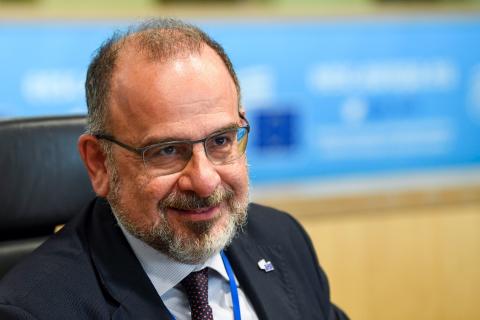
We invited Mr Jahier, former president of the European Economic and Social Committee (2018-2020) and current vice-president of the European Semester Group, to answer one question related to this topic. (ehp)


Luca Jahier: The National Recovery and Resilience Plans are making good progress

EESC info: What is the state of play of the implementation of the National Recovery and Resilience Plans in the Member States?

Luca Jahier: One year ago, we were at the very beginning of the process of implementing the Recovery and Resilience Facility, with only very few countries having made progress in the preparation of their national plans. 

Read more in all languages

EESC info: What is the state of play of the implementation of the National Recovery and Resilience Plans in the Member States?

Luca Jahier: One year ago, we were at the very beginning of the process of implementing the Recovery and Resilience Facility, with only very few countries having made progress in the preparation of their national plans.  

It was first and foremost essential to test and stress the importance of implementing Article 18 of the EU Regulation, concerning the obligation for Members States to involve civil society organisations as well as the social partners, local authorities, universities and other stakeholders, in preparing, implementing and monitoring the plans.

This year, 26 countries have finalised their plans (the Netherlands is in the final stages of doing so) and, with the exception of just two countries, on account of "rule of law" conditionality, all the others have already been approved and many are already in the implementation phase. Some plans have already been fully concluded, have received a positive EU assessment for the first six months' implementation and are fast advancing in the second six-month period. As such, there are many more elements on the practical application of Article 18 of the Recovery and Resilience Facility Regulation and the final content of National Recovery and Resilience Plan has now generally been assessed favourably by organised civil society.

Although there are many qualitative differences in civil society organisation involvement in the Member States, with some having had minimal involvement, some very good best practices have also been identified. For example, in Austria, France, Luxembourg, Spain and Sweden, there is close and constructive cooperation with governments, strengthened by transparency and ongoing dialogue. Moreover, in Czechia, Estonia, Finland, Italy and Spain, a Recovery and Resilience Facility campaign website or government portal has been implemented with transparent information that is accessible to the public. In Italy, a Permanent Round Table Partnership was established in November 2021 at government level, coordinated by the president of the National Economic and Social Committee. In Croatia, organised civil society is involved in preparing tenders for the implementation of the National Recovery and Resilience Plan. Finally, in Portugal, a National Monitoring Committee has been set up and includes, among others, representatives of the social partners, universities and the social sector.

And so, we can conclude that, firstly there is a need to further stress this point, inviting the Member States to adopt positive lessons and follow these best practices. Secondly, we can confirm that high-quality, effective and stable civil society organisation participation in economic governance in the Member States should be based on legal rules as well as on public and transparent procedures, guaranteed through an EU directive or regulation.



New publications

The surprise guest

Each month in this column, we introduce a public figure whose work and commitment are a source of inspiration. Their courage, strength of character and determination to take action set a shining example and their bravery deserves respect. Our guest this month is Kostas Onisenko.

Read more in all languages

Each month in this column, we introduce a public figure whose work and commitment are a source of inspiration. Their courage, strength of character and determination to take action set a shining example and their bravery deserves respect. Our guest this month is Kostas Onisenko.

Kostas Onisenko is a Greek journalist of Ukrainian origin, who has been working for Greek media, newspapers and television for the last 20 years. Since 2014, he has been covering the Russia-Ukraine war while, for the last five years, he has been living in Kyiv, from where he has been sending reports to various Greek media outlets. At the same time, Onisenko regularly informs the Greek public about developments in Ukraine through his pages on social networks.

Objectivity or morality? The media's dilemma in reporting the war in Ukraine

Since the Vietnam war, the international journalistic community has gravitated towards objective war reporting, in other words not showing support for either side. This new practice was considered a sign of massive progress in the direction of objectivity, in contrast to the previous practice of embedded journalism where reporters were attached to a country's military. Naturally, this was made possible thanks to the economic growth of the media, but also due to the fact that most conflicts were being fought "away" from the headquarters of the big media companies. These were "foreign" wars so it was relatively easy for journalists to distance themselves emotionally. The war in Ukraine dented this theory and is likely, in the near future, to bring about significant changes to the overall functioning of the media and to their relationship with society and the state.

Read more in all languages

Since the Vietnam war, the international journalistic community has gravitated towards objective war reporting, in other words not showing support for either side. This new practice was considered a sign of massive progress in the direction of objectivity, in contrast to the previous practice of embedded journalism where reporters were attached to a country's military. Naturally, this was made possible thanks to the economic growth of the media but also due to the fact that most conflicts were being fought "away" from the headquarters of the big media companies. These were "foreign" wars so it was relatively easy for journalists to distance themselves emotionally. The war in Ukraine dented this theory and is likely, in the near future, to bring about significant changes to the overall functioning of the media and to their relationship with society and the state.

From a communication perspective, the war in Ukraine, which began with Russia's invasion of Crimea in 2014, was riddled with lies right from the start. International media outlets, both big and small, reported on "neo-Nazis who are oppressing Russian-speaking people" in Western Ukraine, giving the Kremlin an excuse to continue its atrocities. The publication of these reports was not so much a display of incompetence on the part of western media, but rather a sign that the "west's" media system was not ready to deal with such a wave of disinformation, organised and financed by Moscow. It was a sign that Moscow used the freedoms of the western world in order to target those very freedoms.

When this became apparent, particularly over the last three months, a large proportion of foreign journalists openly took Ukraine's side. This was not only because the country is enduring an unprovoked attack, but because these journalists understood that an attack is also being carried out on all the principles and values upon which the freedom of expression and functioning of the media – amongst other things – are based.

At first glance, this choice could be seen as an "obligation" on the part of the journalistic community to remain objective; however "objective" and "impartial" a portrayal of a rapist and their victim could be. This war showed more clearly than on other occasions that keeping an "objective distance" between victim and offender always works in favour of the latter.

The dilemma was also about having to choose between objectivity and morality. It may sound strange but many of the big media outlets face this dilemma. It was also about whether "Europe", as Ukrainians perceive it at least, is prepared to defend its freedoms, even if this requires tighter checks on potential violations of these freedoms.

For the past eight years, Ukrainian society and especially journalists in Ukraine have been aware of the fact that the Russian Federation – and from now on any power that conspires against European principles and values – believes our own freedom of expression and the media as an institution can be used as an instrument of war. Waged against us.

Despite the military invasion against Ukraine, for the past eight years Ukrainians have also been portrayed as responsible or jointly responsible for this situation. They were portrayed as offenders when in fact they were victims. One of the consequences of this was seen on the battlefield, with fewer sanctions against Russia, delays in the supply of weapons to Ukraine, etc. This situation seems to be changing now thanks not only to journalistic work that is helping to uncover Russia's colossal lies, but also to the fact that many journalists are re-discovering their role in society. Not the role of a spineless messenger, but that of society's central nervous system that is helping, amongst other things, to answer one simple question: Where is good and where is evil?

Kostas Onishenko


EESC News

Charles Michel speaking at the EESC calls for a European Geopolitical Community including Ukraine

Opening the May plenary session, the EESC president Christa Schweng stressed: "United we must face the consequences of the war in Ukraine and the geopolitical challenges ahead. Europe must evolve from a champion in crisis management to a world champion in shaping the future".


Read more in all languages

Opening the May plenary session, the EESC president Christa Schweng stressed: "United we must face the consequences of the war in Ukraine and the geopolitical challenges ahead. Europe must evolve from a champion in crisis management to a world champion in shaping the future".

"The Kremlin has been wrong: about its own military capabilities, about the strength of Ukrainian resistance, about European determination and unity" said the president of the European Council, Charles Michel, who proposed a new approach to enlargement negotiations.

Given the slow progress of the negotiations with the Western Balkan countries, and fresh membership applications from Ukraine, Georgia and Moldova, the EU should envisage a "proportionate and managed integration" approach.

According to Michel, "a solution would lie on a gradual and progressive integration during the accession process". The European Council president talked about the creation of a European geopolitical community, as the EU assumes greater political leadership. Foreign policy would be a major area of cooperation within this Community. "The aim is to forge convergence and deepen operational cooperation to address common challenges, peace, stability and security on our continent", said the president.

However, he clarified: "this initiative is in no way intended to replace enlargement or to find a new excuse to procrastinate. Nor is it a guarantee for those who participate that they will one day be a member of the EU". (at)


A holistic and cohesive migration system can arm Europe against dictators' threats and refugee crises

Responding to the state-sponsored instrumentalisation of migrants at the EU's external borders, the EESC held a conference on this topic, highlighting the momentum behind the Europeanisation of migration policy. So far, authoritarian leaders have instrumentalised humanitarian suffering to blackmail Europe, as they are aware of the gap on migration policy on the continent.

Read more in all languages

Responding to the state-sponsored instrumentalisation of migrants at the EU's external borders, the EESC held a conference on this topic, highlighting the momentum behind the Europeanisation of migration policy. So far, authoritarian leaders have instrumentalised humanitarian suffering to blackmail Europe, as they are aware of the gap on migration policy on the continent.

The conference entitled Towards a Europeanisation of migration policy? Lessons to be drawn from the instrumentalisation of migrants and the war in Ukraine was held in conjunction with the External Relations (REX) section meeting.

It should be noted that the instrumentalisation of migrants by the Belarusian regime was not the first case of its kind, as similar abuses had also been carried out by Turkey, Libya and Morocco.

Regarding the instrumentalisation of migrants as a weapon in the hands of authoritarian leaders, the Vice-President for Promoting our European Way of Life, Margaritis Schinas, said: "The main lesson drawn from our policies is that, as long as we are not able to produce a common and agreed migration system, we will be targeted."

EESC president Christa Schweng stressed: "This refugee crisis has made it clear that migration impacts all Member States. The EU must use this momentum to move forward with the New Pact on Migration and Asylum in order to bring about the systemic change necessary to develop a rational and rights-based EU asylum and migration policy".

"Now it is the moment of geopolitics. Exactly as we came together with the pandemic, this war is producing the same effect in European public opinion and this is very important", emphasised the Vice-President for Promoting our European Way of Life, Margaritis Schinas. (at)


There can be no place for the repression of civil society dialogue in the EU

The European Economic and Social Committee has urged the EU institutions to adopt zero tolerance towards Member State attitudes and practices that hamper the work of civil society and shrink its space in Europe.

Read more in all languages

The European Economic and Social Committee has urged the EU institutions to adopt zero tolerance towards Member State attitudes and practices that hamper the work of civil society and shrink its space in Europe.

To counter such developments, the EESC is asking the EU to take a number of measures, such as withholding EU funds from countries that do not observe EU values, in order to ensure the full participation of civil society in all stages of policy making and to safeguard participatory democracy in Europe.

In the opinion The role of civil society organisations as guardians of the common good in the post-pandemic recovery, the EESC stated that Europe's civil society is still facing many major barriers, with its space drastically reduced in some parts of the EU. This is despite the fact that civil society played a key role in cushioning the effects of the pandemic and that its help for Ukrainian refugees was exemplary from the very first day of the Russian aggression.

"Civil society has been a driving force in helping our society to get through the COVID-19 pandemic. And now, the Ukraine crisis has clearly shown the value and significance of civil society for our democracies", says rapporteur for the opinion, Ioannis Vardakastanis.

Now that civil society is about to play a key role in building back from the devastating effects of the COVID-19 crisis, which will require the participation of all parts of society, the EU must ensure there is dialogue between civil society and policy makers, as the lack of such dialogue is one of the main barriers faced by Europe's civil society at all levels.

Another barrier is the absence of meaningful involvement of civil society in decision-making processes relating to important policies and legislation.

In the EESC's view, the EU institutions must adopt "zero tolerance" to these attitudes and must react "strongly and uncompromisingly", as the inclusion of civil society in the policy-making process is inseparable from the EU's values and the EU Treaties. To eliminate such practices, legal regulations should be put in place at the European and national level.

Civil society organisations should receive financial and technical support from EU, local and national authorities to develop their roles, but without compromising their independence. (ll)


Recovery will only succeed if European civil society is systematically involved

The EESC has adopted a new resolution on the involvement of organised civil society in the implementation and monitoring of the National Recovery and Resilience Plans (NRRPs). A recent consultation shows that, contrary to regulation, organised civil society is not involved enough in these plans.

Read more in all languages

The EESC has adopted a new resolution on the involvement of organised civil society in the implementation and monitoring of the National Recovery and Resilience Plans (NRRPs). A recent consultation shows that, contrary to regulation, organised civil society is not involved enough in these plans.

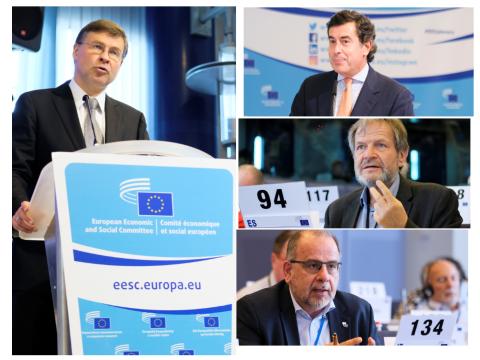
The Committee calls for clear rules to effectively remedy this, and bring the economy back on track. During the adoption debate, EESC President Christa Schweng pointed out that involving organised civil society in the reforms set up in the NRRPs, is a must for improving the quality, transparency and the implementation of new policies. Gonçalo Lobo Xavier, European Semester Group vice-president, shared some of the key findings of the consultation.

"The final content of the NRRPs is generally assessed positively by organised civil society. However, the social dimension is often underdeveloped", he pointed out. ESG president, Javier Doz Orrit, presented the main recommendations. He also called on the Member States "to urgently comply with the rules laid down in the Recovery and Resilience Facility", and the European Commission and Parliament to enforce this. ESG vice-president, Luca Jahier, shared some good practices, and said that "the lack of effective and quality participation of organised civil society in the economic governance of the EU will not be resolved until there is a reform of the European Semester".

Valdis Dombrovskis, Executive Vice President of the European Commission, who also took part in the debate, highlighted the impact of Russia’s invasion of Ukraine on the global economic recovery and the EU, and what is needed to absorb it and move on. (tk)


War in Ukraine poses major challenge to EU cohesion policy

Cohesion policy is key to recovering from the COVID-19 crisis, achieving climate neutrality by 2050 and reducing disparities in Europe. A recent EESC opinion cautions that its most serious challenge for the foreseeable future is the war in Ukraine.

Read more in all languages

Cohesion policy is key to recovering from the COVID-19 crisis, achieving climate neutrality by 2050 and reducing disparities in Europe. A recent EESC opinion cautions that its most serious challenge for the foreseeable future is the war in Ukraine.

Rapid action is needed to help refugees and ensure Ukraine's European integration. In its opinion, the EESC also underscores that it is strongly in favour of Ukraine joining the EU without delay and calls for cohesion policy and the associated financial instruments to be adapted accordingly.

Specifically, the Committee suggests creating a separate EU fund to facilitate post-war reconstruction and development. The opinion, adopted during the May plenary, analyses a European Commission communication about its Cohesion in Europe towards 2050 report.

The report was published two weeks before Russia's invasion of Ukraine – and therefore did not take its ramifications into account. Rapporteur Krzysztof Balon said: "In the short and medium term, the biggest challenge for cohesion policy is Russia's aggression, which is in fact also an act of aggression against the European Union."

Co-rapporteur Gonçalo Lobo Xavier added: "Cohesion policy is still a fundamental instrument for the recovery and resilience of the European economy and particular focus should be placed on SMEs."  (tk)

EESC calls for an open and secure Schengen area

The war in Ukraine, which has caused an unprecedented flow of refugees to seek shelter in the EU, points to an urgent need for effective, humane and humanitarian common European regulations on migration and asylum in an open but equally secure Schengen area, according to an EESC opinion adopted at its plenary session in May.

Read more in all languages

The war in Ukraine, which has caused an unprecedented flow of refugees to seek shelter in the EU, points to an urgent need for effective, humane and humanitarian common European regulations on migration and asylum in an open but equally secure Schengen area, according to an EESC opinion adopted at its plenary session in May.

"The Russian military aggression against Ukraine is a game changer. Historically, it's the greatest threat there has ever been to the functioning of the Schengen area and the security of the EU. The terrible events in Ukraine reaffirm the importance of external border security in the Schengen area and stability as a prerequisite for Europe's internal security," said the rapporteur for the opinion Security Union package/Schengen package, Krzysztof Balon.

He said that the EESC supported the Commission's position that any border closures between Schengen countries should only be temporary.

In the opinion, which evaluated the Commission's recent package updating the rules governing the Schengen area, the EESC stated that Member States' security concerns would be better addressed by increasing and strengthening cooperation and coordination between law enforcement authorities than by reintroducing controls at internal borders.

The opinion puts a strong emphasis on ensuring that the EU and the Member States, when managing borders, migration and asylum, respect the Charter of Fundamental Rights at all times, in particular freedom of movement and residence as well as the right to asylum and the principle of non-return. The same applies to all instances of police and judicial cooperation between Member States.

The EESC called upon the Member States to proactively support the solidarity mechanism and share responsibility for migration management, in line with the provisions of the New Pact for Asylum and Migration.

Solidarity mechanisms could be developed among the Member States on the basis of the Temporary Protection Directive, which has just been activated in the context of the Russian aggression against Ukraine and which the EESC greatly appreciates. The Commission should consider implementing the Temporary Protection Directive for non-EU nationals in future severe and urgent crisis situations.

The EESC also repeated its concern about the continued exclusion of Romania, Bulgaria, Croatia and Cyprus from the Schengen area and sided with the Commission in calling for swift and decisive action from the Council to change that.(ll)


The EESC welcomes the long-awaited Social Economy Action Plan

Stronger measures in four specific areas would make it more effective according to the EESC, which is otherwise happy to see that many of its proposals have been taken on board.

Read more in all languages

Stronger measures in four specific areas would make it more effective according to the EESC, which is otherwise happy to see that many of its proposals have been taken on board.

In an opinion adopted at its May plenary the EESC gave the thumbs up to the European Commission's Social Economy Action Plan, which takes up many of the proposals the EESC has made over more than a decade.

"We are thrilled to see this long-awaited plan adopted, but the work is only just beginning," says opinion rapporteur Giuseppe Guerini. "Now is the time to implement this plan with bold and long-term measures. The EESC has many innovative and concrete proposals to make sure that the social economy's potential is fully exploited in as many EU Member States as possible".

In the plan, the EESC singles out four key areas where it believes stronger measures could be taken:

•    More agile forms of cooperation between public administrations and social economy enterprises working together locally on the provision of services of general interest, with a clear distinction in the public procurement directive between the pursuit of the general interest and competition-driven activities.

•    Regulatory action, possibly in the form of guidelines, to clarify the requirements for access to state aid and the amount of support available to Member States, so that they can use all the flexibility available to help social economy enterprises. It will not be enough to organise workshops and webinars, as the Commission suggests.

•    A system of guaranteed credits and loans, as already in place for SMEs across the EU, established by Member States with EU support. It is all well and good to launch new financial products to mobilise private funding for social economy enterprises, but many of them need support in getting access just to everyday credit.

•    Specific taxation for the social economy is fine, but Member States need to be accompanied on the path towards coordinated fiscal harmonisation, perhaps inspired by good practices in some of them, such as tax exemptions on undistributed profits, lower VAT rates, reductions on or exemptions from social insurance costs. (dm)


Europe must strongly combat the spread of hate speech and hate crime

The EESC supports the European Commission initiative to extend the list of EU crimes to all forms of hate crime and hate speech in an opinion adopted at its May plenary, and encourages the Council to take on this proposal.

Read more in all languages

The EESC supports the European Commission initiative to extend the list of EU crimes to all forms of hate crime and hate speech in an opinion adopted at its May plenary, and encourages the Council to take on this proposal.

Civil society organisations have witnessed the rise of hate speech and hate crime first-hand, both as targets of hatred and when assisting affected communities. As a result, the Committee recognises the need to safeguard human dignity, fundamental rights and equality. "Democracy, and the EU itself, are not possible if people are living in fear and shame," says rapporteur Cristian Pîrvulescu.

Through advances in social media, and thanks to freedom of movement, the EU public sphere has become more integrated. Therefore, a common basis is now indispensable in order to effectively combat hate. Awareness-raising and education are also necessary for identifying the impact of these actions and for preventing them. The Committee recommends giving special consideration to those who play an important role in combating hatred such as teachers, journalists and law enforcement personnel. The Committee also calls on political leaders to act responsibly.

The EESC highlights the critical role that social partners play at grassroots level in preventing and combating hate crimes. "Civil society organisations are our societal watchdogs against hatred" says co-rapporteur Milena Angelova. The EU must promote their codes of conduct and good practices, and provide more financing to make the most of their expertise. (gb)


Decent work: Business should never be done at the expense of people's dignity and freedom

A steep rise in child and forced labour as well as continued exploitation of workers across the globe make EU action on decent work increasingly more urgent.

Read more in all languages

A steep rise in child and forced labour as well as continued exploitation of workers across the globe make EU action on decent work increasingly more urgent.

The hearing on "Decent work worldwide", which took place on 4 May, brought together EESC members, representatives from the European institutions and the International Labour Organisation (ILO), as well as academics and civil society organisations.

The hearing was held to gather input for the EESC's forthcoming opinion on the topic, focusing on the Commission's Communication on Decent Work Worldwide, adopted in February, and its proposal for a Directive on Corporate Sustainability Due Diligence.

With these initiatives, the Commission is striving to position the EU as a champion of decent work, both at home and worldwide, and to enable millions of people to work and live in dignity.

"We have a dream of a future where work is decent. But decent work is not yet a reality for hundreds of millions of people around the world, which makes achieving the Sustainable Development Goals a difficult task", said the rapporteur of the EESC opinion, María del Carmen Barrera Chamorro.

The COVID-19 pandemic has further aggravated the situation in the world of work, with lots of countries reporting a spike in precarious working conditions. It has disproportionately affected women as well as vulnerable groups such as children and workers in the informal economy. The number of children engaged in labour had started to climb even before the pandemic, having increased by more than 8 million in the period between 2016 and 2020, after it had previously fallen.

It now stands at 160 million child workers, or one in ten children worldwide. There are 25 million people in a situation of forced labour. In the absence of sufficient social protection coverage, an additional 46 million children may fall victim to child labour in the near future.

The aim of the EU's endeavour is to encourage sustainable and responsible corporate behaviour in domestic markets, in non-EU countries and throughout global value chains. The key tools will be EU policies for corporate responsibility and transparency. A legal instrument to ban products made by forced labour is also planned. All policies will promote gender equality and non-discrimination.

"We welcome the Commission's initiative, but we need to have a more ambitious agenda and an integrated policy based on universal human rights. Decent work is in the interest of people, but also of companies, consumers and the planet", Ms Barrera Chamorro concluded. (ll)


The EU must break down barriers to employment for young people with disabilities

An EESC hearing held on 8 April, which brought together leading actors in disability policy, including social partners and civil society organisations, points to the need to increase the employment rate of persons with disabilities, especially young people. Despite legal efforts, data shows that many of them are still facing discrimination in the world of work due to stereotypes portraying them as unproductive.

Read more in all languages

An EESC hearing held on 8 April, which brought together leading actors in disability policy, including social partners and civil society organisations, points to the need to increase the employment rate of persons with disabilities, especially young people. Despite legal efforts, data shows that many of them are still facing discrimination in the world of work due to stereotypes portraying them as unproductive.

The main takeaway of the hearing was that the new EU Strategy on the Rights of Persons with Disabilities acknowledged the problems faced by young people with disabilities when it comes to employment and education. However, social partners have yet to see how ambitious these efforts will be.

Young people with disabilities face obstacles when they try to enter the employment market and these obstacles exist both in the private and public sectors. Indeed, the unemployment rate of people with disabilities is disproportionately high compared to the general population, especially for women and young people. According to the most recent data available at EU level, people with disabilities are 24.4% less likely to be hired. The COVID-19 pandemic appears to have increased that inequality.

Daphne Nathalie Ahrendt, Senior Research Manager at Eurofound, presented the results of a Eurofound survey: 27% of respondents with disabilities were unemployed, compared to 12% of respondents without disabilities. 55% of them are considered financially fragile, compared to 38% of their peers without disabilities. A high majority of respondents with disabilities are more likely to face depression and loneliness.

According to Francesca Sbianchi from the European Disability Forum's Youth Committee, "many of us face a higher cost of living and therefore depend on support services and disability allowances to live with dignity". One of the main prerequisites for putting an end to some of this inequality is to allow people with disabilities to be able to keep their disability allowance when they start working, in order to give them time to become financially independent.

Stefan Tromel from the International Labour Organization pointed out that although the new forms of employment represent opportunities for including more people with disabilities, OECD data shows that there is also a digital skills gap between persons with and without disabilities, and remote working needs to remain a choice. In order to fill this gap and improve workplace accessibility, trade unions need to work together with social partners: the economic and social councils of every country could be a good platform to provide that space.

People with disabilities face greater discrimination if they are young. With 2022 being the European Year of Youth, it is essential to gain a better understanding of the reality faced by this particular group. (rl)


New funding sources for EU budget must be stable, fair and business-friendly

The Committee is calling on the European Commission to carry out more targeted impact assessments of its proposals for new EU budget funding sources to repay NextGenerationEU debt.

Read more in all languages

The Committee is calling on the European Commission to carry out more targeted impact assessments of its proposals for new EU budget funding sources to repay NextGenerationEU debt.

The EESC generally agrees with the proposed EU "own resources" revenues for the budget. However, they need to be stable and fair and should not burden households or businesses.

In an opinion adopted at its May plenary session, the EESC also calls on the Commission to ensure its proposals can weather economic shocks and cautions that these proposals could be derailed by the consequences of higher energy costs due to the war in Ukraine.

"The design of the new own resources should not jeopardise the budgets of other EU programmes and instruments, and avoid increasing the GNI-based resource contributions," said opinion rapporteur Philip von Brockdorff.

Co-rapporteur Antonio García del Riego added: "The EESC applauds the OECD's efforts to ensure that global corporates are taxed where economic activity and value creation occur but warns that EU businesses should not be placed at a competitive disadvantage by implementing the new rules before major trading partners". (tk)

Competition policy should match the EU's new ambitions

Merger, antitrust and State aid control rules should be overhauled to serve the Union's climate and digital ambitions and help achieve strategic autonomy, all of which will require massive investment. Two new EESC opinions explain how this overhaul should be done.

Read more in all languages

Merger, antitrust and State aid control rules should be overhauled to serve the Union's climate and digital ambitions and help achieve strategic autonomy, all of which will require massive investment. Two new EESC opinions explain how this overhaul should be done.

A debate held on 19 May at the EESC's plenary focused on two new reports addressing EU competition policy and State aid to health and social services in a changed global context.
In the report on "A competition policy fit for new challenges", the EESC urged the European Commission to go further than ever before in the revamp of EU competition policy currently underway. 

The measures taken to address COVID-19 and later the Russian aggression in Ukraine have hugely helped businesses, but the latter need to be improved. There is also a need to ensure that eligibility criteria allow all sectors to benefit and do not close the doors to the hardest hit businesses. 

As for the general framework of competition law, while it has adjusted to a number of challenges, it has not gone far enough in taking up the EU's strategic aims – i.e. the green and digital transitions but also resilience. These ambitions require huge public and private investment and should be given maximum support, stresses the EESC.

Measures to control concentrations and mergers sometimes seem to stand in the way of remaining competitive in relation to the US and China. Provisions on abuse of dominant position are not necessarily tailored to the new green and digital challenges. 

"We suggest some technical adjustments to ease access to support, but also better ways of taking into account innovation and digital developments. We've also made suggestions to allow all sectors to benefit, not just industry. I'm thinking in particular of the trade sector and SMEs," says opinion rapporteur Emilie Prouzet.

In a second opinion the EESC addressed State aid for health and social services. 

"The COVID-19 pandemic has shown that health and social protection systems need to be able to adjust swiftly to any changes," says rapporteur Giuseppe Guerini, "and the measures we propose would help simplify and speed up the provision of State aid."

The EESC points out that this sector does not really have much of an impact on cross-border competition. Health and social services are mostly organised locally within countries and are essentially availed of where they are provided. State aid to this sector should not be considered distortive of competition.

Another important proposal concerns the maximum amount of State aid allowed. The EESC says the ceiling for notifying aid to the Commission (currently at EUR 500 000 over three fiscal years), which triggers a lengthy and complex process, should be higher for these services than for other services of general interest (SGEI). This would be justified by their public interest role, their limited impact on cross-border trade and the return of inflation. (dm)

A sustainable packaging industry would be a pivot point in protecting the planet

In an opinion, adopted at May's plenary session, the EESC recommends that the European Commission and national governments, in consultation with all stakeholders inside the packaging industry, take the necessary steps throughout each product's life cycle to increase the industry's sustainability.


Read more in all languages

In an opinion, adopted at May's plenary session, the EESC recommends that the European Commission and national governments, in consultation with all stakeholders inside the packaging industry, take the necessary steps throughout each product's life cycle to increase the industry's sustainability.

Most of the enormous amounts of packaging materials currently used for the safety, hygiene, transportation, conservation, presentation, and application of all kinds of goods – whether it is for industrial purposes, construction work, communication systems, or individual consumption – are made of carbonic or metallic fibres, which are limited resources.

''Future EU legislation should focus on the entire life cycle of products to promote the circular economy. Production, consumption and waste-treatment in the packaging industry are key in advancing towards a sustainable future'', said opinion rapporteur, Matteo Carlo Borsani.

The opinion includes a list of preferred raw materials: packaging made of natural fibres and other natural materials can effectively decouple growth from resource usage. Renewable materials are long-lasting, appealing, recyclable, and biodegradable.

Consumer perceptions and interactions with packaging are also evolving. It is critical that industry and consumers change their habits when it comes to packaging.

The EESC also calls for the implementation of a European social dialogue in the packaging industry, involving trade union federations and employers' federations. Considering the importance of packaging across all areas of the economy, the opinion also underlines the need for the European Commission to establish an annual forum on packaging and packaging waste. The forum would bring together stakeholders and representatives from European institutions to monitor the Directive's implementation and identify best practices in relation to sustainable packaging regulations. (ks/rl)


Restoring sustainable carbon cycles: EESC supports European Commission's view

In an opinion adopted in its May plenary, the EESC supports the European Commission's communication on sustainable carbon cycles and says it believes that the Common Agricultural Policy (CAP) must provide the strategic framework paving the way for a low-carbon transition in agriculture.

Read more in all languages

In an opinion adopted in its May plenary, the EESC supports the European Commission's communication on sustainable carbon cycles and says it believes that the Common Agricultural Policy (CAP) must provide the strategic framework paving the way for a low-carbon transition in agriculture.

Responding to the urgency for climate action, the European Union has set into law its objective of economy-wide Climate Neutrality by 2050. To achieve this ambitious objective, sustainable and climate-resilient carbon cycles must be established through key actions such as recycling carbon from waste streams, from sustainable sources of biomass or directly from the atmosphere and upscaling carbon removal solutions that capture carbon dioxide (CO2) from the atmosphere and store it long term.

''Finding a solution to carbon neutrality requires a reduction in greenhouse gas emissions, finding green alternatives to fossil carbon and increasing carbon sinks,'' said opinion rapporteur, Arnold Puech d'Alissac. He added that the EESC supports the European Commission's communication on carbon cycles, which proposes two solutions for removing and sequestering carbon: nature-based solutions (known as "carbon sequestration") and industrial technological solutions.

The EESC therefore encourages the European Commission to take a holistic approach to the topic: increasing carbon sinks and replacing fossil carbon as much as possible will require more biomass to be produced, which will affect the land sector. The land sector can be actively involved in combating global warming while contributing to the broader transition towards a sustainable food system.

Carbon sequestration should be seen not only as a commercial opportunity, but also as a key component of European agriculture in the future and as a tool for climate action: carbon credits must remunerate a service rendered, namely that of atmospheric carbon sequestration, but must also support the agricultural sector's carbon transition.

The Committee also highlights the critical role that the CAP must play in providing the policy framework that paves the way for the low-carbon transition in agriculture, whereby the sector will emit less and sequester more. However, it also stresses that carbon storage should not be a condition of the CAP and that a specific market must be created and supported. The EESC considers that the development of carbon sequestration will require a clear legal framework that is shared by the Member States, taking into account the differences in the level of investment and support that the Member States can provide. (ks)


EESC says secure and affordable energy supply is a priority

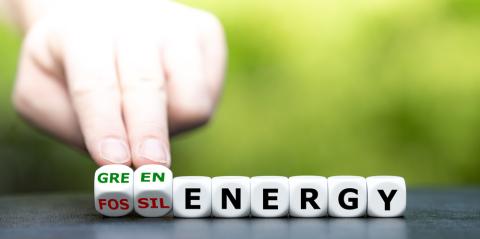
Energy independence is key for Europe's future: the EU needs to secure its energy supplies as soon as possible, breaking free from Russian gas and drastically accelerating the transition to clean energy. This is the main takeaway of the opinion "REPowerEU: Joint European Action for more affordable, secure and sustainable energy", drafted by Thomas Kattnig, Alena Mastantuono and Simo Tiainen, and adopted at the May plenary session.

Read more in all languages

Energy independence is key for Europe's future: the EU needs to secure its energy supplies as soon as possible, breaking free from Russian gas and drastically accelerating the transition to clean energy. This is the main takeaway of the opinion "REPowerEU: Joint European Action for more affordable, secure and sustainable energy", drafted by Thomas Kattnig, Alena Mastantuono and Simo Tiainen, and adopted at the May plenary session.

The EESC backs the European Commission's communication "REPowerEU", approved by the College on the same day as the opinion, saying that it matches the objectives of the Green Deal and the European Energy Union. In addition, the proposal sets out new actions to ramp up the production of green energy, diversify supplies and reduce demand for Russian gas, which has led to significant increases in electricity market prices due to market manipulation.

The Committee also warns that the EU must be particularly cautious when it comes to replacing Russian gas with other resources, taking into account their environmental impact and the prospect of becoming newly dependent on third countries which do not share European values.

The current geopolitical situation caused by the Russian invasion of Ukraine has further worsened the unprecedented surge in energy prices the EU has faced in the past few months. It is therefore extremely important to take immediate steps to mitigate the impact of high prices for European households, farmers, businesses and industry. (mp)


The EESC calls for more concrete action to support and protect independent Belarusian journalists

Since August 2020, the authoritarian regime of Aleksandr Lukashenko has carried out a mass attack on civil society, independent journalists, bloggers and writers in Belarus. The EESC published an information report on the media situation in the country, making recommendations on how to assist Belarusian media companies and journalists who have fled the country and those who are left behind fighting the regime.

Read more in all languages

Since August 2020, the authoritarian regime of Aleksandr Lukashenko has carried out a mass attack on civil society, independent journalists, bloggers and writers in Belarus. The EESC published an information report on the media situation in the country, making recommendations on how to assist Belarusian media companies and journalists who have fled the country and those who are left behind fighting the regime.

EESC member Tatjana Babrauskienė, rapporteur for the report, who presented the information report on Supporting the independent media sector in Belarus at the EESC May plenary session, underlined the significant contribution of the appointed expert, independent Belarusian journalist Hanna Liubakova, to the overall drafting of the report and stressed: "It is important to recognise the incredible work of Belarusian journalists, who have very often put their lives and families at risk just to get us the truth. We have a duty to protect and support them."

As the situation of the media in Belarus is a European issue, the EESC proposes that the Member States not only establish cooperation with independent news agencies in Belarus but also help to disseminate and report news from the country.

The information report brings to the table specific recommendations and sets a global example of support for media freedom in crisis:
•    visa waivers for Belarusian journalists seeking refuge from repression;
•    establishment of EU and national funds in Member States to support Belarusian free media and journalists;
•    legal, financial and psychological support for journalists suffering repression;
•    integration of Belarusian independent journalists in EU Member States through employment or scholarships;
•    elimination of bureaucracy in obtaining EU financial aid;
•    IT facilities to allow internet access and digital tools to circumvent censorship. (at)


Western Balkans Youth need tanglible policies for their future

Participants in the hearing "Youth Policy in the Western Balkans (WBs), as part of the Innovation Agenda for the WBs", held by the EESC, reaffirmed the importance of young people for the future of the region. They also pointed to the "brain drain" problem and how transforming this into "brain circulation" could stimulate economic growth and development in the Western Balkans.

Read more in all languages

Participants in the hearing "Youth Policy in the Western Balkans (WBs), as part of the Innovation Agenda for the WBs", held by the EESC, reaffirmed the importance of young people for the future of the region. They also pointed to the "brain drain" problem and how transforming this into "brain circulation" could stimulate economic growth and development in the Western Balkans.

EESC member Dragica Martinović Džamonja stated: "Young people are a vital resource for development and an essential factor for peace and stability."

In the same vein, Andrej Zorko, also an EESC member, said: "Young people should not be the subject of a project, but really need to be an active component in policy-making."

Dafina Peci, Director of Tirana European Youth Capital 2022, highlighted the importance of youth and civil society organisations, showcasing the work of the Western Balkan Youth Platform, which has been active for years in the six countries of the Western Balkans.

Inadequate education, lack of skills, poor employment conditions and limited opportunities cannot guarantee a prosperous future for young people.

Albert Hani, Secretary-General of the Regional Youth Cooperation Office (RYCO), stated that an average 52% of young people would like to live outside of the region. "If governments are to persuade young people to stay at home, they need to show their commitment to young people's needs and priorities," he said.

Milica Škiljević, project manager at Belgrade Open School, flagged up the lack of information on career and employment prospects. 

Ognjen Marković, Team Leader of the Western Balkans Youth Lab Project in the Regional Cooperation Council, explained the added value of youth participation as they can offer knowledge and expertise, provided that they are placed on an equal footing with policy-makers.

The Youth Guarantee for the Western Balkan initiative, along with youth networks and national stakeholders, could mark the beginning of a reform process, strengthening employability among the region's younger generation. (at)


Running for Ukraine

On behalf of the EESC, vice-president Giulia Barbucci participated in the 42nd edition of the Brussels 20-km run on 29 May, along with representatives of other EU institutions, including Roberta Metsola, president of the European Parliament.

Read more in all languages

On behalf of the EESC, vice-president Giulia Barbucci participated in the 42nd edition of the Brussels 20-km run on 29 May, along with representatives of other EU institutions, including Roberta Metsola, president of the European Parliament.

In Ms Barbucci's opinion, this event is of great importance, especially now. "The successful 20 km of Brussels race sent a strong message for peace, standing united with Ukraine".

More than 33 000 people with 137 different nationalities took part in the run this year, as well as 800 staff members from the "Running for Europe" team. As in 2021, the race was won by Belgium's Amaury Paquet, who covered the 20-km distance in 1:00:01.

This year's event was dedicated to showing that the European Union stands united with Ukraine. The funds raised for this event will be donated to the National Organization of the Scouts of Ukraine to provide food, medicine, sleeping bags and other necessary supplies, along with coordinating psychological support for people and communities impacted by the conflict. (ehp)


News from the Groups

The European Chips Act – an important initiative with some question marks

By Heiko Willems, EESC Employers' Group

Semiconductors are an essential component of many different economic sectors and areas of life – both for industry and consumers. Moreover, the green and digital transition targets cannot be met without semiconductors. The European Chips Act, presented by the European Commission on 8 February 2022, should guarantee the EU's security of supply, resilience and technological leadership in semiconductor technologies and applications.

Read more in all languages

By Heiko Willems, EESC Employers' Group

Semiconductors are an essential component of many different economic sectors and areas of life – both for industry and consumers. Moreover, the green and digital transition targets cannot be met without semiconductors. The European Chips Act, presented by the European Commission on 8 February 2022, should guarantee the EU's security of supply, resilience and technological leadership in semiconductor technologies and applications.

Strengthening the European semiconductor ecosystem requires private investment and significant support from the public sector. Therefore, the Commission plans to invest EUR 43 billion in the upcoming years. However, a major chunk of the budget will only be reallocated from other programmes and is only about a third of what China aims to mobilise by 2025. At the same time, granting significant State Aid could lead to investments which are not commercially sustainable and could have a negative impact on the market.

The EU must also focus on the needs of European industry. Proficiency in small feature sizes (< 10 nm) is not the sole determining factor in the success of the semiconductor ecosystem. The strengths of Europe's semiconductor industry must also be considered.

The semiconductor value chain is one of the most globalised. Therefore, establishing a closed value chain in every part of the world would not make economic sense. Rather, a detailed analysis of the strengths and weaknesses of the European semiconductor ecosystem should serve as the starting point for a debate on how targeted investments could increase Europe's resilience. In parallel, the EU should strengthen international partnerships.

This situation must also be taken into account when it comes to the envisaged emergency measures, which are extremely far-reaching. Prioritisation of orders for critical sectors, common purchasing schemes and export controls are extensive market interventions that must be reserved for exceptional situations.

In its June Plenary the EESC will discuss the opinion A Chips Act for the EU (INT/984).


Ensuring citizens' demands are followed up on after the Conference on the Future of Europe

By the EESC Workers' Group

After a year of intense work, the Conference on the Future of Europe has finally issued its recommendations, presenting a set of ambitious proposals for a fairer, stronger Europe put forward by citizens from all over Europe, working together with social partners and other actors.


Read more in all languages

By the EESC Workers' Group

After a year of intense work, the Conference on the Future of Europe has finally issued its recommendations, presenting a set of ambitious proposals for a fairer, stronger Europe put forward by citizens from all over Europe, working together with social partners and other actors.

Citizens have made it clear that the European Union must do more in areas that matter to them, in particular in areas such as inequality, poverty, combating climate change and protection of democracy. This can be seen, for instance, in the inclusion of a Social Progress Protocol to ensure that social and labour rights are on an equal footing with the four fundamental freedoms of the single market.

Citizens also demanded a bolder Europe, one that acts in the international arena with a single voice, that is able to react to its environment and that becomes closer to its citizens and more transparent in its workings.

This work, however, must not end in a simple declaration of good intentions, or empty words. Real follow-up is fundamental. This means organising a convention and exploring the possibility of creating permanent structures for citizen participation, something for which the European Economic and Social Committee would be particularly well equipped. The EESC, as the house of organised civil society and deliberative democracy in the EU, must ensure that the ambitious proposals from citizens are turned into actual policies. Citizens were asked and they have responded.

The Workers' Group organised a high-level conference with members of the various components of the Conference to discuss the recommendations and possible follow-up for this very purpose, giving continuity to the process. Now it is the turn of the institutions to take action. (prp)


Civil Society Organisations' Group is the new name of the EESC's Diversity Europe Group

By the EESC Civil Society Organisations' Group

On 18 May 2022, the Diversity Europe Group (Group III) of the European Economic and Social Committee decided unanimously to change its name to "Civil Society Organisations' Group". The change of name enters into force with immediate effect.

Read more in all languages

By the EESC Civil Society Organisations' Group

On 18 May 2022, the Diversity Europe Group (Group III) of the European Economic and Social Committee decided unanimously to change its name to "Civil Society Organisations' Group". The change of name enters into force with immediate effect.

Séamus Boland, president of the Civil Society Organisations' Group, said: "The economic and financial crisis, the COVID-19 pandemic and now the war in Ukraine have demonstrated that civil society organisations actively contribute to the resilience and sustainability of our communities. They bring solutions to challenges, defend our European values and are essential for the implementation of effective policies. Civil society organisations are key players for a sustainable future and must be recognised as such."  

Within this context, the Group has decided to change its name in order to provide stakeholders with more clarity about its composition and mission.

The change of name is especially timely, in the light of the publication of the final report on the outcome of the Conference on the Future of Europe. The report proposes strengthening existing structures to better reflect the needs and expectations of EU citizens in the decision-making process and, in this regard, enhancing the institutional role of the EESC and empowering it as a facilitator and guarantor of participatory democracy activities like structured dialogue with civil society organisations and citizens' panels.

During the 2020-2023 presidency, the Civil Society Organisations' Group is focusing its work on "Poverty and the role of civil society organisations in combatting it".

Find out more about the Group on the EESC website.

Soon in the EESC/Cultural events

Biodiversity: artists take action

A new generation of artists are placing biodiversity and nature at the heart of their creative activity. The online exhibition "Biodiversity: artists take action", highlights the connection between humans and nature in a truly unique way. In conjunction with the French Presidency of the Council of the EU, it will run from 20 May to 20 June 2022.

Read more in all languages

A new generation of artists are placing biodiversity and nature at the heart of their creative activity. The online exhibition "Biodiversity: artists take action", highlights the connection between humans and nature in a truly unique way. In conjunction with the French Presidency of the Council of the EU, it will run from 20 May to 20 June 2022.

In this online art project, five emblematic young artists have been selected by the French delegation to the European Economic and Social Committee in recognition of their work in bringing these topics into the limelight and into public discourse.

The artists were selected from among the 21 laureates of the Planète Art Solidaire prize, awarded in 2021 by the non-profit organisation Art of Change 21. This 100% virtual exhibition features a piece of work by each artist, accompanied by an explanation from the artist, as well as a short video in which each artist talks about their work. (ck)


Editors

Ewa Haczyk-Plumley (editor-in-chief)
Daniela Marangoni (dm)
 

Contributors to this issue

Amalia Tsoumani (at)
Chrysanthi Kokkini (ck)
Daniela Marangoni (dm)
Daniela Vincenti (dv)
Ewa Haczyk-Plumley (ehp)
Jasmin Kloetzing (jk)
Karen Serafini (ks)
Katharina Radler (kr)
Katerina Serifi (ks)
Laura Lui (ll)
Marco Pezzani (mp)
Pablo Ribera Paya (prp)
Thomas Kersten (tk)


Coordination

Agata Berdys (ab)
Katerina Serifi (ks)

Technical support
Bernhard Knoblach (bk)

Address

European Economic and Social Committee
Jacques Delors Building,
99 Rue Belliard,
B-1040 Brussels, Belgium
Tel. (+32 2) 546.94.76
Email: eescinfo@eesc.europa.eu

EESC info is published nine times a year during EESC plenary sessions. EESC info is available in 23 languages
EESC info is not an official record of the EESC’s proceedings; for this, please refer to the Official Journal of the European Union or to the Committee’s other publications.
Reproduction permitted if EESC info is mentioned as the source and a link  is sent to the editor.
 

June 2022
07/2022

Follow us

  • Facebook
  • Twitter
  • LinkedIn
  • Instagram