International Trade

This page is also available in:

International trade is governed by a complex mixture of global rules agreed under World Trade Organization and bilateral and multilateral agreements. The free trade agreements are having a growing impact on citizens' rights. Under the Lisbon Treaty, EU trade policy must be conducted within the framework of the principles and objectives of the Union’s external action, including promotion of the rule of law, human rights and sustainable development.

We believe that this trend should be a guiding principle in EU trade negotiations and in trade relations. The fact that we at the EESC reconcile the positions and views of business, workers, professionals, farmers, consumers and other important stakeholders contributes real added value. We are in a position to efficiently relay the opinions of civil society and interest groups to international policy-makers both during negotiations and in the implementation of trade agreements. We have set up a Follow-up Committee on International trade to ensure that civil society has a say in the shaping of EU trade policy. We are also managing the Domestic Advisory groups set up under the trade and sustainable development chapters of the EU "new generation" trade agreements. These groups, composed of civil society representatives (from inside and outside the EESC) are responsible for identifying trade and sustainable development-related problems in the implementation of a trade agreement.

  • Published in
    12 pages

    Priorités du groupe des employeurs du CESE 

    Ce document présente les cinq priorités du groupe des employeurs du CESE ainsi que les mesures que les décideurs publics sont appelés à prendre pour améliorer l’environnement des entreprises et, ainsi, renforcer la compétitivité de l’UE et les conditions nécessaires à la création de prospérité pour les citoyens.

  • During the 26th meeting, the DAG Members exchanged views with representatives of the EEAS, DG TRADE and DG INTPA on the political, social and economic situation in Colombia, Peru and Ecuador, the implementation of the Trade Agreement and ongoing cooperation initiatives. Discussions also covered labour rights, sustainable development, civil society participation and current Single Entry Point complaints. In its internal session, the DAG discussed preparations for the joint events in Quito, including the regional labour conference, and follow-up to the Joint Declaration approved in Lima in 2025.

  • Au regard de la fragmentation et de la politisation croissantes du commerce mondial, des membres des 15 groupes consultatifs internes de l’UE se sont réunis à Bruxelles pour examiner comment la société civile organisée peut contribuer davantage à la mise en œuvre des accords commerciaux de l’UE et veiller à ce que les engagements en matière de durabilité fassent l’objet d’une surveillance et d’un suivi efficaces.

  • -

    Joint events of the Domestic Advisory Groups of the EU and six Central American countries were hosted by the European Unionin Brussels, on 15-16 June 2026.

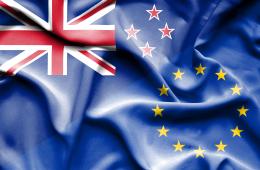
  • Third meeting of the EU - New Zealand DAG

    The EU-New Zealand Domestic Adivsory Group met for the 3rd time on 11 May to discuss priorities for the EU DAG, and future joint meetings. 

  • The 25th meeting of the EU-Colombia/Peru/Ecuador Domestic Advisory Group held on 20 April 2026 focused on the political, social and labour situation in the Andean region alongside the implementation of the EU trade agreement. Participants highlighted a deteriorating context marked by political instability, security concerns and persistent human rights and labour rights violations, as well as broader issues such as environmental degradation and the impact of drug trafficking.

  • -

    Between 26 and 29 March 2026, EESC members joined the EU delegation at the 14th Ministerial Conference of the World Trade Organisation (WTO) in Yaoundé.

    The delegation attended the daily debriefings for civil society hosted by DG Trade, and had informal meetings with the African Union ECOSOCC, the WTO, the French business association AFEP and the International Trade Union Confederation (ITUC). A short impromptu meeting was also organized with MEP Warborn (INTA).

  • -

    Domestic Advisory Groups of the EU and three Andean countries – Colombia, Peru and Ecuador – held their 11th Joint Meeting and Workshop on 2-3 December 2025 in Lima. The discussions focused on future priorities for cooperation, the role of civil society in monitoring and advancing Trade and Sustainable Development commitments, and key thematic areas such as labour rights, environmental challenges, and EU supply-chain sustainability regulations.

  • Published in
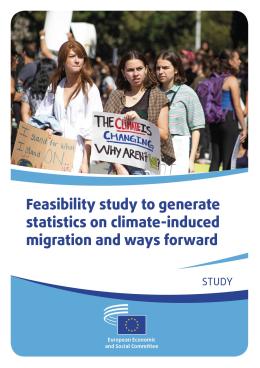
    Study
    72 pages

    Cette "étude de faisabilité visant à générer des statistiques sur la migration induite par le climat et à envisager des pistes d’action"  a pour but de rassembler et examiner les données existantes sur la migration induite par le climat, en se concentrant sur cinq États membres (France, Allemagne, Grèce, Italie et Espagne) et un pays candidat (Turquie), afin d’éclairer une réponse efficace de l’UE. Il n’existe pas de définition universellement acceptée de la migration induite par le climat.

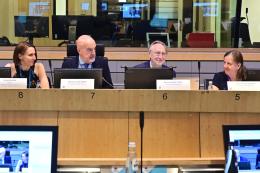
  • Le 25 juin 2025, le Comité économique et social européen (CESE) a organisé une manifestation dans le cadre de la Semaine européenne de la diplomatie publique, lancée pour la première fois par le Service européen pour l’action extérieure (SEAE). Les participants ont mis en évidence une dimension fondamentale de l’action européenne: la contribution de la société civile à la diplomatie publique dans des domaines allant du commerce international à l’eau, en passant par l’élargissement. La société civile est en effet susceptible d’apporter une valeur ajoutée lorsque des questions politiques ou d’autres problèmes restreignent la portée de la diplomatie officielle.