At its June plenary session, the European Economic and Social Committee (EESC) became the first EU body to formally endorse the Declaration of principles for a gender-equal society, backing the European Commission’s Roadmap for Women’s Rights. This move sends a clear signal that urgent, concrete action is needed to close persistent gender gaps.
reaffirms its unwavering commitment to gender equality and women’s rights as fundamental pillars of democracy, social justice and inclusive growth and stands firmly alongside all the players striving to advance equality for all women and girls, in all their diversity;
endorses the Declaration of principles for a gender-equal society, which aligns closely with the values and priorities repeatedly expressed in EESC opinions;
recognises that the implementation of these principles requires coordinated and sustained action to which it is committed;
stands ready to contribute actively to the realisation of this roadmap and to work with the European institutions and Member States, to transform these principles into practice.
Despite progress in gender equality, millions of women across Europe still face violence, discrimination and barriers to equal opportunities. From under-representation in leadership to the alarming rise in gender-based violence, urgent action is needed. The European Economic and Social Committee (EESC) High-Level Forum on Women’s Rights brought together leading voices to address these pressing issues and outline key priorities ahead of the upcoming UN Commission on the Status of Women session.
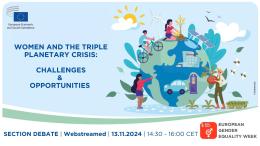
In the context of the European Gender Equality Week, the European Economic and Social Committee is organising a thematic debate during the meeting of its Section for Agriculture, Rural Development and the Environment (NAT) on 13 November 2024 (14:30 - 16:00 CET), focusing on the disproportionate impact of climate change, pollution, and biodiversity loss on women and girls, and the critical role they play in advocating for solutions.
The opinion expresses the views of the EU organized civil society on the priorities to the sixty-ninth session of the Commission on the Status of Women (UNCSW69). It calls for an increased pace of progress on gender equality, be more vocal about the shrinking space for civil society and block any backlash against women’s rights. Some challenges to be addressed include attracting more women to politics, addressing violence against women, ensuring a gender-equal just transition, closing the gender digital gap and the unpaid care responsibilities and ensuring women stay in the labour market.
This resolution presents recommendations of the European Economic and Social Committee to the legislature 2024-2029. They are based on discussions with social partners and civil society organizations from all walks of life, including young people during the first EESC Civil Society Week, and contain a comprehensive set of actionable steps to strengthen and safeguard democratic principles.
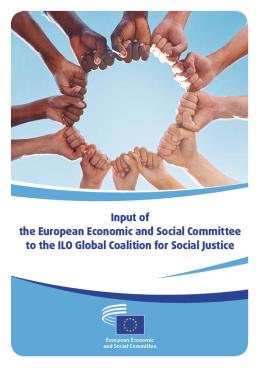
This document seeks to provide input to the Global Coalition for Social Justice. It highlights key messages from EESC opinions on the six priority areas identified by the International Labour Organization (ILO) for immediate action.
Room VMA 22 EESC building & Interactio, Rue Van Maerlant 2, 1040
Brussels
Belgium
The EESC's Permanent Group on disability Rights is organising a hybrid public hearing on " Ensuring sexual and reproductive health rights for women with disabilities " on 8 July 2024 from 9:30 am to 1 pm.
During the event, we will discuss with relevant stakeholders existing good practices as well as problems encountered by women with disabilities both in the EU and on a global level.