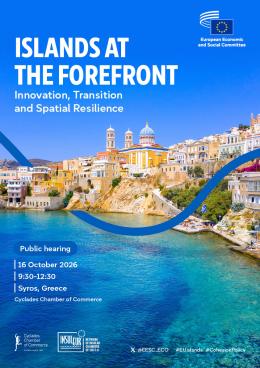
As part of the preparation of the EESC opinion on an EU Strategy for Islands, the European Economic and Social Committee, in cooperation with INSULEUR, will hold a public hearing in Syros, at the heart of the Cyclades. The hearing aims to bring together local and regional authorities, organised civil society, businesses, academia and citizens to exchange views on both the challenges and the untapped opportunities facing Europe's islands.
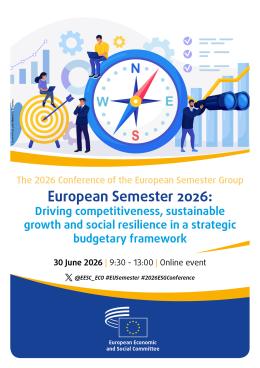
As Europe seeks to strengthen its competitiveness in an increasingly fragmented global economy, the challenge is not only to boost productivity and innovation, but also to preserve the foundations of its social market economy. This high-level conference will examine how the EU can mobilise savings and investment, maintain sustainable public finances, and deepen Economic and Monetary Union to support long-term growth, resilience and convergence.
The European Commission presented a new Communication on islands on 10th of June as a result of the public consultation in which the EESC has contributed with the exploratory opinion requested by the Cypriot Presidency of the Council of the EU.
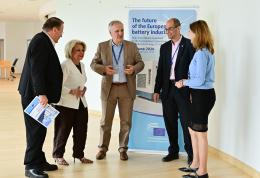
The European Economic and Social Committee (EESC) held a high-level experts’ debate on the European battery industry which called for urgent and coordinated action to strengthen Europe's battery ecosystem and secure its industrial future. By combining strategic investment, innovation, industrial capacity and social responsibility, the battery transition can become a genuine European success story.
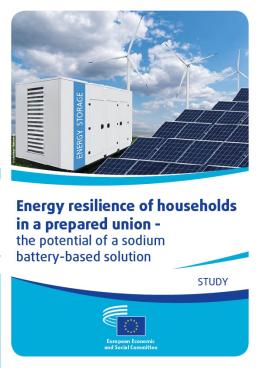
This study examines the potential of sodium ion battery technology to strengthen energy resilience in European households and businesses, particularly in meeting a 72 hour electricity self sufficiency objective under the EU’s preparedness strategy.
Public debate in the ECO Section on the The Multiannual Financial Framework after 2027 - Assessing progress and outstanding challenges. The event will take stock of developments in the negotiations since the Commission presented their proposals for the next Multiannual Financial Framework and discuss outstanding challenges.
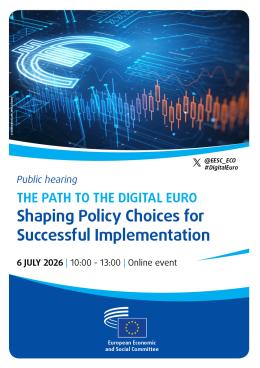
In the context of the work on the own-initiative opinion on the introduction of the digital euro, the ECO section decided to organise a public hearing bringing together experts from European and international institutions and various organised civil society.
In this opinion, the EESC argues that equality and competitiveness go hand in hand. The Committee calls for a competitiveness agenda that fully mobilises Europe's talent by removing barriers to participation in work and society, promoting quality jobs, investing in skills and human capital, and ensuring that the green and digital transitions are inclusive. It stresses that strengthening equality is not only a social imperative but also a key driver of Europe's long-term productivity, innovation and resilience.
Download format:
Download — EESC opinion: Equality and the Competitiveness Agenda
European Semester 2026: Driving competitiveness, sustainable growth and social resilience in a strategic budgetary framework
Location
online event
Belgium
The EESC’s European Semester Group is bringing together speakers from the EU institutions, organised civil society, the Member States and research institutes for its annual conferenceto be held on Tuesday 30 June 2026.