Africa, Caribbean, Pacific (ACP)

This page is also available in:

From the first Lomé Convention (1975) to the Cotonou agreement (2000-2021), EU-ACP Parterships have governed the relations between the EU and 79 countries of the African, Caribbean and Pacific Group of States (ACP), which recently became the Organisation of the African, Caribbean and Pacific States (OACPS).

Throughout this period the EESC, together with ACP civil society, fought for recognition of the essential role played by non-state operators in the development process until this was achieved in the Cotonou Agreement, which mandated the EESC to organise activities and consultations with "ACP-EU economic and social interest groups" in order to gather the views of, and give voice to the organised civil society. The aim has been to foster exchanges and provide recommendations on issues and policies relevant to ACP-EU relations, later officially addressed to the EU and ACP leaders.

In practical terms, the EESC's activities concerning EU-OACPS relations are mainly carried out under the guidance of an inclusive ACP-EU Follow-up Committee made of EESC members and delegates representing ACP economic and social interest groups.

The ACP-EU Follow-up Committee maintains regular contacts with the representatives of civil society in the ACP countries at different levels, through:

  • Regular meetings of the ACP-EU Follow-Up Committee,
  • Regional Seminars in ACP countries, providing a forum for discussing topics of common interest with civil society representatives in alternating regions,
  • Triennial General Meetings of ACP-EU economic and social interest groups in Brussels.

The EESC also maintains regular contacts with the African Union's representatives of economic and social interest groups, in the framework of the Joint EU-Africa strategy. In particular, the EESC holds annual meetings with the Africa-EU Economic and Social Stakeholder's network.

The EESC has for many years kept up regular contact with the ACP-EU Joint Parliamentary Assembly, presenting a report on its activities at sessions of the Plenary Assembly.

The EESC is likewise in close contact with international employers', workers', farmers', cooperatives' and consumers' organisations. These organisations nominate the ACP representatives invited to the meetings held by the EESC, including the ACP-EU Follow-up Committee.


  • At its December plenary session, the European Economic and Social Committee (EEESC) hosted a debate on democracy in Africa with representatives from the African Union Economic and Cultural Council (AU ECOSOCC). Both sides agreed that civil society is the driving force for a successful EU-Africa partnership based on equality, fostering civil and social dialogue.

  • Event type
    Meeting

    The second meeting of the EU Domestic Advisory Group (DAG) under the EU–Kenya Economic Partnership Agreement (EPA), held on 13 April 2026 at the European Economic and Social Committee, brought together representatives from EU institutions, civil society, and international organisations to assess progress and discuss key priorities for implementation.

  • The Domestic Advisory Group (DAG) established under the EU–Kenya Economic Partnership Agreement (EPA) held its inaugural meeting on 27 October at the EESC. This is the first time that an EU EPA with an African country has included the creation of a DAG to monitor and advise on the implementation of the agreement. 

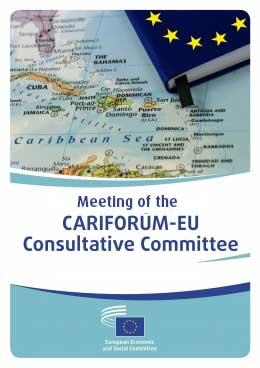
  • The 9th meeting of the CARIFORUM–EU Consultative Committee brought together civil society representatives from the Caribbean and the European Union to discuss key developments in CARIFORUM–EU relations. The agenda included updates on the implementation of the CARIFORUM–EU Economic Partnership Agreement (EPA), the provisional application of the OACPS–EU Samoa Agreement in relation to CARIFORUM, and discussions on the revision of the EPA review process.


  • On 9 November 2023, the ACP-EU Follow-up Committee held a meeting for a timely update on ACP-EU relations and with a view to discuss the participation of civil society in the post-Cotonou Agreement, the so-called Samoa Agreement that has been signed on 15 November.

  • Event type
    Joint meeting

    The CARIFORUM-EU Consultative Committee (CC) was established with the task and responsibility of fostering meaningful dialogue and collaboration among delegates from civil society organizations, including the academic community, and social and economic stakeholders.

  • The AU-EU partnership for a sustainable future
    -
    Event type
    Conference

    The European Economic and Social Committee (EESC) organises regular consultations of the European Union‑Africa Economic and Social Stakeholders' Network, which gathers representatives of organised civil society (employers and chambers of commerce, employees and trade unions, cooperatives, farmers' organisations, consumers' organisations, NGOs, etc.) from both continents.

    The 8th meeting of the EU-Africa Economic and Social Stakeholders' Network will take place in Brussels, Belgium, on 28-29 June 2023, at EESC premises, with the participation of African Union Economic, Social and Cultural Council (AU ECOSOCC).

  • Meeting of the EU-ACP Follow-up Committee - April  2022

  • -
    Event type
    Meeting

    Being the first in-person meeting since the irruption of COVID-19 pandemic, Delegates from Africa, the Caribbean and Pacific and EESC Members are gathering in the context of the pending signature of the Partnership Agreement between the European Union and the Organisation of African, Caribbean and Pacific States (OACPS).

  • ACP
    -

    Under the auspices of the Organisation of African, Caribbean and Pacific States (OACPS)-European Union relations, the European Economic and Social Committee (EESC) organises regular consultation meetings with ACP and EU economic and social stakeholders, including representatives of civil society originating from the 79 ACP countries.