
European Economic
and Social Committee
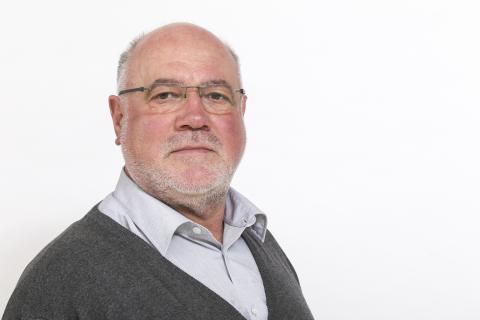
In February 2015, the European Commission published its "Energy Union package", a "framework strategy for a resilient Energy Union with a forward-looking climate policy". Many good proposals were put forward; promises on promises were made, including to drastically reduce import dependency, consistently expand renewable energies, and make Europe the world's number one in renewables. Citizens, it was maintained, should be placed at the heart of the policy…
Had we worked consistently on implementing these proposals, we would not have stumbled so deeply into the crisis we are facing today. And yet, Member States seemed to be satisfied with their old policies: Germany allowed itself to be dazzled by Putin's cheap fossil fuels, even declaring the expansion of renewables to be "too fast". The latter was capped, and the result was a real collapse in the wind industry, with a loss of around 40 000 jobs. Poland is failing to get its act together and move away from coal, and France continues to dream of the alleged benefits of the nuclear industry; the reality, however, looks somewhat gloomier as – enter climate change – more than half of France's reactors had to be taken off the grid owing to technical problems and insufficient cooling water. The EU's dependency on energy imports had never been as high as it was in 2021, and our research and development spending on climate-friendly technologies is at the lower end globally.
There are only two real options when it comes to solving our current energy problem while tackling climate change: much more consistent savings and a truly massive expansion of renewable energies. There is huge potential to do both. On the positive side, our domestic resources of wind and sun provide much cheaper electricity than the (currently) still highly subsidised fossil and nuclear power plants.
It therefore comes down to building many new, decentralised production structures, but also to creating new stakeholders, who should form the backbone of the energy transition. This is because the energy transition requires social acceptance, and this can only be created if we involve people. 90% of green power plants in Germany, for example, belong to private citizens, farmers, cooperatives, SMEs and municipal utilities, and not to large energy utility companies. However, there is little evidence of any strategy to genuinely support civil society engagement in order to increase the potential of producing and using decentralised energy for jobs, and to ensure public ownership of and participation in the energy transition by promoting prosumer and civic energy. We will pay the bitter price of this now and in the months to come. Unfortunately, so too will our climate.
Lutz Ribbe, President of the EESC Sustainable Development Observatory