
European Economic
and Social Committee
EU enlargement must be built into Europe’s climate strategy, EESC says
As the EU prepares for a potentially larger Union, enlargement can no longer be treated separately from Europe’s climate ambitions, the European Economic and Social Committee (EESC) has warned. Candidate countries could bring both new challenges and significant opportunities for Europe’s transition to climate neutrality.
The EESC adopted its opinion Enlargement and EU climate policy – Achieving the EU climate targets in a larger Union at its September plenary session, calling for enlargement to be fully integrated into the EU’s climate, energy and industrial strategy.
With Ukraine, Moldova and the Western Balkans among the countries seeking EU membership, a future Union could have more than 30 Member States. These candidate countries currently account for around 10–15% of current EU greenhouse gas emissions, making their transition increasingly relevant as the EU works towards its 2040 climate target and climate neutrality by 2050.
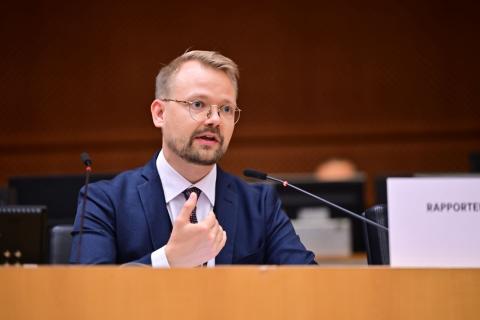
“Enlargement is a geopolitical imperative, but it is also an opportunity to accelerate Europe’s clean energy transition,” said Teppo Säkkinen, rapporteur for the opinion. “If we start aligning candidate countries with EU climate and energy policies now, we can cut emissions, strengthen energy security and create better conditions for investment and competitiveness across Europe.”
The EESC argues that early alignment with EU climate, energy and industrial policies could reduce future compliance costs, give businesses and investors greater certainty and help candidate countries modernise their economies.
It also calls on the European Commission to clarify how EU climate targets and emissions baselines would be calculated in an enlarged Union. Clear rules will be essential for long-term investment decisions and to ensure that climate ambition goes hand in hand with industrial competitiveness.
Ukraine’s reconstruction could accelerate the green transition
Ukraine occupies a particular place in the opinion. The Committee worked with enlargement candidate members from Ukraine to draw in views from Ukrainian employers, trade unions and other civil society organisations. Its post-war reconstruction, EU accession process and need for deep decarbonisation will unfold simultaneously, creating an opportunity to rebuild its energy, industrial and transport infrastructure to modern, low-carbon standards.
Despite Russia’s war of aggression, Ukraine has demonstrated the resilience of its energy system and has at times exported electricity to neighbouring EU countries. Its nuclear capacity and renewable energy potential could make the country an important part of Europe’s future clean-energy system.
“Ukraine’s reconstruction should not simply restore what existed before the war,” said Säkkinen. “It is an opportunity to build a modern, competitive and low-carbon economy that can contribute to Europe’s energy resilience and industrial strength.”
Investing early in candidate countries
The EESC also sees investment and innovation as central to preparing candidate countries for membership. It argues that they should be prioritised in future climate partnerships, including when the EU develops its approach to international carbon credits linked to its 2040 target.
Early investment in decarbonisation could lower the eventual cost of accession, speed up industrial modernisation and help deploy clean technologies where emissions reductions can be achieved cost-effectively.
Closer integration into European energy markets, carbon-pricing mechanisms and stronger emissions monitoring and reporting systems would also help candidate countries prepare for EU membership.
But the transition cannot succeed through investment and regulation alone, the EESC warns. Governments must involve employers, trade unions and civil society at large from the outset, while particular attention should be paid to skills, SMEs, farmers and rural communities.
For the EESC, the message is that enlargement and climate policy should no longer run on parallel tracks. If managed early and strategically, bringing new countries into the EU could become part of the solution to Europe’s climate, energy-security and competitiveness challenges. (ks)
Work organisation
Recommended for you
La creazione condivisa di servizi pubblici nel settore sanitario contribuirà a una democrazia più partecipativa nell'UE
News
L'evento organizzato dal Comitato economico e sociale europeo (CESE) in collaborazione con l'Università di Debrecen ha posto in evidenza l'importanza cruciale della creazione condivisa di servizi di…
Per combattere i cambiamenti climatici, l'UE ha bisogno di maggiori investimenti pubblici nelle infrastrutture energetiche
News
In un parere adottato nella sessione plenaria di settembre, il Comitato economico e sociale europeo (CESE) avverte che, per realizzare gli obiettivi climatici e di transizione energetica, sono…
Energia - Il CESE mette in guardia di fronte al rischio di nuove dipendenze
News
Il Comitato economico e sociale europeo (CESE) assume una posizione ferma in materia di energia in un parere adottato nella sessione plenaria di settembre. La proposta della Commissione, infatti, è…
La transizione digitale deve essere equa: i diritti umani e il controllo umano devono rimanere pilastri fondamentali
News
Il Comitato economico e sociale europeo (CESE) sottolinea le opportunità offerte dalla rivoluzione digitale, ma mette anche in guardia dai rischi: se attuate troppo rapidamente, le soluzioni digitali…
L'UE ha bisogno di un piano d'azione per fornire alloggi dignitosi e a prezzi accessibili
News
Il convegno ad alto livello organizzato a Riga dal Comitato economico e sociale europeo (CESE) ha lanciato l'allarme per la crisi degli alloggi a prezzi accessibili, sottolineando che è il momento…