On 13 January the Consultative Commission on Industrial Change (CCMI) of the European Economic and Social committee (EESC) held its inaugural meeting to welcome new members and adopt the 2021work programme.
The CCMI president, Pietro Francesco De Lotto, vice-president Monika Sitarova and the EESC's members and external delegates, whose term of office runs from November 2020 to November 2025, adopted the CCMI's Political Guidelines and Work Programme for 2021 unanimously.
To discuss ways to accelerate action on the UN Sustainable Development Goals (SDGs) for a sustainable recovery, the EESC Section for Agriculture, Rural Development and the Environment held a debate on 15 December in connection with the Europe Sustainable Development Report 2020, published on 8 December. The report is a joint initiative by the Sustainable Development Solutions Network (SDSN) and the Institute for European Environmental Policy (IEEP), in collaboration with the EESC.
Al webinar organizzatodallacommissioneconsultiva per le trasformazioniindustriali (CCMI), membri del CESE, delegatiesterni e partiinteressate del settoreminerariohannovalutatol'impattodellenuovetecnologienellaproduzionesostenibile di materie prime, evidenziandone i benefici, i limiti e i potenzialirischi sul piano
Emergency measures to curb the spread of COVID-19 have taken a heavy toll on Europe’s civil society. Although mostly justifiable and necessary to save lives, these measures should never offer a carte blanche to governments to turn what was initially an urgent response into the permanent demise of the rule of law. So finds a recent EESC hearing.
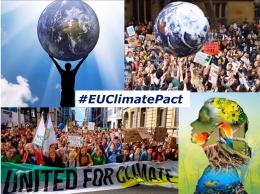
In una delle settimane più importanti per l'azione a favore del clima, dato che non solo ricorre il quinto anniversario dell'accordo di Parigi ed è stata raggiunta un'intesa sul clima in seno al Consiglio europeo, ma il 16 dicembre verrà altresì ufficialmente lanciato il patto europeo per il clima varato dalla Commissione europea, il Comitato economico e sociale europeo (CESE) raccomanda la titolarità e la responsabilizzazione della società civile, quali presupposti indispensabili per la riuscita di questo patto.
Il Comitatoeconomico e socialeeuropeo (CESE) esorta la Commissioneeuropea ad avviare un nuovodibattito per assicurare che la nuovalegislazione si occupianchedegliobiettiviecologici e del miglioramentodelleprestazioni del sistema per la gestione del trafficoaereo.
The European Economic and Social Committee advocates a set of common principles for public services to help ensure full compliance of all Member States with democratic norms and the rule of law.
Durante una conferenza ad alto livelloorganizzata dal Comitatoeconomico e socialeeuropeo, il nuovopattodell'UE sulla migrazione e l'asilo è statooggetto di forticritiche da parte di rappresentantidellasocietàcivile, di gruppi di riflessione e del Parlamentoeuropeo, secondo i quali il testo non introduce i cambiamenti