
European Economic
and Social Committee
Rise in drug trafficking in the EU: the European Economic and Social Committee calls for action
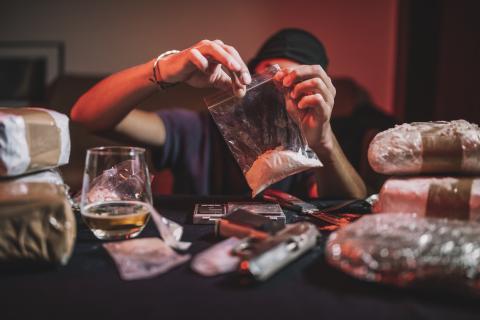
Amid an unprecedented surge in illicit drugs available on European streets, the EESC is asking for strategic action to strengthen Europe’s response to drug trafficking
The European Economic and Social Committee (EESC) has called for customs administrations and police forces in the Member States to be beefed up in order to tackle the surge in drug trafficking and organised crime in the EU.
In the opinion Roadmap on anti-drug trafficking, adopted at its plenary session in April, the EESC recommended that police and customs administrations in EU countries should be provided with adequate human and technical resources, decent pay, fair working conditions and continued training.
In its view, involving trade unions in resource allocation ensures a comprehensive approach to addressing human resources and equipment needs.
The EESC also called for better cross-border law enforcement coordination between police and customs authorities and for drug use to be combated with a more whole-of-society approach.
The drugs trade orchestrated by organised crime is one of the most serious security threats facing Europe today, and the situation is escalating, as clearly demonstrated by the unprecedented increase in illicit drugs available in Europe, in particular cocaine from South America.
From the record-breaking 9.5 tonnes of cocaine intercepted in Spain’s Algeciras port to the violent repercussions reverberating through our communities, the stakes have never been higher. Tragically, the toll of this crisis extends beyond drug seizures, claiming the lives of thousands through drug overdoses. In 2021, 6 200 people died in the EU from a drug overdose.
In the opinion, the EESC argues that combating the abuse of drugs and hard drugs necessitates a more comprehensive societal approach. Its rapporteur Christian Moos emphasised that ‘the consumption of drugs must not be seen as a crime, but as an addiction issue’. The EESC strongly recommends studying the experiences of countries and regions where the use of certain drugs is now tolerated and/or the use of cannabis has been decriminalised. A progressive stance towards tackling substance abuse must be put forward and encouraged.
The Committee also highlighted the importance of international collaboration. Enhanced cross-border coordination between police and customs authorities, coupled with better cooperation between law enforcement and judicial authorities as well as fiscal authorities, constitutes the cornerstone of Europe’s strategy to combat organised crime effectively.
Work organisation
Recommended for you
Tetyana Ogarkova: "The day of victory will come but it will not bring normality back"
Agenda
On 24 February 2022, the lives of millions of Ukrainians were turned upside down. Now, when we say the word "victory", we expect that day to be the way things used to be. A normal day, a day of peace…
Lutte contre la précarité énergétique: garantir un approvisionnement énergétique abordable devrait figurer au premier rang des priorités politiques des pays de l’UE
News
Alors que le nombre de ménages qui sont dans l’incapacité de chauffer leur logement va vraisemblablement augmenter dans l’Union, avec une inflation annuelle de l’énergie qui dépasse 40 %, il y a…
Les zones rurales ont le potentiel pour produire davantage de résultats
News
Si l’attrait de la vie à la campagne s’est accru ces toutes dernières années, de nombreuses zones rurales de l’Union restent confrontées à un certain nombre de problèmes qui dissuadent les personnes…
Pour lutter contre le sans-abrisme, il faut une approche globale et une action collective
News
Le 7 octobre dernier, le Comité économique et social européen (CESE) a tenu une conférence sur le sans-abrisme et les moyens d’éradiquer ce phénomène d’ici à 2030, en appliquant le principe du…
Un rôle actif pour la société civile organisée est essentiel à la résilience de l’Union européenne
News
Le CESE a tenu un débat en session plénière sur l’importance croissante de la société civile organisée et des villes pour mettre l’Europe en capacité de faire face aux chocs asymétriques et aux…