
European Economic
and Social Committee
Rise in drug trafficking in the EU: the European Economic and Social Committee calls for action
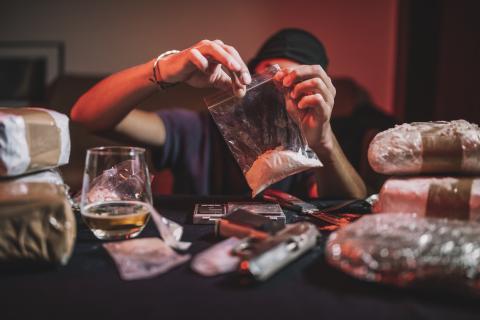
Amid an unprecedented surge in illicit drugs available on European streets, the EESC is asking for strategic action to strengthen Europe’s response to drug trafficking
The European Economic and Social Committee (EESC) has called for customs administrations and police forces in the Member States to be beefed up in order to tackle the surge in drug trafficking and organised crime in the EU.
In the opinion Roadmap on anti-drug trafficking, adopted at its plenary session in April, the EESC recommended that police and customs administrations in EU countries should be provided with adequate human and technical resources, decent pay, fair working conditions and continued training.
In its view, involving trade unions in resource allocation ensures a comprehensive approach to addressing human resources and equipment needs.
The EESC also called for better cross-border law enforcement coordination between police and customs authorities and for drug use to be combated with a more whole-of-society approach.
The drugs trade orchestrated by organised crime is one of the most serious security threats facing Europe today, and the situation is escalating, as clearly demonstrated by the unprecedented increase in illicit drugs available in Europe, in particular cocaine from South America.
From the record-breaking 9.5 tonnes of cocaine intercepted in Spain’s Algeciras port to the violent repercussions reverberating through our communities, the stakes have never been higher. Tragically, the toll of this crisis extends beyond drug seizures, claiming the lives of thousands through drug overdoses. In 2021, 6 200 people died in the EU from a drug overdose.
In the opinion, the EESC argues that combating the abuse of drugs and hard drugs necessitates a more comprehensive societal approach. Its rapporteur Christian Moos emphasised that ‘the consumption of drugs must not be seen as a crime, but as an addiction issue’. The EESC strongly recommends studying the experiences of countries and regions where the use of certain drugs is now tolerated and/or the use of cannabis has been decriminalised. A progressive stance towards tackling substance abuse must be put forward and encouraged.
The Committee also highlighted the importance of international collaboration. Enhanced cross-border coordination between police and customs authorities, coupled with better cooperation between law enforcement and judicial authorities as well as fiscal authorities, constitutes the cornerstone of Europe’s strategy to combat organised crime effectively.
Work organisation
Recommended for you
La UE necesita más inversión pública en infraestructuras energéticas para luchar contra el cambio climático
News
En un Dictamen aprobado en el pleno de septiembre, el Comité Económico y Social Europeo (CESE) afirma que se necesita una inversión pública masiva para lograr la transición energética y cumplir los…
Energía: el CESE advierte contra la creación de nuevas dependencias
News
El Comité Económico y Social Europeo (CESE) se pronuncia con firmeza sobre la energía en un Dictamen aprobado en su pleno de septiembre: la propuesta de la Comisión es un paso en la dirección…
La transición digital debe ser justa: los derechos humanos y el control humano deben seguir teniendo una importancia fundamental
News
El Comité Económico y Social Europeo (CESE) señala las oportunidades que presenta la revolución digital, pero también advierte de sus peligros: si se implantan con demasiada rapidez, las soluciones…
La UE necesita ya un plan de acción para ofrecer una vivienda asequible y digna
News
En la conferencia de alto nivel que el Comité Económico y Social Europeo (CESE) celebró en Riga los participantes dieron la voz de alarma por la crisis de la vivienda asequible y advirtieron que ya…
La Presidencia checa de la UE replanteará, reconstruirá y reactivará Europa
News
En el pleno de julio del Comité Económico y Social Europeo (CESE) se celebró un debate con el ministro checo de Asuntos Exteriores, Jan Lipavský, para debatir las prioridades de la Presidencia checa…