
European Economic
and Social Committee
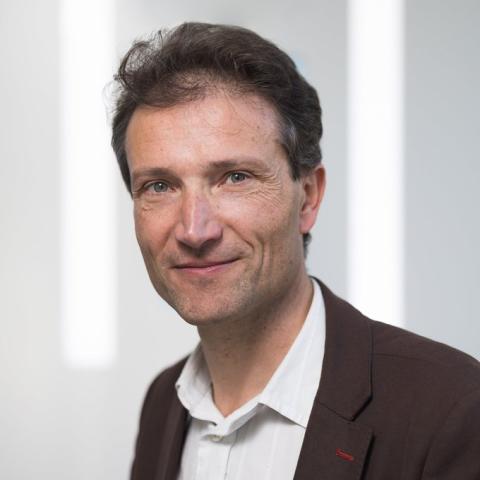
Jacques Delors has passed away after a long life of successful engagement that has had a lasting impact. He was directly involved in writing entire chapters of the European project as we know it: the single market, the Schengen area, the Erasmus programme, the euro and the Cohesion Fund. Behind the European achievements lies the ethics of action.
Mr Delors gave an air of nobility to public engagement. In his community work, his trade union activities and, later, his political action, the activist, as he humbly liked to define himself, was particularly inspired by Emmanuel Mounier’s thoughts on personalism. A quietly devout Christian, he saw each person as a unique individual who is part of a network of social ties that he knew had to be mobilised if any large-scale action were to be undertaken.
Concerned about the rise of individualism, the social democrat believed in engagement in society, where everyone does their bit for the common good. His name remains inextricably linked to consultation, co-management, collegiality and other forms of collective action, which he promoted and advocated. This is why he attached so much importance to the European Economic and Social Committee and the Committee of the Regions, which he helped create. He respected intermediary bodies and believed in sincere social dialogue in the spirit of compromise.
He practised this at EU level, where he also extended this to dialogue with religions. Mr Delors was not a saviour figure. While being self-taught, he did not consider himself a self-made man but someone who had been shaped by and with others and through action. His way of thinking was constantly evolving based on feedback from action in a virtuous circle. Although he was a man of principles and convictions rooted in his strong faith, he was not a slave to blind ideology. By clearly seeing the realities, grasping situations and respecting national traditions, he was able to find the way forwards.
For him, reality took precedence over the idea, which he knew to pave the way for when circumstances demanded. As such, he knew to take up the idea of the single currency, while supporting German reunification from the outset, which had become inevitable after the fall of the Wall. Of course, the world and its current turmoil are no longer those of Mr Delors’ Europe. His achievements, like the internal market, must be adapted and added to in the face of threatening powers. But they provide the basis for action today. And his approach of incorporating and clearly seeing the realities, while adhering firmly to principles and remaining open to compromise in order to find a way forwards together, should be revived among European leaders.
Sébastien Maillard, special advisor and former director (2017-2023) of the Jacques Delors Institute