
European Economic
and Social Committee
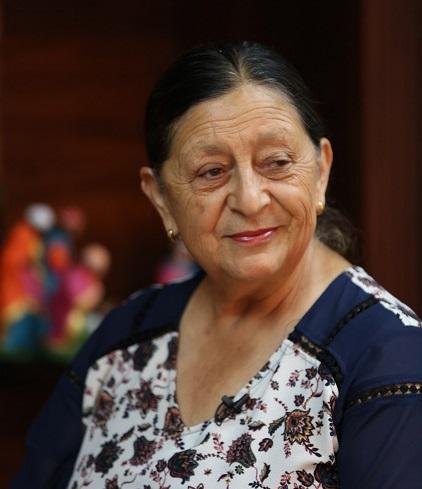
‘We rural women do not want to be viewed with pity or compassion; we want to be recognised and valued as allies in achieving sustainable development. We need opportunities and quality basic services to be able to stay in our territories and continue feeding the world’, says Luz Haro Guanga, Ecuaduarian peasant farmer and Executive Secretary of the Network of Rural Women of Latin America and the Caribbean (RedLAC), who recently spoke at the EESC debate on Women and the triple planetary crisis. In her interview with EESC Info, Ms Haro Guanga talks about the impact of climate change in Latin America and why – despite the setbacks of COP16 – there is no room or time for pessimism in the fight for a more sustainable and healthier planet.
Your organisation, RedLAC, participated in COP16. Are you disappointed with the results of the conference, given that no consensus was reached on funding for the protection of nature and biodiversity? Was anything achieved at COP16?
As an Ecuadorian woman from the countryside, I have been fighting for the rights of my rural sisters in Ecuador since the 1980s. Among the lessons that these nearly 40 years have taught me, is that social processes require enormous efforts, give few immediate rewards and, most of all, require persistence, consistence and insistence. A consensus on financing for the protection of nature and biodiversity would have been great, but I’m sure that the voices of thousands of urban and rural men and women, brought to COP16 as an avalanche of grains of sand, won hearts and minds that previously had no desire to support this urgent climate action.
We didn’t end up achieving our goal, but right now we need to continue insisting before the authorities of every city, community and country, so they take note and, with personal, technical and political will, make the best decisions to avoid human deaths from hunger in the future as a result of not acting today.
How does climate change affect indigenous and rural women in Latin America?
I would like to highlight some facts from a document compiled by the Inter-American Commission of Women (CIM) of the Organisation of American States (OAS), on the basis of dialogues with 70 female leaders from 16 countries. The dialogue process started in September 2024. The document was presented at COP16 and put forth the opinions of rural women.
The conclusion was that climate change is a reality in all countries, including in the Americas, and is causing serious impacts. However, four climate events were singled out.
Prolonged droughts: Some countries reported months with very little rainfall, with countries further south reporting years-long droughts.
The rise in temperatures is well above normal levels: These high temperatures, together with dry soils, are contributing to numerous fires (some spontaneous and others deliberately lit), but all of which are exacerbated by dry conditions, affecting life and biodiverse systems. For example, at the time of the Brazil meeting, it was reported that there were 300 active fire outbreaks in the state of Piauí.
Windstorms: It was mentioned that rain is intense and comes in very short bursts, often accompanied by strong windstorms. Participants from Central America, Mexico, the Dominican Republic and coastal Colombia spoke of an increase in the intensity and frequency of hurricanes and tropical storms that impact their areas.
Changes in rainfall patterns: ‘It rains when least expected’ is an expression that cropped up in all meetings, and in the south and in Andean areas they spoke of unexpected frost, hail and snowfalls. In general, a decrease in yearly rainfall was noted, but it was said that when it does rain, the rains are torrential, causing floods and natural disasters, resulting in loss of life, infrastructure, roads and crops, and affecting living conditions, mainly in rural areas. One participant summed it up by saying ‘sometimes the rainfall is terrifying’.
On the other hand, unsustainable practices are being implemented, depleting natural resources. The most worrying and also most commonly mentioned issues were logging or deforestation of forests and mangroves; deliberately lit forest fires; inadequate handling of water resources; pollution; the promotion of intensive, expansive, water-intensive and polluting activities; and the excessive use of agrochemicals, herbicides and pesticides.
One aspect that stood out was the inaction of some local and national governments that were not developing regulatory frameworks to curb destructive activities and promote sustainable productive strategies. Some countries have regulations, but because of corruption or personal political interests, the authorities do not implement them.
International leaders are therefore called on to put more pressure on states to comply with the biodiversity and climate change treaties they have signed.
Are you optimistic or pessimistic about the direction that the fight for climate and environmental protection is going? What do you think should be done?
If we do not dream big, we will not achieve great things. While climate change affects us and its effects are progressing rapidly, we cannot stop fighting for decision-makers to pay attention to those fundamental aspects that require priority action, not only in terms of financing, but also in terms of coordination, cooperation, and less egoism and partisan political zeal.
I am optimistic that if we continue insisting, raising our voices, and sustaining the long-term social processes through perseverance – if we make strategic alliances, in the Americas and across the world, we can influence public policies and ensure that those who take up positions of power or decision-making roles do so with the conviction that there is an urgent need to fight climate change and, at the same time, reduce actions that accelerate its harmful and destructive effects on our planet: fires, single-crop farming, indiscriminate use of insecticides and chemicals, the destruction of water basins, indiscriminate fishing, the destruction of water springs, sewage treatment, etc.
Pessimism will weaken our voices, eventually leading us to give up our work and our fight. There is no time to lose, nor space for pessimism in the fight for a more sustainable and healthier planet, despite negative occurrences. It’s a question of life or death for current and future generations!
The time to act was yesterday. But today is still a good day to start changing attitudes and make commitments for the good of all people.
Luz Haro Guanga is Ecuadorian peasant farmer and Executive Secretary of the Network of Rural Women of Latin America and the Carribean (RedLAC), as well as the president of the technical arm of RedLAC in Ecuador, FUNMUJERURAL-e. RedLAC is a social organisation made up of more than 200 rural women's organisations from across Latin America and the Carribean. Founded in Argentina in 1990, its purpose is to promote the effective civic and political participation of rural women. Thanks to RedLAC’s long-standing efforts, the Organisation of American States (OAS) proclaimed the period between 2024-2034 as the 'Inter-American Decade for the Rights of All Women, Adolescents and Girls in Rural Areas of the Americas’.