European Economic
and Social Committee
European Economic
and Social Committee
The European Economic and Social Committee (EESC) is the voice of organised civil society in Europe.
Find out more about its role and structure at http://www.eesc.europa.eu/en/about
The EESC issues between 160 and 190 opinions, evaluation and information reports a year.
It also organises several annual initiatives and events with a focus on civil society and citizens’ participation such as the Civil Society Prize, the Civil Society Days, the Your Europe, Your Say youth plenary and the ECI Day.
Find the latest EESC opinions and publications at http://www.eesc.europa.eu/en/our-work/opinions-information-reports/opinions and http://www.eesc.europa.eu/en/our-work/publications-other-work/publications respectively.
The EESC is active in a wide range of areas, from social affairs to economy, energy and sustainability.
Learn more about our policy areas and policy highlights at http://www.eesc.europa.eu/en/policies
The EESC holds nine plenary sessions per year. It also organises many conferences, public hearings and high-level debates related to its work.
Find out more about our upcoming events at http://www.eesc.europa.eu/en/agenda/our-events/upcoming-events
Here you can find news and information about the EESC'swork, including its social media accounts, the EESC Info newsletter, photo galleries and videos.
Read the latest EESC news http://www.eesc.europa.eu/en/news-media/news and press releases http://www.eesc.europa.eu/en/news-media/press-releases
The EESC brings together representatives from all areas of organised civil society, who give their independent advice on EU policies and legislation. The EESC's326 Members are organised into three groups: Employers, Workers and Various Interests.
Find out more about our Members and groups at http://www.eesc.europa.eu/en/members-groups
The EESC has six sections, specialising in concrete topics of relevance to the citizens of the European Union, ranging from social to economic affairs, energy, environment, external relations or the internal market.
Find out more at http://www.eesc.europa.eu/en/sections-other-bodies
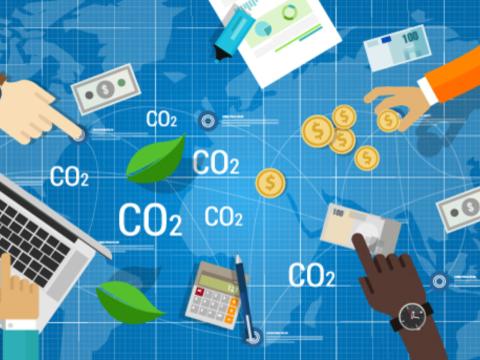
Seit Unterzeichnung des Kyoto-Protokolls wurden in verschiedenen Ländern und Gebieten weltweit Emissionshandelssysteme (ETS) umgesetzt. Das EU-EHS ist das älteste und größte Emissionshandelssystem. Es wird derzeit im Einklang mit dem EU-Rahmen für die Klima- und Energiepolitik bis 2030 überarbeitet. In seiner auf der September-Plenartagung verabschiedeten Stellungnahme bietet der EWSA einen Kurzüberblick über das EU-EHS und die weiteren Emissionshandelssysteme weltweit und umreißt die Ansätze für die Regulierung des Handels im Rahmen des neuen Deals für CO2-Märkte.
In seiner Stellungnahme bekräftigt der EWSA seine Unterstützung für den europäischen Grünen Deal, fordert die Kommission auf, lokale CO2-Märkte zu beobachten, um die besten Praktiken zu identifizieren, die bei der Überarbeitung des EHS nützlich sein könnten, und wägt die Vor- und Nachteile eines EU-CO2-Ausgleichsmechanismus für Umwelt und Handel ab.
Der EWSA zeigt sich in dieser Stellungnahme insbesondere angesichts des asymmetrischen CO2-Preisniveaus zwischen verschiedenen Ländern und Märkten besorgt. Faire Wettbewerbsbedingungen zwischen der Industrie in der EU und in anderen Gebieten könnten sowohl durch die Entwicklung unterschiedlicher Emissionshandelssysteme wie auch durch die Konkurrenz von Drittmärkten in Ländern mit weniger ehrgeizigen Klimapolitiken beeinträchtigt werden. Daher fordert der EWSA die Kommission auf, in den kommenden Monaten ein CO2‑Grenzausgleichssystem vorzulegen, das die meisten CO2-intensiven Sektoren in der EU vor Importen aus Drittländern ohne oder mit weniger ehrgeizigen Klimapolitiken schützen soll. Der EWSA plädiert für die Umsetzung von CO2-Grenzausgleichssystemen im Einklang mit den Regeln der Welthandelsorganisation (WTO), um das Entflammen eines Handelskriegs zu verhindern. (dgf)