Focussing on five EU Member States (Belgium, Bulgaria, France, Italy and Portugal), this study aims to provide a comprehensive overview of the role and increasing significance of the national Economic and Social Councils (NESCs), while also putting forward a set of policy recommendations on how to involve the NESCs more constructively, and how to make sure that the EESC's relationship with the NESCs, and henceforth its involvement as the EU's institutional bridge with civil society, can be further strengthened.
This study explores effective practices for youth participation in policy and decision-making processes, providing a comprehensive overview of what youth participation means and its key characteristics
The EESC is now applying the EU Youth Test to its opinions, a tool designed to strengthen youth participation and youth mainstreaming in policy-making, becoming the first EU institution to implement it
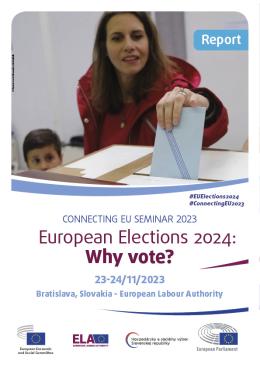
This brochure brings you the highlights of the EESC's Connecting EU 2023 seminar, held in Bratislava in November 2023 under the title "European Elections 2024: Why vote?"
The 2023 edition of the EESC's annual European Citizens' Initiative (ECI) Day took place on 8 June. Participants in Brussels and online joined us to discuss how to upskill citizens for a successful ECI with impact.
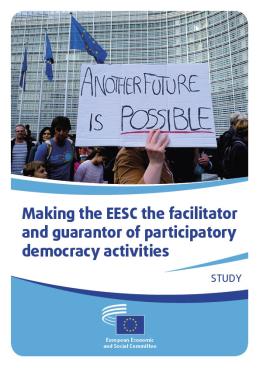
This study looks at the Conference on the Future of Europe’s (CoFoE) proposals on European democracy and the role of the European Economic and Social Committee (EESC). It explores different options for institutional reform of the EESC to best serve its purpose and increase citizens’ participation. To do this, the study examines different forms of participatory and deliberative practices, the current functions of the EESC, and the roles and structures of selected National Economic and Social Councils (NESCs).