On 19 July, the European Economic and Social Committee (EESC) held a high-level conference on relief and reconstruction of Ukraine, at which it pledged its full support for the war-ravaged country on all fronts.
The European Economic and Social Committee (EESC) is proud to announce the finalists, by category, for the first ever EU Organic Awards, co-organised with the European Commission and other partners to reward excellence along the European organic value chain. The winners of each category will be announced on 23 September, EU Organic Day, during a special ceremony with EU commissioner for Agriculture, Janusz Wojciechowski.
At its July plenary, the European Economic and Social Committee (EESC) argued that the new Trade and Technology Council (TTC) can become an innovative tool for both the EU and USA to work together towards a safer and more prosperous world, based on the principles of sustainable development and democratic values.
The European Commission should place greater focus on the long-term development of an EU able to better withstand geopolitical upheavals, counter their negative economic and social impacts and ensure that sustainable development guides its policies, the European Economic and Social Committee (EESC) has said in a resolution on the EU's priorities for 2023.
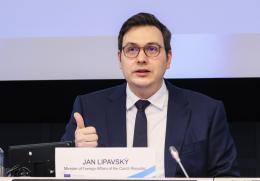
In un dibattito svoltosi durante la sessione plenaria di luglio del Comitato economico e sociale europeo (CESE), sono state discusse con il ministro degli Esteri ceco Jan Lipavský le priorità della presidenza ceca del Consiglio dell'Unione europea per il secondo semestre del 2022.
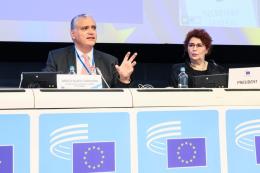
At the July plenary session of the European Economic and Social Committee (EESC), its president Christa Schweng and the newly elected president of the European Committee of the Regions (CoR) Vasco Alves Cordeiro discussed renewed prospects for joint action and cooperation between the two committees.
At its July plenary, the European Economic and Social Committee (EESC) debated the Commission's draft directive to tackle gender-based violence and gender equality in presence of Cristina Fabre of the European Institute for Gender Equality. The Committee adopted two opinions with recommendations for making the legislation more effective in combatting such an issue of epidemic proportions and demanded for its inclusion in the list of EU crimes.
Il convegno ad alto livello organizzato a Riga dal Comitato economico e sociale europeo (CESE) ha lanciato l'allarme per la crisi degli alloggi a prezzi accessibili, sottolineando che è il momento che l'UE intervenga per consentire ai cittadini europei di far fronte a questa necessità fondamentale, ora esposta a un rischio ancora maggiore a causa dell'impennata dei prezzi dell'energia e della guerra in Ucraina.
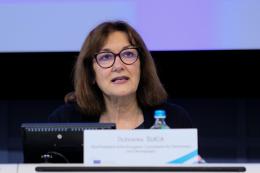
Alla sessione plenaria di giugno del Comitato economico e sociale europeo, la Presidente del CESE Christa Schweng e la vicepresidente della Commissione europea Dubravka Šuica hanno convenuto che, dopo un intero anno di dibattiti sul futuro dell'UE, ora l'importante è offrire ai cittadini europei una serie di misure circostanziate per dare seguito al processo.