La conférence "Paquet législatif dans le domaine de la lutte contre le blanchiment de capitaux", fera le point sur l'état des lieux et débattra en particulier des propositions législatives proposées par la Commission européenne en juillet 2021 pour renforcer les règles de l'UE en matière de lutte contre le blanchiment de capitaux et le financement du terrorisme (LBC/FT). Ces propositions incluent, entre autres éléments, la création d'une nouvelle autorité de l'UE pour lutter contre le blanchiment d'argent, une application complète des règles de LBC/FT de l'UE au secteur des crypto-actifs et une limite européenne de 10 000 € sur des paiements en espèces.
La conférence est organisée le 5 octobre 2021, à partir de 14h30.
La conférencesera retransmise en ligne.Il n’est pas nécessaire de s’inscrire et la participation est gratuite.
Après l’apparition de la pandémie de COVID-19, le Comité économique et social européen (CESE) a joué un rôle central pour porter à la connaissance des décideurs politiques les points de vue consensuels de la société civile organisée de l’UE et pour contribuer aux mesures en évolution rapide prises au niveau européen sur le plan de la politique économique, en réponse à la crise.
À cet égard, nous estimons que l’heure est venue pour les institutions de l’Union européenne de prendre des mesures décisives afin d’approuver rapidement ce nouveau dispositif et de mettre en place les mécanismes de mise en œuvre nécessaires aux niveaux européen et national, de sorte que les États membres, citoyens et entreprises les plus durement touchés puissent bénéficier des financements européens correspondants au moment où ils en ont le plus besoin.
Dans ce contexte, et à l’occasion de la première réunion de la section «Union économique et monétaire et cohésion économique et sociale» (ECO) du CESE dans le cadre de notre nouveau mandat (2020-2025), nous organisons un débat thématique sur cette question entre les responsables politiques européens et les représentants de la société civile.
Ce débat aura lieu le jeudi 19 novembre 2020, de 14 h 30 à 16 h 40, sous la forme d’une manifestation en ligne retransmise en direct sur le site internet du CESE.
L'objectif de cette étude est de recenser les initiatives en matière de participation des jeunes aux processus politiques et décisionnels, à travers une vue d'ensemble de ce que signifie la participation des jeunes et de ses principales caractéristiques
Les partis d’extrême droite gagnent du terrain en Europe, devenant potentiellement le troisième ou le quatrième groupe au Parlement européen après les prochaines élections européennes. Ce changement présente une menace critique pour les droits et libertés de millions de travailleurs à travers le continent en raison de leur comportement électoral en matière de politique sociale.
Le 20 février 2024 à Bruxelles, le CESE a organisé une conférence sur la crise du logement en Europe. Cette publication présente l'évaluation des participants sur la situation actuelle et leurs recommandations sur la manière de faire face à la crise actuelle du logement.
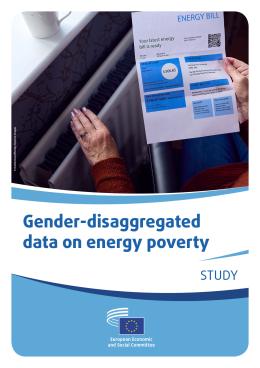
La précarité énergétique a été projetée au premier plan du débat social et politique par les récents chocs économiques dus à la pandémie de COVID-19 et par la crise énergétique qui a touché l’Europe à la suite de l’invasion de l’Ukraine par la Russie. Si les politiques européennes s’attaquent de plus en plus à la précarité énergétique, les questions d’égalité entre les hommes et les femmes sont encore délaissées.
Cette brochure présente les points forts du séminaire Connecting EU 2023 du CESE, qui s'est tenu à Bratislava en novembre 2023 sous le titre "Élections européennes 2024 : Pourquoi voter?"