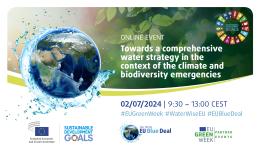
This event, organized by the Sustainable Development Observatory (SDO) in cooperation with the Consultative Committee on Industrial Change (CCMI), follows up on the EESC's call for an EU Blue Deal. We'll examine the role of water in the climate and biodiversity emergencies we face, seeking cohesive, sustainable solutions for water resilience.
Conférence sur «Le soutien professionnel au Blue Deal européen»
Location
99 Rue Belliard
Bruxelles et en ligne
Belgium
Le 7 mai 2024, la catégorie «Professions libérales» du CESE a présenté la 8e édition de la Journée européenne des professions libérales. Regardez l'enregistrement de l'événement.
Avec ce débat, la section ECO fournit une contribution ex-ante à la Commission européenne, en préparation du prochain cycle de prospective stratégique 2023 qui veut faire la lumière sur les décisions stratégiques nécessaires pour assurer une Europe socialement et économiquement durable avec un rôle plus important dans le monde, dans les décennies à venir.
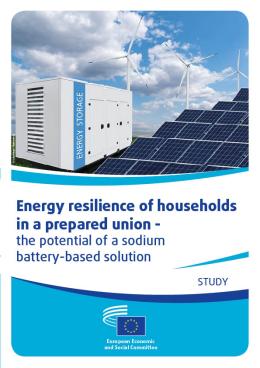
Cette étude examine le potentiel de la technologie des batteries au sodium pour renforcer la résilience énergétique des ménages et des entreprises européens, notamment pour atteindre l’objectif d’autosuffisance énergétique de 72 heures prévu par la Stratégie de l’UE pour une union de la préparation.
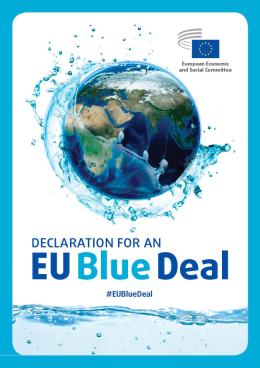
Cette publication marque le nouvel appel du CESE en faveur d’un Pacte Bleu pour l'Europe en 2025, intégrant dans la Déclaration les nouvelles recommandations adoptées depuis le lancement de l’appel en octobre 2023.
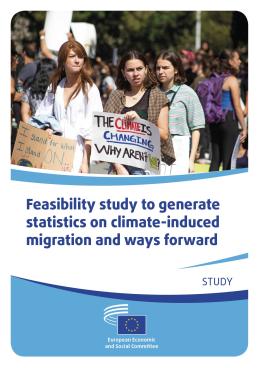
Cette "étude de faisabilité visant à générer des statistiques sur la migration induite par le climat et à envisager des pistes d’action" a pour but de rassembler et examiner les données existantes sur la migration induite par le climat, en se concentrant sur cinq États membres (France, Allemagne, Grèce, Italie et Espagne) et un pays candidat (Turquie), afin d’éclairer une réponse efficace de l’UE. Il n’existe pas de définition universellement acceptée de la migration induite par le climat.
Le Comité économique et social européen appelle les institutions européennes à considérer l’eau comme une priorité et à adopter un pacte bleu pour l’UE en tant que politique stratégique autonome, sur un pied d’égalité avec le pacte vert pour l’UE.