Dans un avis exploratoire demandé par la présidence française au Conseil de l’UE et adopté en janvier 2021, le Comité économique et social européen (CESE) invite la Commission européenne à examiner les avantages substantiels que les régions ultrapériphériques (RUP) peuvent apporter à l’avenir de l’Europe. La Commission devrait également prendre des mesures appropriées pour veiller à ce que ces territoires ne passent pas à côté de la reprise post-COVID, et ne se retrouvent à la traîne en ce qui concerne les transitions climatique, sociale et numérique.
Saluée comme un complément indispensable à la réaction européenne aux urgences sanitaires, la proposition de la Commission relative à l’HERA, la nouvelle autorité de l’UE chargée de lutter contre les menaces transfrontières pour la santé, peut encore être grandement améliorée. Ses détracteurs lui reprochent son manque d’ambition, sa transparence limitée et son manque d’indépendance, qui pourrait la conduire, selon certains, à céder aux pressions de l’industrie pharmaceutique au lieu de servir l’intérêt général.
[FR bientôt disponible] New financial instruments are needed if the social economy is to keep growing beyond the stimulus provided by public programmes, says a newly-adopted report by the EESC, which also calls for financial training as a way to foster private funding.
The EESC firmly believes that a care model for dependent older people with long-term care needs should be mainstreamed into EU policymaking, given that the proportion of the population aged over 80 is expected to more than double by 2050. The pandemic revealed failures and shortcomings in this area, which must be addressed fast. The Commission's initiative to establish a new European Care Strategy is a step in this direction, but consultative institutions and European civil society organisations representing older people have to have a say.
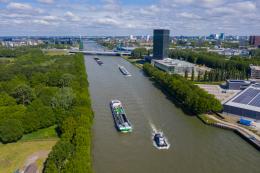
Dans son avis adopté lors de la session plénière de janvier, le Comité économique et social européen (CESE) soutient le transport multimodal et la navigation intelligente, en soulignant que le transport par voies navigables intérieures, essentiel pour l’avenir, doit être préservé et développé.
[FR bientôt disponible] The current socio-economic situation in euro area countries is characterised by a high level of uncertainty, an unprecedented accumulation of public debt and the rise of inflation. Despite initial encouraging expectations for a recovery in the real economy, it seems that the process is more complicated due to the rapid spread of the COVID-19 pandemic and the appearance of new variants. During its plenary on 19 January 2022, the European Economic and Social Committee (EESC) adopted an opinion on the European Commission's (EC) recommendations on the economic policy of the euro area for 2022, according to present-day reality.
[FR bientôt disponible] The EESC is urging the creation of a European network of special ombudsmen to help SMEs cope with the financial and funding issues they are experiencing, particularly as a result of the COVID crisis. The Committee also stresses that for SMEs to take up AI there needs to be the political will to support them in the process.
Le décaissement des fonds de l’UE, y compris le Fonds pour la relance, doit être conditionné au respect de l’état de droit dans tous les États membres. Dans tous les cas, les défaillances systématiques de l’état de droit nuisent à la mise en œuvre des programmes financés par l’UE, et l’absence d’une réponse rapide et globale de l’UE à ce problème compromettra sa crédibilité, avertit le CESE
Clear EU taxation rules for energy products and electricity are needed to make sure they continue to contribute to the smooth functioning of the internal market, while at the same time tackling climate- and environment-related challenges. In an opinion "Revision of the Energy Taxation Directive", adopted during its plenary on 20 January 2022, the European Economic and Social Committee (EESC) welcomed the objective of the European Commission (EC) to clarify and update the existing Union framework and to structure European taxation in a way that favours sustainable non-fossil energy. However, the EESC is also concerned at the possible negative socio-economic impact of some of the measures found in the EC Proposal for a Directive.
L’année 2022 sera pour l’Union européenne l’Année de la jeunesse. Cette initiative d’une Année de la jeunesse a été proposée par la Commission afin de mettre en avant les possibilités qui s’offrent aux jeunes et de les encourager à devenir des citoyens actifs et des acteurs du changement. Louable qu’elle soit, nous devons veiller à ce que cette opération soit orientée vers l’obtention de résultats concrets et durables au bénéfice de tous les jeunes en Europe.