
European Economic
and Social Committee
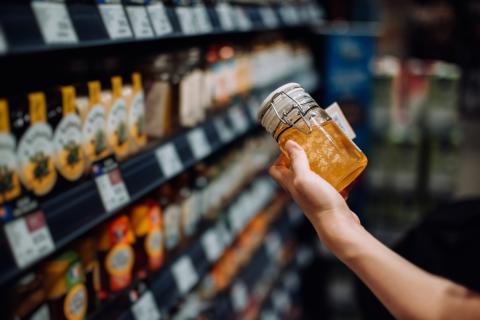
The EESC underscores the pivotal role of promoting healthy and sustainable diets in enhancing human health, preserving ecosystems, strengthening society and supporting rural communities.
Achieving these objectives requires a multifaceted approach, including increasing the availability of sustainable products, educating individuals on healthier dietary choices, advocating for product reformulation, and expanding mandatory origin labelling for specific items. These changes must align with current societal concerns and consumer demands while maintaining competitiveness and favourable working conditions within the agri-food sector.
''The opinion supports the Commission proposal of mandatory origin labelling for honey blends, but goes a step further by also requesting the percentages of each origin, based on the development of a reliable testing method. At the same time, "adulterated honey" is easily detectable; this is the most urgent measure to protect EU beekeepers; it could, and should, be enforced immediately'', says Kerli Ats, rapporteur for an EESC report on this issue.
European beekeepers and stakeholders in the honey supply chain face formidable challenges concerning the transparency of honey blends' origins. These challenges significantly affect their income and the broader European market situation. Current efforts to combat fraud and unfair competition remain insufficient. While the EESC welcomes the proposal to revise the Honey Directive by introducing mandatory origin labelling, it expresses reservations about the lack of ambition in implementing additional measures to combat fraud effectively.
The EESC strongly urges the adoption of more ambitious measures to safeguard European honey producers, enforce stringent marketing standards, institute systematic testing and traceability checks on honey imported into the EU, and mandate country of origin labelling for honey blends. The proposed labelling should detail the respective percentage share of each honey origin, presented in descending order.
Addressing the challenges in quantifying the percentage share of each honey origin in blends is paramount. The EESC emphasises the need for a swift and accessible analytical method to ensure the integrity of mandatory origin labelling, protecting consumers from fraud.
Efforts should also focus on developing a traceability system that assigns a unique identification code to all commercially sold honey, whether produced within the EU or imported. This system would make it possible to trace honey back to the beekeeper responsible for its harvest. However, it is imperative to ensure that these measures do not unduly burden companies, especially small and medium-sized enterprises, with excessive costs.(ks)