Newsletter Info

EESC info

European Economic and Social Committee A bridge between Europe and organised civil society

DECEMBER 2020 | EN

GENERATE NEWSLETTER PDF

Available Languages:

  • BG
  • CS
  • DA
  • DE
  • EL
  • EN
  • ES
  • ET
  • FI
  • FR
  • GA
  • HR
  • HU
  • IT
  • LT
  • LV
  • MT
  • NL
  • PL
  • PT
  • RO
  • SK
  • SL
  • SV
Editorial

Editorial

Dear readers,

I am excited to be taking on this role as Vice-President of the EESC in this new mandate. I was delighted to be elected to the position by my colleagues. I feel the role of communication is essential in any organisation.

I have always been impressed by the work carried out on a day-to-day basis by the staff and members of this Committee. A new mandate provides an opportunity to take stock and look at everything again with fresh eyes. Our limited ability to travel, due to COVID, is a further reason to grasp the opportunity to reassess.

Read more in all languages

Dear readers,

I am excited to be taking on this role as Vice-President of the EESC in this new mandate. I was delighted to be elected to the position by my colleagues. I feel the role of communication is essential in any organisation. 

I have always been impressed by the work carried out on a day-to-day basis by the staff and members of this Committee. A new mandate provides an opportunity to take stock and look at everything again with fresh eyes. Our limited ability to travel, due to COVID, is a further reason to grasp the opportunity to reassess.

I believe that the role of civil society in our political systems is an essential one. Here at the EESC we fulfill that function in an institutional sense. 

Our unique selling point is that we bring together all the sectors and groups that normally oppose each other in the field. We build consensus, through understanding and respect for each other's perspectives. And we produce valuable content that has already passed the test of whether or not it is implementable. Our proposals, rooted in consensus building, provide practical solutions to the challenges we face.

That is the EESC at its best: connecting stakeholders, making sure their voices are heard loud and clear, and producing practical solutions that are fair to all sectors.

A new mandate gives us the opportunity to do more of what we do well and to reduce or eliminate the things we do not.

The spirit of this Committee is to identify those who are ambitious to be effective and empower them to secure a significant impact with their work.

I am looking forward to reaching out to colleagues in other institutions to ensure that our collective views are heard. I likewise want to ensure that the wider community is also aware of how our work is received, and of what we do to ensure that the views of civil society have been taken on board when final decisions are reached.

Lastly, we will, as always, use our resources as a means to facilitate dialogue between other stakeholders, reaching beyond our members and really making that connection between civil society and the EU institutions. 

I look forward to a busy and productive two and a half years.


Cillian Lohan, Vice-President for Communication

Diary Dates

10 December 2020, Brussels

COVID-19: Mitigating Impact and Overcoming the Crisis (Webinar)


27 - 28 January 2021, Brussels

EESC plenary session

Recovery funds and the budget cannot be held hostage!

On 18 November, the respective presidents of the EESC Section for Employment, Social Affairs and Citizenship (SOC), the EESC Section for Economic and Monetary Union and Economic and Social Cohesion (ECO) and the EESC Group on Fundamental Rights and the Rule of Law, Aurel Laurențiu Plosceanu, Stefano Palmieri and Cristian Pîrvulescu, issued a joint statement expressing great concern over the stance of two governments who threatened to veto the EU Budget if it remains tied to respect for the rule of law.

The EESC has already given strong support to the Commission's proposal on the Next Generation EU package, which should – together with the 2021-2027 Multiannual Financial Framework (MFF) and for a total amount of EUR 1.82 trillion – cushion the blows of the COVID-19 crisis and enable EU economies to make a quick recovery.

According to the statement, making the use of EU funding dependent upon Member States' respect for the rule of law should not be controversial as it is one of the core values upon which the EU was built.

Read the full statement here: https://europa.eu/!cH83Bj

Read more in all languages

On 18 November, the respective presidents of the EESC Section for Employment, Social Affairs and Citizenship (SOC), the EESC Section for Economic and Monetary Union and Economic and Social Cohesion (ECO) and the EESC Group on Fundamental Rights and the Rule of Law, Aurel Laurențiu Plosceanu, Stefano Palmieri and Cristian Pîrvulescu, issued a joint statement expressing great concern over the stance of two governments who threatened to veto the EU Budget if it remains tied to respect for the rule of law.

The EESC has already given strong support to the Commission's proposal on the Next Generation EU package, which should – together with the 2021-2027 Multiannual Financial Framework (MFF) and for a total amount of EUR 1.82 trillion – cushion the blows of the COVID-19 crisis and enable EU economies to make a quick recovery.

According to the statement, making the use of EU funding dependent upon Member States' respect for the rule of law should not be controversial as it is one of the core values upon which the EU was built.

Read the full statement here: https://europa.eu/!cH83Bj

One question to...

One question to…

In our section "One question to…" we ask EESC Members to respond to a topical question that seems to us to be particularly relevant.

We have asked Mr Stefano Palmieri, the President of the Economic and Monetary Union and Economic and Social Cohesion section (ECO) to answer the following question:

"What is your view on the blockage of the long-term EU budget and the recovery package triggered by three Member States? Looked at from different points of view, is it one of the biggest institutional and political crises facing the EU?"

Read more in all languages

In our section "One question to…" we ask EESC Members to respond to a topical question that seems to us to be particularly relevant.

We have asked Mr Stefano Palmieri, the President of the Economic and Monetary Union and Economic and Social Cohesion section (ECO) to answer the following question:

"What is your view on the blockage of the long-term EU budget and the recovery package triggered by three Member States? Looked at from different points of view, is it one of the biggest institutional and political crises facing the EU?"

Stefano Palmieri, President of the ECO section

I was genuinely shocked when I learned that after the encouraging news we heard on 10 November, when the negotiating teams of the European Parliament and the Council ...

Read more in all languages

I was genuinely shocked when I learned that after the encouraging news we heard on 10 November, when the negotiating teams of the European Parliament and the Council reached agreement on the final details of the next Multiannual Financial Framework and the recovery fund, two Member States - later joined by a third - made the blunt decision to hold all of Europe hostage.
Neither did the video-call between European leaders on 19 November bring a way out of the deadlock.

The "Next Generation EU" package, together with the 2021-2027 Multiannual Financial Framework (MFF), amounting to a total of €1.85 trillion, are urgently needed to enable a quick and effective recovery in all countries, and for all our citizens. If there is no agreement on the budget and the recovery fund soon, then we will clearly be faced with one of the biggest institutional and political crises of the EU. Far from being a purely political and institutional crisis, it will also deepen the economic and social crisis we are already in.

I reacted immedidately to the blockage in the Council with in a press statement, issued together with my esteemed colleagues Aurel Laurențiu Plosceanu, SOC President, and Cristian Pîrvulescu, President of the EESC´s Group on Fundamental Rights and the Rule of Law.

Most shocking is that two governments are blocking the recovery fund in order to prevent tying the EU budget to respect for the rule of law. Human rights and rule of law are intrinsic to democratic societies. There should be no opposition to them, those values are enshrined in Article 2 of the EU Treaty. Such principles are not negotiable!

Let me finish on a positive note: in its long history the EU has proved to be a "deal-making machine", even on politically controversial and complex issues. I sincerely hope that in the end, we will also get out of this impasse. I do not want to imagine anything else at this point.

Some political and economic analysts have come up with the idea to move forward with the recovery fund in an enhanced cooperation procedure, and decouple it from the MFF, if an agreement between all Member States is not possible. They claim that the Treaty provides this possibility. While I think that this could be considered as a last resort option, I am firmly convinced that a deal between all 27, and one that respects the rule of law, must be the aim.

Time is pressing. I therefore urge the Member States, and in particular those that are currently blocking the deal, not to deprive European citizens any longer of the much-needed recovery money.

Guess who is our guest..
EESC News

A prosperous, inclusive and sustainable Europe at the heart of the EESC's new presidential programme

The European Economic and Social Committee (EESC) has released the full programme of its new president, Christa Schweng, for her 2020-2023 term of office. It is now online and is available in all EU languages.

Ms Schweng's programme offers a bold vision for a stronger and more resilient post-COVID-19 Europe and envisages a powerful contribution from the EESC to Europe's recovery and participatory democracy.

Read more in all languages

The European Economic and Social Committee (EESC) has released the full programme of its new president, Christa Schweng, for her 2020-2023 term of office. It is now online and is available in all EU languages.

Ms Schweng's programme offers a bold vision for a stronger and more resilient post-COVID-19 Europe and envisages a powerful contribution from the EESC to Europe's recovery and participatory democracy.

Under the motto "United for the future of Europe", it places great emphasis on unity, which will be the key word of her presidency with its call to rebuild the EESC, making it more united and more effective in influencing EU policy-shaping.

It sets forth four priorities which are in line with her idea of a post-pandemic Europe that enables its citizens to thrive and live in an open and value-based society.

The first priority is an economically prosperous Europe, with an emphasis on helping Member States, companies, workers and the general public to survive and rebuild economies. The transition to a more digital and green economy should be linked to social recovery as well.

The second priority is a socially inclusive Europe which makes sure that nobody is left behind during the digital and green transitions. Safeguarding employment and income for all workers is paramount, with particular attention paid to vulnerable groups. The programme states that common EU values are not negotiable under any circumstances. The creation of a European health union is also supported as an important aspect of solidarity.

The third priority – an environmentally sustainable Europe – recognises a greener and digitalised economy as the driving force of the recovery plan for Europe. Yet for this to succeed, business needs to be considered as part of the solution and must be encouraged to take an active part in shaping the transition to a low-carbon, resource-efficient economy.

The fourth priority is making sure that the EESC plays a vital role in the Conference on the Future of Europe, an important initiative which should give Europeans a sense of ownership of their EU by enabling them to debate major EU topics, with the aim of improving the way the EU works. As a committed advocate of participatory democracy, and with members from all parts of civil society active on the ground in all Member States, the EESC has an opportunity to show its added value and act as a facilitator. (ll)


European Circular Economy Platform set to move up a gear as it enters second term

In an annual conference held entirely online on 3-4 November, the EESC voiced its determination to help make the Circular Economy Platform a real hub of the collective effort to build a circular economy in Europe.
EESC president Christa Schweng opened the event together with Commission executive vice-president Frans Timmermans, looking back on the Circular Economy Stakeholder Platform's first three years as a database of best practices and a discussion forum for practitioners, and then forward to the term now beginning under the EU's new Action Plan for the Circular Economy.

Read more in all languages

In an annual conference held entirely online on 3-4 November, the EESC voiced its determination to help make the Circular Economy Platform a real hub of the collective effort to build a circular economy in Europe.

EESC president Christa Schweng opened the event together with Commission executive vice-president Frans Timmermans, looking back on the Circular Economy Stakeholder Platform's first three years as a database of best practices and a discussion forum for practitioners, and then forward to the term now beginning under the EU's new Action Plan for the Circular Economy.

"The past three years have shown that this is the way people want to work together," she said. "The European Circular Economy Stakeholder Platform, your platform, is a great example of policy and practice working hand in hand.

"So please continue to share lessons learnt and inspiring examples, whether they are consumer products designed for circular behaviour, innovative ideas for decreasing and managing waste, jewellery designed from recycled material, governments' national circular strategies or schools preparing the next generation.

"If you look around, you will see that our joint transition has started, but we will need to do much more for the EU to truly lead the global transition towards a circular economy."

Ms Schweng stressed that the circular economy will be key for the success of the European Green Deal, the EU's flagship plan for the years to come. She pointed to the circular economy's proven record in job creation (around 4 million new jobs between 2012 and 2018), at a time when job cuts are everyone's concern, and to the need to support business in making the transition while grappling with the impact of COVID-19.

EESC vice-president for communication Cillian Lohan, one of the platform's initiators and a strong believer in its potential, opened the second day of the conference, stressing that cooperation has been and must continue to be at the heart of the project:

"From the outset, this platform has been all about collaboration," said Mr Lohan. "That history – though it's very recent history – is important to remember because the spirit of a collaborative project was set immediately: this was something that we were going to achieve together, rather than in conflict or competition with each other. And the platform has gone on to work in that spirit. 

"The circular economy is a transition that is achieved by everyone, in this collaborative manner, with stakeholders at the forefront of it. Today we are looking to take the circular economy forward with all of you in the driving seat."

Over 700 people participated in this two-day event, making it one of Twitter's top trending topics in Belgium.

The European Circular Economy Stakeholder Platform is a joint EESC-European Commission initiative that aims to provide a "network of networks" to support a stakeholder-driven transition. A trailblazing project, it has served as a model for similar platforms in both the EU Member States and the USA.

The outcomes of the discussions at the conference will soon be made available on the platform's website. (dm)

The EESC addresses shortcomings in the integration of migrant women and children

The specific needs of women and children striving to overcome discrimination or obstacles to their integration are not always fully taken into consideration in the integration policies of EU Member States. The EESC has put forward ways to address these shortcomings in an exploratory opinion presented at the October plenary session.

Read more in all languages

The specific needs of women and children striving to overcome discrimination or obstacles to their integration are not always fully taken into consideration in the integration policies of EU Member States. The EESC has put forward ways to address these shortcomings in an exploratory opinion presented at the October plenary session.

The German Presidency of the Council of the European Union asked the EESC to discuss ways to facilitate the integration of women, mothers and families with a migrant background.

This opinion was drawn up by former member Indrė Vareikytė and presented by the rapporteur-general, Ákos Topolánszky, at the plenary session on 29 October.

Mr Topolánszky warned his peers that fewer than half the Member States have enacted policies that explicitly support women and children of migrant descent who face discrimination and barriers to integration. "Isolated, they are too often victims of loneliness and violence," he said. As regards solutions, Mr Topolánszky stressed the importance of adopting integration policies in a holistic way, encompassing labour inclusion, education, health, justice and housing.

The EESC believes that migrants should be better informed about the objectives of language training and the associated benefits for their daily lives. The Committee also encourages further investigation into whether the Common European Framework of Reference for Languages could be used to streamline the migrant language training process and ensure a more tailor-made approach.

Migrant women face multiple or intersectional forms of discrimination in many areas of social life.
The EESC therefore encourages Member States to ratify the Istanbul Convention and calls for all Member States to ensure that female migrants who are victims of violence have the same access as native-born women to appropriate services, support and facilities.

As the COVID-19 crisis has disproportionately affected vulnerable communities, such as ethnic minority migrant women, the EESC strongly encourages the Commission, when developing its new initiative on integration and inclusion, to take into account the lessons learnt from this crisis across the Union and within the Member States.

In its appendix, the opinion lists a series of inspiring social projects in which migrant women and children are supported in their integration and language training. (ll/tk)

No way out of the crisis without a boost in public and private investment, says the EESC

Taking into account the disastrous social and economic impact of the COVID-19 crisis, the EESC has outlined in two opinions its views on the current economic crisis and on recovery perspectives in the EU. On the one hand, the advisory body considers the Commission's proposals for a Next Generation EU plan to be both welcome and timely. Any undue delay in approving and implementing the plan risks severely undermining the EU's economic recovery.

Read more in all languages

Taking into account the disastrous social and economic impact of the COVID-19 crisis, the EESC has outlined in two opinions its views on the current economic crisis and on recovery perspectives in the EU.

On the one hand, the advisory body considers the Commission's proposals for a Next Generation EU plan to be both welcome and timely. Any undue delay in approving and implementing the plan risks severely undermining the EU's economic recovery.

On the other, EESC members warn that Member States need to boost public investment and create synergies with private investment: the escape clause of the Stability and Growth Pact and maximum flexibility in State aid rules should apply at least until broad-based economic recovery has been fully established and unemployment has fallen significantly.

Overall, the EU needs a shift towards prosperity-focused and solidarity-based economic governance, as a return to austerity would dwarf any benefits from Next Generation EU.

Philip von Brockdorff, rapporteur for the opinion on the Annual Sustainable Growth Strategy 2020  said: "The EESC sees the ASGS as an opportunity for the dominant economic model to become far more resilient and sustainable, and to give equal weighting to both economic and social objectives."

Judith Vorbach, co-rapporteur of the opinion on the Recommendation for the economic policy of the euro area, stressed: "In order to minimise and avert the severe impacts of COVID-19 and climate change, the EESC recommends prosperity-focused economic governance, stepping up investment in sustainable growth, enforcing the European Pillar of Social Rights and reforming tax policies."

The two opinions, which were adopted at the October 2020 plenary, are the EESC' s contribution to the European Commission's forthcoming Autumn Semester Package and the ensuing inter-institutional discussions. Read the full news item here. (na)

EESC-Cedefop forum points to the need for an urgent and coordinated response to low skill levels in Europe

On 5 and 6 November, the European Economic and Social Committee (EESC) and the European Centre for the Development of Vocational Training (Cedefop) held the Third Policy Learning Forum (PLF) on upskilling pathways. It brought together social partners and government and civil society representatives relevant to this area, who warned that the current pandemic might further accelerate the changes in the world of work already brought about by the digital revolution, making upskilling and reskilling ever more relevant.

Read more in all languages

On 5 and 6 November, the European Economic and Social Committee (EESC) and the European Centre for the Development of Vocational Training (Cedefop) held the Third Policy Learning Forum (PLF) on upskilling pathways. It brought together social partners and government and civil society representatives relevant to this area, who warned that the current pandemic might further accelerate the changes in the world of work already brought about by the digital revolution, making upskilling and reskilling ever more relevant.

Participants in the PLF therefore stressed the urgency of implementing the upskilling pathways, the legislative proposal adopted as a Council Recommendation in 2016. This forms the building block of the EU Skills Agenda, aiming to equip all Europeans with the skills required to participate in the labour market and unlock their full potential to thrive, both as individuals and as members of society.

According to research by Cedefop, 128 million adults in Europe will have to update their skills or gain new ones in order to keep or get a job that corresponds to their competences and skills levels. This is the total figure for the EU-27, Iceland, Norway and the UK, and corresponds to a staggering 46.1% of the population.

"We need to emphasise that what we are offering is a part of a survival kit, both for workers and for employers, because business will not be as usual. Strong skills are a driver for competitiveness at EU level, and also for the personal and professional fulfilment of individuals," said the president of the EESC Section for Employment, Social Affairs and Citizenship, Laurenţiu Plosceanu.

"We have to ensure that every adult has lifelong opportunities to update existing skills and acquire new ones to help them navigate uncertain times and thrive in their life and career", said Jürgen Siebel, executive director of Cedefop, adding that upskilling and reskilling systems should also take into account the needs of firms, which are an important part of the equation for achieving ambitious goals.

The third PLF took a closer look at experiences in designing and implementing Upskilling Pathways in Finland, Ireland and the Netherlands, where governments have set ambitious targets with comprehensive strategies, as well as introducing reforms in lifelong and adult learning that are already bearing fruit.

The PLF also explored the Portuguese government's programme that has managed to boost the availability of adult training in a country where, as of 2016, half of the population had not completed secondary education. (ll)

EESC calls for enhanced social dialogue in the EU

The European Economic and Social Committee (EESC) threw its support behind fostering effective social dialogue in EU Member States as it plays a key role in shaping economic, labour and social policies that create better living and working conditions across the EU. It is thus necessary for promoting and achieving economic sustainability.

Read more in all languages

The European Economic and Social Committee (EESC) threw its support behind fostering effective social dialogue in EU Member States as it plays a key role in shaping economic, labour and social policies that create better living and working conditions across the EU. It is thus necessary for promoting and achieving economic sustainability.

In the opinion Social dialogue as an important pillar of economic sustainability and the resilience of economies taking into account the influence of lively public debate in the Member States, the EESC gave an overview of national social dialogue practices, examining it in the context of past crises. It also explored how the concept of social dialogue, and especially its tripartite form, which involves public authorities, can go beyond collective bargaining and how it is a key instrument for sound governance of any process of change.

The opinion was drafted at the request of the German EU Presidency by former EESC member Vladimíra Drbalová and current member Cinzia Del Rio.

Countries with well-established social dialogue mechanisms respond better and more quickly to crises, including those of global proportions like the COVID-19 pandemic. Yet the opinion found that in many countries, social dialogue remains fragmented and takes places only occasionally, or has been weakened, with the autonomy of the social partners undermined.

The opinion lists several recommendations for sound post-pandemic management in the near future, including securing active social partner involvement in designing and implementing national recovery plans and encouraging sound corporate governance based on social dialogue and collective bargaining.

However, to be effective, social dialogue must include representative and legitimate social partners as well as the governments committed to engaging in it. It is equally essential to respect social partners' autonomy and freedom of association and the right to collective bargaining.

European social dialogue is enshrined in the EU Treaties and the European social partners should exploit all of the potential that this offers them.

They should be involved in the European Semester of economic governance and especially in developing and implementing employment, social and, where relevant, economic reforms and policies.

"We need a binding consultation mechanism for social partners in the European Semester. Nowadays, bearing in mind the economic and social impact of the pandemic, it is more important than ever to involve social partners in drawing up recovery and resilience plans, including government reporting tools," Ms Del Rio said. (ll)

Social justice for migrants and ethnic minorities key to addressing structural racism

The European Economic and Social Committee (EESC) has called on the European Union and the Member States to take a holistic approach to promoting diversity and inclusiveness in their societies and to step up legal and political efforts to tackle rising racism and xenophobia in Europe.

With the volume of attacks and hate speech directed at migrants and ethnic minorities on the rise, and with the current pandemic exacerbating the structural discrimination they face, the EU urgently needs to do more on this front, including by promoting diversity management.

Read more in all languages

The European Economic and Social Committee (EESC) has called on the European Union and the Member States to take a holistic approach to promoting diversity and inclusiveness in their societies and to step up legal and political efforts to tackle rising racism and xenophobia in Europe.

With the volume of attacks and hate speech directed at migrants and ethnic minorities on the rise, and with the current pandemic exacerbating the structural discrimination they face, the EU urgently needs to do more on this front, including by promoting diversity management.

The EESC set out its proposals on this matter in its opinion on Diversity management in the EU Member States, requested by the German EU presidency. In preparing its opinion, the EESC conducted case studies in four countries – Finland, France, Italy and Poland – representing four different parts of Europe. The results were presented in the opinion and its appendix.

The case studies revealed that migrant workers were concentrated in low-paid and precarious employment in all four countries, the most extreme situation being in Italy, followed by France, and with Poland trending in the same direction. Women of colour experience the highest rates of employment discrimination in all four countries, compared to white Europeans and men of the same ethnic groups. In all four countries, Roma remain the minority facing the highest degree of marginalisation.

The opinion was drafted by the EESC's former Polish member Adam Rogalewski and presented by Carlos Trindade, rapporteur-general, at the October plenary session.

"COVID-19 is exacerbating structural racism in Europe. Ethnic minorities and migrants not only face greater exposure to the disease but are at greater risk of associated inequalities from the economic and social fallout, and are less likely to be supported," Mr Trindade noted.

"Fighting structural racism across all institutions requires social justice for ethnic minorities and migrants," Mr Trindade stressed, adding that the EESC called on the EU and the Member States to increase their legal and political efforts to tackle racism and xenophobia.

In the opinion, the EESC argues that sound diversity management should focus on all aspects of the work and daily lives of migrants and ethnic minorities. This includes how they are treated in the workplace, their education and access to public services, their social rights and their integration into local communities. (ll)

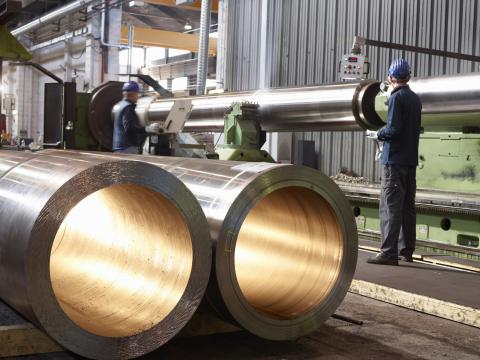
EESC debates the challenges for the EU steel industry

On 9 November, the Consultative Commission on Industrial Change (CCMI) met for a remote debate on the EU steel industry. The debate,  chaired by Pietro Francesco De Lotto, the new CCMI president,  focused on the issues of overcapacity and decarbonisation in the international steel industry. The speakers addressed the challenges facing the European steel industry: the post COVID-19 recovery plan, decarbonisation of production processes, EU safeguard measures and trade.

Read more in all languages

On 9 November, the Consultative Commission on Industrial Change (CCMI) met for a remote debate on the EU steel industry. The debate,  chaired by Pietro Francesco De Lotto, the new CCMI president,  focused on the issues of overcapacity and decarbonisation in the international steel industry. The speakers addressed the challenges facing the European steel industry: the post COVID-19 recovery plan, decarbonisation of production processes, EU safeguard measures and trade.

Steel is an essential good in all developed and developing countries. The COVID-19 pandemic has raised questions about global supply chain dependence, especially when many countries are dependent on one country alone.

The overcapacity production of the Chinese steel industry is a source of concern, as China now dominates more than half of the world's market. In 2018, the United States enacted protectionist taxes so that the American economy was less dependent on Chinese materials. This measure ended up severely harming the EU market, as the USA is an important customer for steel produced in the EU.

At the same time, nations around the world are making efforts to reduce their greenhouse gas emissions, and an increasing number of initiatives are being put forward to move towards a circular economy.

"We need to ensure the competitiveness of steel sectors that uphold the environmental standards necessary for this transition but that are facing competition from other regions of the world where such standards are non-existent or inadequate,'' said Mr De Lotto, as he concluded the debate. ''This also applies to standards on working conditions and labour rights."

Therefore, the EESC calls for a level playing field between European and third-country exporting producers. (tk/ks)

The surprise guest

We now have a new section.

Each month we introduce you to our surprise guest. This will be a well-known European cultural figure who has been in the news and who will give us their take on the world: a breath of fresh air to broaden our horizons, inspire us and make us happy.

Read more in all languages

We now have a new section.

Each month we introduce you to our surprise guest. This will be a well-known European cultural figure who has been in the news and who will give us their take on the world: a breath of fresh air to broaden our horizons, inspire us and make us happy.

Pierre Kroll

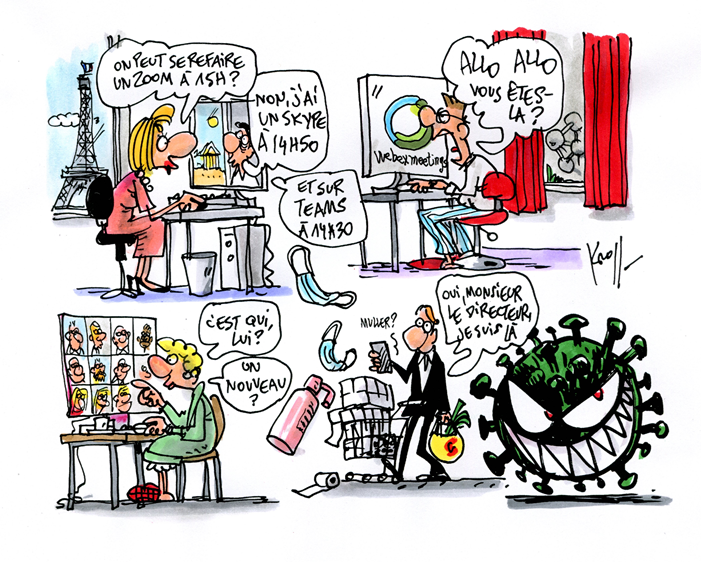
For this first piece, our surprise guest is the distinguished Belgian cartoonist Pierre Kroll of the daily newspaper Le Soir, known for the humour and unique style of his cartoons in which he gives an original and unusual perspective on European and global affairs.

In response to our request for a comment on the most burning issue of the day, Pierre Kroll kindly gave us the following cartoon. (ehp)


Read more in all languages

For this first piece, our surprise guest is the distinguished Belgian cartoonist Pierre Kroll of the daily newspaper Le Soir, known for the humour and unique style of his cartoons in which he gives an original and unusual perspective on European and global affairs.

In response to our request for a comment on the most burning issue of the day, Pierre Kroll kindly gave us the following cartoon. (ehp)

News from the Groups

Forecast: Economy might be harder hit than predicted by the European Commission forecast

By the EESC Employers' Group

In response to the European Commission's recently published Autumn 2020 Economic Forecast, the Employers' Group issued a statement on the initiative of its president Stefano Mallia. The Group concurred with the European Commission's Autumn 2020 Economic Forecast, which stressed that Europe's economic rebound has been interrupted by the resurgence of the pandemic.

Read more in all languages

By the EESC Employers' Group

In response to the  European Commission's recently published Autumn 2020 Economic Forecast, the Employers' Group issued a statement on the initiative of its president Stefano Mallia. The Group concurred with the European Commission's Autumn 2020 Economic Forecast, which stressed that Europe's economic rebound has been interrupted by the resurgence of the pandemic. However, it underlined that the current high level of uncertainty could make the Autumn Economic Forecast less accurate and that the economy might be even harder hit than predicted by the European Commission.

In order to reboot the economy, the Employers' Group called, among other things, for the following measures:

  • Fostering innovation and empowering start-ups will help not only to protect current jobs, but also to create new ones, closing the existing gap between those who have a job and those who don't.
  • Particular attention must be paid to solvency tools, where needed, to support viable firms suffering from liquidity squeeze, while helping companies that have become obsolete wind down in an orderly way. We agree that the best policy response is to deliver on the expectations of the NextGenerationEU.
  • A synchronised fiscal push to improve prospects for all. Fiscal policy must play a leading role in the recovery, making sure that the level of expenditure does not unnecessarily compromise fiscal soundness.
  • It is imperative that both sides in the EU-UK negotiations remain committed to delivering a timely agreement that provides a sound competitive environment for companies, combining good market access with level playing-field provisions.

The full statement can be found via https://europa.eu/!nK46cT

Challenges facing Europe and priorities of the Workers' Group

By the EESC Workers' Group

The preservation of workers' rights must be a top priority in any recovery and reconstruction plan in the aftermath of the COVID-19 pandemic, with solidarity as its guiding principle. To distil this into concrete priorities and actions, the Workers' Group organised an extraordinary meeting on 24 November.

Read more in all languages

By the EESC Workers' Group

The preservation of workers' rights must be a top priority in any recovery and reconstruction plan in the aftermath of the COVID-19 pandemic, with solidarity as its guiding principle. To distil this into concrete priorities and actions, the Workers' Group organised an extraordinary meeting on 24 November.

On the agenda, the enormous challenges that Europe is facing, and the solutions to overcome them that would place the creation and safeguarding of quality employment, workers' protection and social recovery on an equal footing with economic concerns, with a view to achieving a new sustainable social, environmental and economic model.

The issues discussed that will help update and shape the Group priorities, for the next five years and beyond, touched upon crucial issues of concern for the EU and its citizens, such as growing poverty and inequality, working conditions and industrial relations, social dialogue, sustainability, fair transition and others.

Several key figures were invited to discuss with the Workers' Group members the social, economic and environmental challenges for the future of Europe. Following a debate on the social challenges with Oliver Röpke, President of the Workers' Group, and Cinzia del Rio, Vice-President of the EESC's section on social affairs, Ana Mendes Godinho, Portuguese Minister of Labour, Solidarity and Social Security, presented the Portuguese presidency's priorities.

Euractiv Journalist Jorge Valero moderated the afternoon session. The panel on the economic challenges in Europe was led by Stefano Palmieri, President of the EESC's section on economic affairs. The debate was enriched with the intervention of keynote speakers Jonás Fernández, S&D Coordinator, Committee on Economic and Monetary Affairs, and Prof. Colin Crouch, Professor Emeritus of the University of Warwick.

The final debate on the subject of environmental challenges and the Green Deal was introduced by Peter Schmidt, president of the EESC's section on agriculture, with interventions by Commissioner Frans Timmermans in charge of the Green Deal and Lucie Studničná, Vice-president of the Workers' Group.


Séamus Boland is the new president of the Diversity Europe Group

By the EESC Diversity Europe Group

With the start of the EESC's new term of office (2020-2025), Séamus Boland took over the presidency of the Diversity Europe Group. The Group confirmed his new role during its first meeting of the new term held on 27 October.


Read more in all languages

By the EESC Diversity Europe Group

With the start of the EESC's new term of office (2020-2025), Séamus Boland took over the presidency of the Diversity Europe Group. The Group confirmed his new role during its first meeting of the new term held on 27 October.

"Poverty and the role of civil society organisations in combatting it" will be the focus of Mr Boland's presidency. In line with the topic, the Group's priorities for the 2020-2023 presidential term include:

  • Addressing the impacts of COVID-19 on society;
  • Implementing the Green Deal with all stakeholders, based on the Sustainable Development Goal "End poverty in all its forms everywhere";
  • Involving civil society organisations, including European platforms, with the Group's work;
  • Including all Group members in the work as well as maintaining a strong gender balance;
  • Promoting the Group's work to other institutions and the wider public more efficiently.

Séamus Boland's candidacy for the presidency was driven by a wish to advance the case for civil society and to strengthen its voice. The Irishman suggested addressing civil society's broad needs and ensuring quality work and robust procedures at the EESC to this end.

The new president will chair the Diversity Europe Group together with seven vice-presidents:

Pietro Vittorio Barbieri (IT), Jan Dirx (NL), Kinga Joó (HU), Rudolf Kolbe (AT), Ariane Rodert (SE), Simo Tiainen (FI) and Ioannis Vardakastanis (EL).

During the EESC's inaugural plenary session in October, the plenary appointed members of the Diversity Europe Group to different leadership positions. Cillian Lohan was appointed EESC vice-president for communication, amongst others.

Detailed information is available on the Group's web page.

Soon in the EESC/Cultural events

The Refuge expo is on in the EESC for the month of December!

The EESC is hosting a photography exhibition by the French photographer Bruno Fert entitled “Refuge: Private worlds in exile”.

It comprises a series of panels with portraits and testimonies, together with images of interiors in refugee camps and makeshift shelters in Greece and France, including the “jungle” in Calais.

The exhibition is being organised by the Directorate for Communication and Interinstitutional Relations in partnership with the Section for Employment, Social Affairs and Citizenship (SOC) to highlight the work done by the EESC on migration policies, also in relation to the EU Migration Pact.

Due to the pandemic the exhibition is being presented 100% virtually. Don't miss it!

Please follow this link to access the exhibition:

https://www.eesc.europa.eu/en/agenda/our-events/events/refuge-private-worlds-exile  (ck)

Read more in all languages

The EESC is hosting a photography exhibition by the French photographer Bruno Fert entitled “Refuge: Private worlds in exile”.

It comprises a series of panels with portraits and testimonies, together with images of interiors in refugee camps and makeshift shelters in Greece and France, including the “jungle” in Calais.

The exhibition is being organised by the Directorate for Communication and Interinstitutional Relations in partnership with the Section for Employment, Social Affairs and Citizenship (SOC) to highlight the work done by the EESC on migration policies, also in relation to the EU Migration Pact.

Due to the pandemic the exhibition is being presented 100% virtually. Don't miss it!

Please follow this link to access the exhibition:

https://www.eesc.europa.eu/en/agenda/our-events/events/refuge-private-worlds-exile  (ck)

Editors

Ewa Haczyk-Plumley (editor-in-chief)
Daniela Marangoni (dm)
 

Contributors to this issue

Chrysanthi Kokkini (ck)
Daniela Marangoni (dm)
David Gippini Fournier (dgf)
Ewa Haczyk-Plumley (ehp)
Jasmin Kloetzing  (jk)
Katharina Radler (kr)
Katerina Serifi (ks)
Laura Lui (ll)
Marco Pezzani (mp)
Margarita Gavanas (mg)
Nicola Accardo (na)
Pablo Ribera Paya (prp)
Theodore Koumakis (tk)
 

Coordination

Agata Berdys (ab)
Katerina Serifi (ks)

Technical support
Bernhard Knoblach (bk)

Special thanks to Roland Nellissen for the images/logos of :
One question to... &  The surprise guest

Address

European Economic and Social Committee
Jacques Delors Building,
99 Rue Belliard,
B-1040 Brussels, Belgium
Tel. (+32 2) 546.94.76
Email: eescinfo@eesc.europa.eu

EESC info is published nine times a year during EESC plenary sessions. EESC info is available in 23 languages
EESC info is not an official record of the EESC’s proceedings; for this, please refer to the Official Journal of the European Union or to the Committee’s other publications.
Reproduction permitted if EESC info is mentioned as the source and a link  is sent to the editor.
 

December 2020
12/2020

Follow us

  • Facebook
  • Twitter
  • LinkedIn
  • Instagram