Newsletter Info

EESC info

European Economic and Social Committee A bridge between Europe and organised civil society

MAY 2022 | EN

GENERATE NEWSLETTER PDF

Available Languages:

  • BG
  • CS
  • DA
  • DE
  • EL
  • EN
  • ES
  • ET
  • FI
  • FR
  • GA
  • HR
  • HU
  • IT
  • LT
  • LV
  • MT
  • NL
  • PL
  • PT
  • RO
  • SK
  • SL
  • SV
Celebrating unity and showing solidarity
Christa SCHWENG

Editorial

This year's celebrations of Europe Day on 9 May were different. Unjustified and unprovoked Russian aggression against Ukraine brutally reminded us of the reason why the EU was created and the importance of peace and solidarity. This year more than ever, we celebrate our unity and the achievements of the EU. We should also continuously show our solidarity with Ukraine.


Read more in all languages

This year's celebrations of Europe Day on 9 May were different. Unjustified and unprovoked Russian aggression against Ukraine brutally reminded us of the reason why the EU was created and the importance of peace and solidarity. This year more than ever, we celebrate our unity and the achievements of the EU. We should also continuously show our solidarity with Ukraine.

On 9 May, we also witnessed the closing event of the Conference on the Future of Europe (CoFoE). Its initial scope had been widened to meet a new challenge: addressing the social and economic consequences of war in Ukraine in an already demanding post-pandemic environment.

After nearly a year, I can say that the experiment of the Conference turned out to be rather successful. Overall, the process was transparent and the outcome is fairly positive. But the work is far from being over. Now, we have to respond to citizens' demands and expectations.

As a first step, a dashboard should be created that allows citizens to check what actions have been taken in response to each recommendation. This tool would ensure a structured and transparent follow-up. In fact, transparency as well as fair representation are key factors in a participative democracy.

Another possible outcome could be the creation of a permanent exchange with citizens based on the lessons learned from the CoFoE, with the EESC as the institutional intermediary.  

In the context of the Conference, I would like to once again emphasise the importance of involving organised civil society in shaping policy. The Committee will continue to work closely with all the EU institutions towards common goals designed to make our societies stronger.

We will ensure that the contribution of organised civil society is at the heart of enhanced participatory democracy. Involving all of us, by default, must be the basis for a European Union that is a great place to be and to prosper.

Christa Schweng
EESC President

Diary Dates

31 May-1 June 2022, Marrakesh

2022 Euromed Summit of Economic and Social Councils and similar institutions

2 June 2022, Brussels

European Citizens’ Initiative (ECI) Day 2022

8 June 2022, Brussels

Consultative Commission on Industrial Change 20th anniversary

15-16 June 2022, Brussels

EESC plenary session

To the point

In the column "To the point", we put the spotlight on EESC opinions and initiatives that can make a difference. In this edition, EESC member Tatjana Babrauskiene highlights the key elements of a new opinion on Supporting the independent media sector in Belarus. She points out the dangers independent journalists face in Belarus and other authoritarian states where democratic principles are trampled, and calls for their protection. (ehp)

Read more in all languages

In the column "To the point", we put the spotlight on EESC opinions and initiatives that can make a difference. In this edition, EESC member Tatjana Babrauskiene highlights the key elements of a new opinion on Supporting the independent media sector in Belarus. She points out the dangers independent journalists face in Belarus and other authoritarian states where democratic principles are trampled, and calls for their protection. (ehp)

Tatjana Babrauskienė: The EU should provide support to independent media in Belarus

The EESC believes that the situation in Belarus is a European issue and should be given due attention. The EU and its Member States could help relay and disseminate independent news coverage from Belarus across Europe by making it available in other languages.

Read more in all languages

The EESC believes that the situation in Belarus is a European issue and should be given due attention. The EU and its Member States could help relay and disseminate independent news coverage from Belarus across Europe by making it available in other languages. 

Since the August 2020 presidential election in Belarus, which the opposition and Western democracies saw as rigged, the authoritarian regime of Aleksandr Lukashenko has taken brutal steps to stifle an unprecedented protest movement in the country, launching a mass attack on civil society and news media. Over 35 000 people have been arrested, thousands have been beaten by law enforcement and several protesters have been killed. 

During all this time, journalists, bloggers and writers have covered the protests, documenting police brutality, providing truthful information, looking for working internet connections to upload footage and trying to avoid arrest. It is because of them that the whole world has learned about the unprecedented human rights crisis in Belarus. It is important to recognise the incredible work Belarus journalists have done, the lengths they have gone to, putting their lives on the line and sometimes putting their families at risk just to get the truth out, and to pay tribute to all the brave and peaceful protestors, who have found the most creative ways to voice their opposition.

The EESC stresses that the situation in Belarus is a European issue and should be given due attention. The EU and its Member States could help to convey news from Belarus to a wider audience by linking up with different independent news agencies from Belarus and making their content available in other languages. 

In a recent information report, the EESC sets out crucial steps that could be taken by EU Member States to support independent media in Belarus and potentially in other countries:

  • setting a global example of support for media freedom in crisis by delivering assistance and extending emergency shelter and visa waivers to Belarusian journalists seeking refuge from repression;
  • establishing European and national funds to support Belarusian free media and journalists – a model that could potentially be extended to other countries living under a dictatorship. This should include emergency aid for repressed and relocated journalists who are in need of legal, financial and psychological support;
  • developing a strategy to channel the support in a way that can help make the work of journalists sustainable; 
  • looking at ways to integrate Belarusian independent journalists into national media outlets of EU Member States or offering them fellowship opportunities;
  • increasing assistance and ensuring flexibility by cutting red tape in obtaining EU financial support;
  • looking for alternative ways to provide internet connections from the EU where the state provider cuts access; 
  • supporting innovations in information transfers; 
  • stopping deliveries of equipment or software that can be used to censor the internet and websites in Belarus and sanctioning the national telecommunications company Beltelecom, which has the monopoly on the carriage of international web traffic and was behind the country's internet shutdowns;
  • countering internet surveillance, providing Belarusian journalists with tools to circumvent censorship and increasing their digital literacy. 

The EESC is also of the opinion that the EU should urgently add all judges, prosecutors and police personnel involved in the prosecution of journalists and activists to the sanctions list.

Tatjana Babrauskienė, EESC member

From Ukraine on the road to...

The tragic story of Ukraine is unfolding before our very eyes thanks to the tireless and heroic work of journalists, photographers and camera operators, who go where we cannot go. One of them, Sławek Kamiński, a Polish photographer, has donated pictures from the Belarus-Polish border, the Polish city of Rzeszów and the Polish-Ukrainian border in Medyka-Shehyni. Today we are publishing a third photo from this series. A big thank you to Mr Kamiński for sharing the moment captured in the frame.

Photo: Sławek Kaminski/GW

Read more in all languages

The tragic story of Ukraine is unfolding before our very eyes thanks to the tireless and heroic work of journalists, photographers and camera operators, who go where we cannot go. One of them, Sławek Kamiński, a Polish photographer, has donated pictures from the Belarus-Polish border, the Polish city of Rzeszów and the Polish-Ukrainian border in Medyka-Shehyni. Today we are publishing a third photo from this series. A big thank you to Mr Kamiński for sharing the moment captured in the frame.

Photo: Sławek Kaminski/GW

One question to

One question to...

In our "One question to ..." column, Jacques Glorieux, one of the most experienced members in the EESC's Consultative Commission on Industrial Change (CCMI), comments on the CCMI's forthcoming 20th anniversary.

Read more in all languages

In our "One question to ..." column, Jacques Glorieux, one of the most experienced members in the EESC's Consultative Commission on Industrial Change (CCMI), comments on the CCMI's forthcoming 20th anniversary.

Jacques Glorieux is on the board of several chambers of commerce in Belgium and Luxembourg and is vice-president of the Belgian Chambers. From 1998 to July 2002, he represented the Belgian coal sector in the consultative commission of the European Coal and Steel Community. He joined the EESC in the newly established CCMI in 2002 and is currently a member of its steering body, the bureau. He actively participates in all CCMI coal-related activities, such as the coal round tables and the "Coal regions in transition" initiative as part of the European Commission's Just Transition Platform.

Twenty years on, CCMI is more relevant than ever

EESC info: The CCMI will celebrate its 20th anniversary on 8 June. What has its role been to date, how has it contributed to the EU agenda and how has it served European civil society? Will it have an essential role to play in Europe's future?

Jacques Glorieux: The Consultative Commission on Industrial Change was set up at the European Economic and Social Committee in 2002 as a distinct legislative commission. It succeeded the consultative committee of the European Coal and Steel Community (ECSC), created by the Treaty of Paris in 1952 for a fifty years period. It is thus the oldest body dedicated to anticipating and supporting industrial change.


Read more in all languages

EESC info: The CCMI will celebrate its 20th anniversary on 8 June. What has  its role been to date, how has it contributed to the EU agenda and how has it served European civil society? Will it have an essential role to play in Europe's future?

Jacques Glorieux: The Consultative Commission on Industrial Change was set up at the European Economic and Social Committee in 2002 as a distinct legislative commission. It succeeded the consultative committee of the European Coal and Steel Community (ECSC), created by the Treaty of Paris in 1952 for a fifty years period. It is thus the oldest body dedicated to anticipating and supporting industrial change.

I have witnessed this transition personally. In these twenty years, the CCMI has cast light and advised on issues of particular relevance for civil society. It was, for example, the CCMI that drew the attention of EU institutions to planned obsolescence in 2013. It has produced a wide range of opinions, making the most of the sectoral expertise not only of its members, but particularly of its delegates. This dual membership is another unique feature and strength of the CCMI.

The CCMI's core business is rooted in its historic mission of analysing industrial change in coal and steel, in particular delocalisation, relocalisation and the restructuring of industries. Nevertheless, I am proud to say that the CCMI has successfully extended its remit to embrace all industrial ecosystems, including, for example, resource- and energy-intensive industries, critical raw materials, the health industries, the automotive sector and the shipbuilding, aerospace and defence manufacturing industries.

I am confident about the future of CCMI, as its mission is more relevant today than ever before. Industrial policy, which was at the core of European integration from the start with the ECSC, remains high on the European agenda, in particular in the context of the recovery from COVID-19, which has exposed critical dependencies and has greatly affected the Single Market. Similarly, the recent invasion of Ukraine has revealed vulnerabilities leading to shortages of certain critical materials and components in Europe and raising energy prices. In this volatile context, succeeding in the green and digital transition of our economy is essential and urgent to boost Europe's resilience and strategic autonomy.

These transformations are and will be impacting our daily lives in an unprecedented way and the EESC, and in particular the CCMI, need to play a key role in making a just transition to a future where industry is compatible with the environment, where the economy thrives and where workers are protected. Before the summer of 2022, the CCMI will adopt opinions covering the Chips Act from the sectoral perspective of the defence and aerospace industries, the critical technologies of defence and security - a key topic for achieving open strategic autonomy - and decarbonisation technologies.

On 8 June, we will be celebrating the CCMI's 20th anniversary, but we will be looking to the future and we will address all of these issues, reflecting on how the EESC can best contribute to the response to the challenges that all European industrial sectors are facing in remaining competitive. The conference will be an opportunity to give a voice to organised civil society, a key player in ensuring that these transformations take place in a just and fair way, leaving no one behind.  

I invite you all to follow the event through the CCMI dedicated website at: https://www.eesc.europa.eu/en/agenda/our-events/events/ccmi-20th-anniversary


The surprise guest

The surprise guest

Each month in this column, we introduce a public figure whose work and commitment are a source of inspiration. Their courage, strength of character and determination to take action set a shining example and their bravery deserves respect. Our guest this month is Nadija Afanasieva, director of the Ukrainian Institute for International Politics in Kyiv, Ukraine. She is also a coordinator of the Civil Society Platform EU-Ukraine. She is an expert in cross-border cooperation and macroregional strategies, EU funds, smart specialisation and project management.


Read more in all languages

Each month in this column, we introduce a public figure whose work and commitment are a source of inspiration. Their courage, strength of character and determination to take action set a shining example and their bravery deserves respect. Our guest this month is Nadija Afanasieva, director of the Ukrainian Institute for International Politics in Kyiv, Ukraine. She is also a coordinator of the Civil Society Platform EU-Ukraine. She is an expert in cross-border cooperation and macroregional strategies, EU funds, smart specialisation and project management.


Nadija Afanasieva: Working together to build a strong and secure Ukraine

Celebrating the New Year with friends and family, making wishes and plans for 2022, nobody in the world expected our lives to change so dramatically in just a few months.


Read more in all languages

Celebrating the New Year with friends and family, making wishes and plans for 2022, nobody in the world expected our lives to change so dramatically in just a few months.

The first time Ukraine saw the face of war since its independence was in 2014.

During the Revolution of Dignity, more than 100 people were shot on Maidan Square. Then came the invasion of Donbas and the annexation of Crimea. Ukrainian civil society was transformed significantly in 2014: volunteers went to the frontline, helping IDPs and supporting injured soldiers. We thought those were the darkest days of our history, but we were wrong.

In 2014 our society's division over whether we should join the EU or not practically disappeared. The last opinion poll before the invasion in February 2022 showed that a significant 68% of Ukrainians were in favour of EU membership for Ukraine; support grew to 86% just after the invasion and reached 91% by the end of March - an absolute record!

This massive backing is a reaction to what EU civil society has been doing to help. It mobilized immediately and pushed EU governments to make rapid decisions. The role of volunteers, who have been working from the first hours of the invasion, has been enormous. Their superpower is that they can find quick solutions to any problem, from ammunition and drones to medicines and clothes for refugees. The wave of demonstrations and the huge numbers of yellow-blue flags waved across the EU were incredible. As we hid in shelters, we found strength in the photos of people all over the world supporting Ukraine.

The majority of our partners started calling soon after they got the news of the massive air strikes all over Ukraine, asking: "how can we help?". We received a lot of help, but we need more.

The army needs innovative solutions and technologies to win the battle; doctors of all specialisations need contemporary equipment and staff to help injured soldiers and civilians; volunteers need even more contacts all over the world; etc.

But we also need a strategic vision of the recovery process in Ukraine, and here the common efforts of the whole democratic world to build a strong and secure state and develop innovative solutions in constructions, infrastructure organisation, business and science support, capacity-building for the institutions of different levels, etc play a crucial role.

Both Ukrainians and the EU have learnt very clear lessons from this war:

-    Some situations require urgent solutions, especially as regards common security issues.
The war started in 2014 and for 8 years Ukrainians have been explaining the danger of close relations with Russia, dependence on Russian energy resources and other products from a country which spends its revenues on terrorism and acts of massacre. Still, neither Ukraine nor the EU were ready for such cruel and full-scale invasion, otherwise we would have both shown more determination. Would the invasion have taken place if the sanctions imposed in 2014 had been as harsh as those of 2022?

-    The war in 2022 is also a war of innovation and technology. For sure, if we increase energy efficiency, diversify energy sources, find new digital solutions, develop space technologies and improve the way we manage our natural resources, etc., our level of independence and security will be higher than now, when all countries are experiencing a serious crisis.

Recognising the importance of an immediate response from politicians, diplomats, military forces, volunteers and civil society set us on a path to win the battle. The need for support is still enormous, but the motivation grows stronger every day.

We Ukrainians have proved that our main values are human dignity and freedom, democracy and equality, rule of law and human rights. There was never any fast-track procedure for EU membership, but the situation of Ukraine is exceptional, and probably it is time to rethink the procedure.

Ukrainians are fully aware of the volume of homework they need to do to join the EU. Our strength is our motivation to build a free state and form partnerships with those who have stood by us in the hardest times. And so we hold out, with trust in our armed forces and the vision of a prosperous country.

Nadija Afanasieva, director of Ukrainian Institute for International Politics in Kyiv, Ukraine

 

EESC News

The EESC discusses the priorities of the Czech EU presidency and the right energy mix for Europe's future

Mikuláš Bek, Czech Minister for European Affairs, revealed the five likely political priorities for the upcoming Czech presidency of the Council of the EU, in an address to EESC members delivered in Prague on 28 April 2022.

Read more in all languages

Mikuláš Bek, Czech Minister for European Affairs, revealed the five likely political priorities for the upcoming Czech presidency of the Council of the EU, in an address to EESC members delivered in Prague on 28 April 2022.

Mr Bek disclosed the Czech presidency's expected political priorities at a meeting of the EESC Bureau, stressing that the spotlight would be on the green and digital transition but also, in the light of recent events, on security.

Under the motto "Europe as a task", taken from a speech by Czech former head of state Václav Havel in Aachen, the Czech EU presidency will focus on:

1) managing the refugee crisis and post-recovery in Ukraine;
2) energy security in Europe;
3) strengthening European defence capacity and cyberspace security;
4) strategic resilience of the European economy;
5) resilience of democratic institutions.

Referring to the developments in the crisis in Ukraine, he said that "ensuring access to affordable, sustainable but also reliable energy sources will be one of the biggest challenges which the EU has ever faced".

In the debate, EESC members urged the minister to increase the EU's and national governments' support to civil society organisations, saying that such organisations were right on the frontline in the humanitarian crisis brought about by the Russian invasion of Ukraine and needed urgent practical support.

European solidarity was another key thread in the discussion: members stressed that it would only be possible to stop energy imports from Russia if all EU Member States stuck together and shared available energy sources.

Several speakers also warned against disregarding social aspects during the Czech Council Presidency in the second half of 2022. With energy and food prices increasing, poverty was on the rise and was threatening social cohesion.

In a seminar held as part of the event, on an Optimal energy mix for sustainable and affordable energy, EESC president Christa Schweng pointed out that reducing the EU's energy dependency on third countries was essential. The way ahead was to diversify energy sources and step up investment on renewables.

"To ensure a successful transition, civil society organisations must play a key role in defining and implementing policies", she said. (mp)

Disentangling the regulatory jungle: EU action on platform work should help secure fair work for all

The EESC has welcomed the European Commission’s proposal for a directive on improving working conditions in platform work, hailing the initiative as a much needed step towards setting clear and well-defined criteria for classifying employment relations and for governing the use of algorithms when recruiting and employing platform workers.

Read more in all languages

The EESC has welcomed the European Commission’s proposal for a directive on improving working conditions in platform work, hailing the initiative as a much needed step towards setting clear and well-defined criteria for classifying employment relations and for governing the use of algorithms when recruiting and employing platform workers.

The EESC said that the use of a binding legal instrument, a directive, to regulate platform work was justified, as the extreme diversity of working conditions and legislation in each Member State often results in the poor treatment of platform workers and in a crumbling of national and EU labour protection standards. The opinion was adopted at its plenary session in March, with 149 votes in favour, 80 against and 17 abstentions.

The rapporteur for the opinion, Cinzia del Rio, said: We see clear examples of discrimination and unequal treatment of platform workers across the EU. The situation in Member States is extremely diverse – it's a regulatory jungle which needs to be disentangled. The proposed directive aims to provide a flexible regulatory framework, which can be adapted at the national level and which would take into account disparities in people's working conditions.

By far the most important issue is the legal classification of the employment relationship and its clear distinction from genuine self-employment. To this end, it is necessary to clearly identify the legally responsible employer, both to ensure proper payment of taxes and social contributions and to enable collective bargaining. In the EESC's view, however, the text of the Commission's proposal is too generic and vague on this issue, as well as on a number of other points, such as the rights of both workers and union representatives to information and consultation.

These legal uncertainties may in some situations favour the emergence and proliferation of undeclared forms of work and deplorable situations of exploitation and competition between the workers themselves, who might be under illegal subcontracting practices, said the EESC. 

The EESC's Employers Group submitted a counter opinion, which obtained more than 30% of the votes cast and was published as an Appendix to the adopted opinion. The Employers' Group opposed the use of a directive to regulate platform work, fearing such binding legislation would represent a "one-size-fits-all" solution. This may become a barrier for innovation and investment in the setting-up and development of digital platforms in the EU.

They also disagree with the introduction of a legal EU definition of who is a worker and who is self-employed on platforms as it would be unable to respect the different models used in different countries or keep up with dynamic developments in labour markets. (ll)
 

EESC calls for consistent and tough sanctions on employers of illegally staying migrants

The EESC has called on EU Member States to step up their efforts and implement the EU directive providing for sanctions against employers of illegally staying third country nationals. In a recently adopted opinion, the EESC warned about the flawed transposition and implementation of the directive across the EU.

Read more in all languages

The EESC has called on EU Member States to step up their efforts and implement the EU directive providing for sanctions against employers of illegally staying third country nationals. In a recently adopted opinion, the EESC warned about the flawed transposition and implementation of the directive across the EU.

Often a source of labour exploitation, the employment of illegally staying migrants is also a pull factor for migrant smuggling; every year, this claims the lives of thousands of people embarking on dangerous journeys to reach Europe. Both criminal practices should be met with resolute action at national and EU level, says the EESC.

In its opinion, the EESC stressed that the severity of sanctions varies considerably between Member States and, in most cases, they do little to dissuade employers from hiring illegally staying third-country nationals. 

Another shortcoming of the directive is its inability to encourage migrants to file any official complaints against employers. This is due to migrants' often justified and legitimate fear that they will be returned to their countries of origin. We firmly support the Commission when it says it will launch infringement proceedings against Member States, should they persist in not providing all relevant information on the implementation of the key obligations on sanctions, inspections and protection of migrants' rights laid down in the Directive, said the rapporteur of the opinion, Carlos Manuel Trindade. 

In another opinion, the EESC analysed the renewed EU Action Plan against Migrant Smuggling (2021-2025). It welcomed its comprehensive approach to this issue, and hailed it as the continuation of its work to combat this dangerous and criminal activity. According to Europol figures, more than 90% of people who entered the EU illegally have travelled via smuggling networks at some point.

Combating migrant smuggling is considered a priority under the EU's New Pact on Migration and Asylum, as it has claimed the lives of thousands of migrant women, children and men. It violates their rights, taking advantage of people trying to enter the EU. It is also a threat to European security.

The fight against migrant smuggling can never be directed against the migrants themselves or against humanitarian aid and help for them. There must be no criminalisation of solidarity, said the rapporteur of the opinion José Antonio Moreno Diaz. We understand that safeguarding the EU's external borders is a priority, but they must be always protected with respect for human rights. (ll)

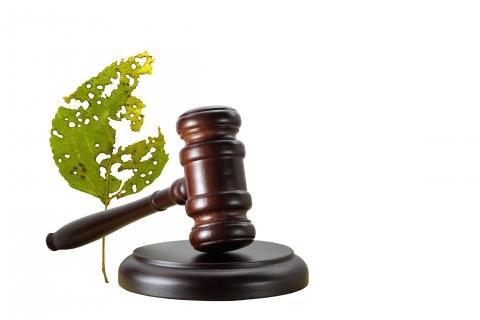
The EU and the environment: time to tighten criminal law

In its opinion Improving environmental protection through criminal law, adopted at its March plenary session, the EESC suggested the EU should impose criminal sanctions on as many environmental offences as possible.

Read more in all languages

In its opinion Improving environmental protection through criminal law, adopted at its March plenary session, the EESC suggested the EU should impose criminal sanctions on as many environmental offences as possible.

The report looked into the proposed new EU Environmental Crime Directive (ECD) and suggested practical ways to make it truly effective, proportionate and dissuasive.

The EESC welcomed the extension of the list of environmental criminal offences from nine to eighteen, but believes the directive should cover as many types of environmental offence as possible. It is also of the view that the maximum limits for sanctions should be substantially higher for these to be effective, proportionate and dissuasive.

A further proposal made in the report is for environmental crimes to be under the jurisdiction of the European Public Prosecutor's Office, since many of them are known to have links to organised crime.

The EESC is also calling for the crime of ecocide to be inscribed in the directive, and to be defined as "an unlawful or wanton act committed in the full knowledge that there is a substantial likelihood of severe and either widespread or long-term damage to the environment". The EESC notes that armed conflicts are practically always, by definition, ecocides. 

Environmental crime is the fourth most lucrative crime category globally and is on the increase in the EU. While cross-border convictions have not grown substantially, the rate of environmental crimes committed in Europe has gone up.
The EESC stresses that overhauling the directive is not enough. One of the weaknesses flagged up in assessments of the current directive is implementation in the Member States. The EESC therefore highlights the need to strengthen the enforcement chain and suggests EU Member States should set up specialised police forces, prosecutors, judges and courts in the area of environmental crime.

The 2008 Environmental Crime Directive is the main binding instrument in place in the EU to tackle environmental crime. An evaluation conducted in 2019 and 2020 showed that it did not have much effect on the ground. Over the past decade, the number of environmental crime cases successfully investigated and sentenced has remained low, the sanctions imposed were insufficiently dissuasive and there has been no systematic cross-border cooperation. Following the evaluation, the Commission decided to replace it with a new EU Directive. (mr)
 

Antisemitism is a test of the European idea

The European Union has an obligation to defend our fundamental values, including the rights of persons belonging to minorities. For this reason, the EESC strongly supported the establishment of the European Commission's Strategy on combating antisemitism and fostering Jewish life at its March plenary.

Read more in all languages

The European Union has an obligation to defend our fundamental values, including the rights of persons belonging to minorities. For this reason, the EESC strongly supported the establishment of the European Commission's Strategy on combating antisemitism and fostering Jewish life at its March plenary.

The EESC firmly believes that antisemitism is a test of the European idea, the rule of law, fundamental rights, and democracy, explains rapporteur Ákos Topolánszky.

The Committee applauds the strategy for seeking not only to address antisemitism but also to foster Jewish life, and work towards public policies and community cooperation promoting mutual acceptance.

The EESC deems it essential to understand the roots and causes of all forms of violence against Jewish individuals and communities in order to be able to take effective action, not only through the criminal justice system, but also through a more effective system of action at community and societal level. 

Moreover, as an integral part of European identity, Jewish culture must be made more accessible to citizens and the general public. The Committee calls on EU institutions, Member States and social partners to properly present and celebrate the Jewish community's role in the EU as an essential and inalienable part of a common culture.

The Committee believes that all constitutional and EU legal instruments should be consistently used to tackle antisemitic content in the media, while improving knowledge and understanding of Jewish life through more balanced and sensitive reporting. 

In most cases, the representation of Jewish communities and their members on traditional and social media is very limited, focusing primarily on the impact of antisemitic violence and terrorism. However, there is also a need to present positive content beyond this as recognition of the importance of social coexistence. 

As a final point, the EESC encourages the European Commission to give the fight against antisemitism and the strategic agenda for the promotion of Jewish life a strong external dimension, in all aspects of cooperation with third countries and international organisations. The Committee points to our neighbourhood policy and development cooperation instruments, as well as the instruments for bringing EU candidate countries closer to the EU, as appropriate mechanisms for combating antisemitism and promoting Jewish life. (gb)

EESC points finger at missing pieces in Commission's proposals to fight shell companies

The EESC supports the Commission's proposed measures to fight the misuse of shell companies and set up a minimum effective corporate taxation, but would like to see them beefed up. In two opinions adopted at its March plenary, the EESC flagged up possible shortcomings and suggested key additions. 

Read more in all languages

The EESC supports the Commission's proposed measures to fight the misuse of shell companies and set up a minimum effective corporate taxation, but would like to see them beefed up. In two opinions adopted at its March plenary, the EESC flagged up possible shortcomings and suggested key additions. 

Ensuring effective and fair taxation across the single market is crucial to stimulating a real recovery after the COVID-19 pandemic and financing the digital and green transition. In the two opinions, the EESC welcomed the Commission's proposals to fight the use of shell companies to evade taxation and introduce a minimum effective taxation of companies, but pointed to possible gaps and suggested key additional measures. 

Benjamin Rizzo, rapporteur for the opinion on fighting the use of shell entities, said: "Shell companies that have been set up in Member States need to be brought into line with the Commission proposal, and collaboration between Member States is more imperative than ever to avoid eroding the EU's fiscal powers". 

Javier Doz Orrit, co-rapporteur for the opinion, said: "If the directive against shell companies complements the Commission's anti money laundering legislative package, a rule against 'professional enablers' running shell companies should further complement it". 

Krister Andersson, rapporteur for the opinion on a minimum effective taxation of companies, said: "The OECD is expected to present important rules concerning safe harbours, simplified administrative filing and other important points. These rules should be included in the directive as well. It is critical that the legislation be transposed in a uniform fashion in the EU and applied equally and at the same time worldwide". 

Petru Sorin Dandea, co-rapporteur for the opinion, said: "The EESC would have appreciated an impact assessment for the parts of the directive that make it compliant with EU law. We call for such an analysis to be undertaken and to be made publicly available". (tk)
 

The EESC is ready to be actively involved in the New European Bauhaus

The New European Bauhaus puts a cultural and creative dimension at the heart of the European Green Deal and the renovation wave, providing a springboard for the green transition. With these words, EESC President Christa Schweng summed up the EESC's position on this new Commission initiative when she met the Commissioner for Innovation, Research, Culture, Education and Youth, Mariya Gabriel, at the EESC plenary session on 23 March 2022.

Read more in all languages

The New European Bauhaus puts a cultural and creative dimension at the heart of the European Green Deal and the renovation wave, providing a springboard for the green transition. With these words, EESC President Christa Schweng summed up the EESC's position on this new Commission initiative when she met the Commissioner for Innovation, Research, Culture, Education and Youth, Mariya Gabriel, at the EESC plenary session on 23 March 2022.

"We fully agree with the aim of providing all citizens with access to goods that are circular and less carbon-intensive in their places of living, work, public buildings and housing through practical experiences," said Ms Schweng. Stressing the importance of involving civil society organisations and looking to the future, she added: "The EESC is ready to be actively involved in the participatory approach of the New European Bauhaus movement in order to ensure a fruitful dialogue with citizens and civil society, providing solutions for and improving their daily lives."

Referring to the severe consequences of the pandemic and the outbreak of war in Ukraine, Ms Gabriel underlined the importance of such projects today: "I think it is more important than ever to be able to see hope in our future, to continue to work together for this. And that is exactly what the New European Bauhaus represents. The EESC is an essential partner for its success. Together, we will make sure that it is put into practice in a way that is as close as possible to local communities, European citizens and their homes."

The Commissioner judged the participatory approach to be "crucial for maintaining dialogue with citizens," adding: "it is precisely this idea of co-creation and cooperation that inspired our initiative". She praised the EESC's proposals, such as the suggestion to set up a civil society platform to provide support at local level and to hold a dedicated conference during the European Bauhaus Festival on 9-12 June 2022. Another important step will be the launch in April 2022 of the New European Bauhaus Lab, a reflection and action group on co-creation, prototyping and testing. (mp)

Energy-efficient buildings will help fight energy poverty

The EESC adopted an opinion on the recast Energy Performance of Buildings Directive (EPBD) at its March plenary session, welcoming the Commission's take up of issues highlighted in previous EESC opinions.

Read more in all languages

The EESC adopted an opinion on the recast Energy Performance of Buildings Directive (EPBD) at its March plenary session, welcoming the Commission's take up of issues highlighted in previous EESC opinions.

Commenting on the adoption of the document, the rapporteur Mordechaj Martin Salamon said that "the EESC wholeheartedly welcomes the EU approach as it boosts renovation of the worst-performing buildings in particular and sets the European Union on a path of decarbonised heating and cooling: measures at EU level are more efficient at accelerating the necessary transition."

The updated Directive on energy performance of buildings aims to help achieve an energy-efficient, high quality and fossil-free built environment, providing the tools to effectively tackle energy poverty and remedy structural long-term underinvestment in construction.

The recent sharp increases in energy prices and the prospect of high prices for at least the medium term have shown that it is more important than ever to put a strategy in place to alleviate and eradicate energy poverty. 

In 2018, 6.8% of people across the EU (approximately 30.3 million) were unable to keep up with utility bills and at risk of having their supply cut off; recent developments have made this problem worse. 

To secure decent, affordable and healthy housing for all, the EU should implement long-term measures to improve the energy efficiency of buildings, including the safe removal of asbestos. This is all the more urgent because fossil fuel-based heating and cooling will become more expensive with the rising costs of EU Emissions Trading System (EU ETS) allowances. (mp)

Energy transition: trust and fair procedures will increase social acceptance

Fair procedures and dialogue with local communities will make Europeans aware of the benefits of the energy transition, motivating them to participate in it, says the EESC in an opinion adopted at the March plenary session.

Read more in all languages

Fair procedures and dialogue with local communities will make Europeans aware of the benefits of the energy transition, motivating them to participate in it, says the EESC in an opinion adopted at the March plenary session.

Building mutual trust with all stakeholders is essential to making the energy and low-carbon transition socially acceptable, stressed the EESC in its opinion "What conditions are needed for the energy and low-carbon transition to be socially acceptable?". 

"All energy transition-related measures require open communication and full participation as early on in the project development phase as possible and at all appropriate levels, from the EU to local government," said rapporteur Arnaud Schwartz.

Co-rapporteur Jean Coulon said: "Support from civil society is extremely important to secure the community's ownership, as local organisations can contribute to the public debate more easily and use scientific data to fight any false ideas that might circulate."

The European Union needs the energy transition because it is cleaner and individually and collectively fairer. It will also be cheaper for citizens in the long term. However, it requires individual and collective changes and, in the short term, decarbonising may entail higher costs for producers and higher prices for consumers.

It is therefore key that the population and all stakeholders strengthen their mutual trust and accept the transformation and its technical changes, from planning to implementation. To achieve this, the process has to be independent, transparent and inclusive, information provided should be of a high quality and easily accessible, and decision-makers should be accountable. (mp)

New TEN-T Regulation is key for Europe's sustainability and smart mobility

The proposed update of the regulation on trans-European transport networks is needed and welcome, if the EU is really to contribute to sustainability and to smart mobility, including through rail. This was the main message of the opinion on the Revision of the TEN-T and Rail Freight Corridor Regulation adopted at the March plenary session.

Read more in all languages

The proposed update of the regulation on trans-European transport networks is needed and welcome, if the EU is really to contribute to sustainability and to smart mobility, including through rail. This was the main message of the opinion on the Revision of the TEN-T and Rail Freight Corridor Regulation adopted at the March plenary session.

The new regulation will upgrade the existing regulatory framework that dates back to 2013 and will help achieve, on the infrastructure side, the goals set in the Green Deal, the Sustainable and Smart Mobility Strategy and the Rail Action Plan. 

Commenting on the adoption of the opinion, Mr Back said: It was high time to propose a new regulation that takes into consideration the current policy context and capitalises on the lessons learned in the past few years. The plan to strengthen the rules on TEN-T implementation is very good news, because the roll-out of the current regulation has seen significant delays and has not been satisfactory.

The Committee values in particular the European Commission's intention to put cohesion at the heart of the proposal. This means ensuring accessibility and connectivity in all EU regions for both passenger and freight traffic when implementing the network. Moreover, the new regulation should also bring about efficient coordination and interconnection between, on the one hand, long-distance, regional and local traffic and, on the other, transport in urban nodes.

From a technical point of view, the EESC is in favour of increasingly harmonising the infrastructure requirements of the "core" and "comprehensive" networks and fixing milestones: 2030 for the implementation of the core network, 2040 for the "extended core network" and 2050 for the comprehensive network. With reference to the 2030 deadline, the EESC reiterates the feasibility doubts raised in its 2020 evaluation report, but considers that the deadline should be maintained to bring pressure to bear on the Member States. (mp)

EESC proposes agency to better coordinate EU civil protection and humanitarian aid action

In a recent own-initiative opinion, the EESC proposed establishing a European agency to make up for the shortcomings of the EU Civil Protection Mechanism, which no longer seemed capable of responding to climate change-related disasters and multiple catastrophes, such as the current war in Ukraine. 

Read more in all languages

In a recent own-initiative opinion, the EESC proposed establishing a European agency to make up for the shortcomings of the EU Civil Protection Mechanism, which no longer seemed capable of responding to climate change-related disasters and multiple catastrophes, such as the current war in Ukraine. 

The agency, as proposed by the EESC, would link civil protection and humanitarian aid more consistently, and could pave the way for stronger foreign policy action.

Despite the reinforcement and legal adaptation of the Union Civil Protection Mechanism (UCPM) in May 2021, the war in Ukraine has demonstrated the urgent need to further improve the mechanism and connect civil protection and humanitarian aid in a more coherent way.

Christophe Quarez, rapporteur for the opinion on Consolidating EU Civil Protection, commented: With all these new challenges, and especially with the war in Ukraine, we feel that the mechanism does not have enough or sufficiently efficient tools. The proposal for the creation of a European civil protection and humanitarian aid agency will help the Ukrainian population and it will better address other issues related to disasters and humanitarian crisis situations.

Violeta Jelić, co-rapporteur for the opinion, added: Civil protection needs to be better recognised and valued by all participant countries in this pure act of solidarity and sense of belonging.

The EESC also considers that the diplomatic dimension of EU civil protection is not sufficiently developed. Given that the European Union has been a leader in sending humanitarian aid to neighbouring countries, the civil protection mechanism can become a powerful tool in the EU's foreign policy toolbox.

The EESC has also proposed a legislative amendment to authorise automatic and immediate responses under the mechanism in the event of a man-made disaster or crisis, whether inside or outside EU territory. (at)

EESC launches Civil Society Forum on trade and sustainable development

On 29 March the EESC held the first European Civil Society Forum on trade and sustainable development (TSD), bringing together civil society, academia, EU and international institutions to discuss innovative ideas and concrete recommendations on the future of EU trade policy. 

Read more in all languages

On 29 March the EESC held the first European Civil Society Forum on trade and sustainable development (TSD), bringing together civil society, academia, EU and international institutions to discuss innovative ideas and concrete recommendations on the future of EU trade policy. 

Taking place at a critical time for trade and sustainable development, the event involved a series of breakout sessions which covered issues ranging from substantive rights to monitoring, enforcement and much more, inviting participants to voice their views as part of the ongoing review of the 15-point action plan on TSD and recent developments in EU partner countries. 

"The EESC commits to being a driving force for an ambitious TSD debate that reflects the high expectations of civil society", Committee President Christa Schweng reaffirmed. She also referred to the geopolitical challenges of our times: The war in Ukraine, like so many others, has a sustainability dimension: it is about resources and dependencies in a world impacted by climate change.

Bernd Lange, chair of the European Parliament International Trade committee, underlined that the global framework had changed as a result of the COVID-19 pandemic and the Russian aggression. The multilateral system is in danger, he said, and it is clear that more emphasis should be given to bilateral trade agreements.

Luisa Santos from Business Europe shared the view that there is a crisis in multilateralism, but added: We should not give up, because we need the multilateral institutions to maintain the dialogue, pointing to a number of recent environmental initiatives at World Trade Organization (WTO) level. 

Anaïs Berthier from Client Earth believed that EU trade policy was too isolated from other policies, such as environment and climate policies. She stressed that: Autonomous initiatives undertaken must guarantee that the products put on the EU market meet sustainability criteria. 

Maria Martin-Prat, deputy director-general for Trade at the European Commission, who is leading the ongoing work on the TSD review, said coherence would not be the goal, but that it is what is effective and makes the change. 

Jean-Marie Paugam, deputy director-general at the WTO, stressed that trade should not be an obstacle to environment policies. "For sustainable development, we have a trade measures notifications mechanism and we have seen that massive trade measures have been leveraged to environment objectives". 

Tanja Buzek, chair of the EESC Follow-up Committee on International Trade and rapporteur of the EESC opinion on the TSD review, set the bar high on expectations saying that "our priorities on the TSD review should be met with a fresh mindset, which also means breaking down the silos". An ambitious review must feature a revamped sanctionable enforcement approach with stronger civil society monitoring, using innovative instruments and enhancing the leverage for TSD. (at)
 

The new framework for free trade agreements must include civil society organisations

In a recent report, the EESC said civil society organisations should be closely involved in negotiating new free trade agreements under the new EU trade policy. 

Read more in all languages

In a recent report, the EESC said civil society organisations should be closely involved in negotiating new free trade agreements under the new EU trade policy. 

The EESC firmly believes that civil society organisations and the social partners should be given a seat in negotiations for the new EU trade strategy. This will help ensure that the benefits of this policy are genuinely distributed among all participants, both in the EU and in the partner countries. 

In February 2021, the European Commission laid out a new open, sustainable and assertive trade policy, with the EU getting tougher on its trading partners and giving sustainability centre stage. The EESC feels, however, that there are a number of prerequisites for the implementation of this policy.

In an own-initiative opinion adopted at the EESC March plenary, the representatives of civil society organisations pointed out that a new framework for free trade and investment agreements is needed, in order to include civil society organisations and at the same time raise public awareness.

Stefano Palmieri, EESC member and rapporteur for the opinion, highlighted that A new negotiating methodology is needed, one able to establish a new roadmap which will ensure that civil society organisations and social partners are actively involved throughout negotiations.

The EESC has been critical of the various negotiation tools used by the EU, and believes that it is time to devise a new negotiating strategy, with new standards and procedures to ensure the broad and constructive involvement of civil society and the social partners. The first step towards this would be the signing of a memorandum of understanding between the negotiating parties, which would guarantee that both parties complete the various stages of the negotiations. The second step is the thorough reform of the Domestic Advisory Groups (DAGs). The opinion suggests that every agreement signed must comprise a protocol on the workings of the DAGs.

This dual reform process will build on the new EU trade policy and help deliver on its objectives. (at)

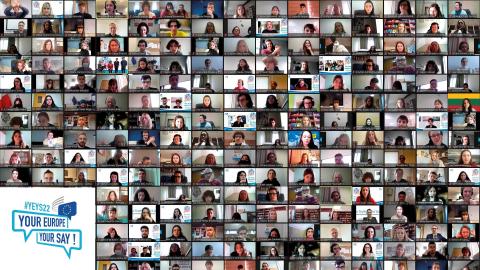
#YEYS2022: Young Europeans debate disinformation and deliver their say to Vice-President Jourová

Eight concrete proposals were handed to Věra Jourová, European Commission's Vice-President for Values and Transparency, by secondary school students from all over Europe. The students were taking part in the virtual youth event Your Europe, Your Say! (YEYS2022). Entitled "The truth about lies. Youth challenging disinformation", the event was hosted by the EESC on 31 March-1 April 2022. 
 

Read more in all languages

Eight concrete proposals were handed to Věra Jourová, European Commission's Vice-President for Values and Transparency, by secondary school students from all over Europe. The students were taking part in the virtual youth event Your Europe, Your Say! (YEYS2022). Entitled "The truth about lies. Youth challenging disinformation", the event was hosted by the EESC on 31 March-1 April 2022. 

After two days of lively virtual discussions and debates, the 99 students aged 16-18 participating in #YEYS2022 came up with a set of specific recommendations, which they presented to and discussed with Vice-President Věra Jourová.

"Education is key to increasing the resilience of our society against disinformation and fake news," said Ms Jourová closing the event Your Europe, Your Say 2022. Vice-President Jourová thoroughly addressed all of the students' recommendations.and discussed them one by one with the students. "Disinformation is a threat to our society, especially in times of war. We must tackle it while preserving freedom of speech," she said. 

The goal of #YEYS2022 was to raise awareness of the dangers of disinformation and to encourage the students to become more active in the fight against fake news. During the event, the youngsters were trained to detect disinformation easily and act against it. They worked in small groups and different workshops and developed a disinformation campaign, which later had to be tackled through a strong information counter-campaign.   

The students were welcomed by Christa Schweng, President of the EESC, who said: "Fake news is constantly being spread in an attempt to undermine European values and democracy. #YEYS2022 is an opportunity for youth to develop critical thinking and learn about tools to fight disinformation. Young people are key to shaping a better future for Europe."

Cillian Lohan, EESC Vice-President for communication, closed the event with these remarks: "As representatives of civil society, we'd like to meet more with our youth, hear their open-minded approaches and blend our concerns with their imagination and vision for the future". 

YEYS2022 has been flagged as one of the main events taking place during the European Year of Youth 2022.

Further details about YEYS 2022 are available on the event's official page. (ks)
 

EESC celebrates Europe Day with a show of support for Ukraine

The EESC celebrated Europe Day 2022 on 7 May with a twin focus on youth and support for Ukraine.


Read more in all languages

The EESC celebrated Europe Day 2022 on 7 May with a twin focus on youth and support for Ukraine.

The EESC joined other EU bodies and institutions in Brussels to mark Europe Day and shared the common focus on youth and Ukraine.

While youth was the main theme in this European Year of Youth, a strong call to support and stand with Ukraine was conveyed in parallel by the EESC in a special dedicated page set up for this online event.

Europe Day is held every year in Brussels and elsewhere in the EU to commemorate Robert Schuman's historic declaration of 9 May 1950. It is a chance to look back at what the EU has achieved through peace, cooperation and solidarity and forward to what we hope to achieve in the future. On this day, the EU invites citizens from across Europe to learn how its institutions work and what it can do for them.

Discover more here. (ck)

News from the Groups

Macron's second term as French president must focus on upward social mobility

By Arnold Puech d'Alissac, EESC Employers' Group Vice-President

When he was first elected president of France in 2017, Emmanuel Macron immediately became a standard-bearer for radical centrism. But this time, considering the current geopolitics and national situation, he ran not so much on his aspirations for the radical centre, but on his record as a true reformer, on his vision for world affairs, and as a leader who has reinvigorated French politics. The final election results, however, show a clearly divided and fragmented country, much more so than in 2017.


Read more in all languages

By Arnold Puech d'Alissac, EESC Employers' Group Vice-President

When he was first elected president of France in 2017, Emmanuel Macron immediately became a standard-bearer for radical centrism. But this time, considering the current geopolitics and national situation, he ran not so much on his aspirations for the radical centre, but on his record as a true reformer, on his vision for world affairs, and as a leader who has reinvigorated French politics. The final election results, however, show a clearly divided and fragmented country, much more so than in 2017.

How can we give hope back to French citizens and make sure that next time around we will not see a Marine Le Pen pretending even more to represent the centre of the political spectrum? The answer is simple: Upward social mobility. Macron has to focus on the underprivileged and give them real prospects of climbing the economic and social ladder.

We are going to have a third round of polls - the legislative elections - which will take place in June. The system, as it's set up, has always delivered positive results for presidents, and I'm not worried at all for Macron here: there will be a strong majority, because there's not enough cohesive opposition on the left or on the right.

And if Les Républicains want to save themselves, they will have to do things a bit differently, particularly on the major issues that have been plaguing France, the deficits and the Stability and Growth Pact. That would pave the way to prosperity and hope.

We must carry out reforms in our country, especially on pensions, where the system is marred by deep inequalities between the public and private sectors. Things are stuck on that front. And if you look at everything President Macron has done over the past five years, there are many reforms he wasn't able to implement. A big test of his second term will be the reforms he will be able to carry out.

Reforms will be very difficult. We're closely knit to the EU and the revision of the Stability and Growth Pact might help us change things.  When it comes to Europe, I think Macron is a good ally and he will continue to follow that path. Finally, he's aligning himself with the German government's proposal by designating two ministers who will be in charge of the environmental transition.

The road ahead for Mr Macron is paved with obstacles and challenges, but as this is his second term of office we hope that he has learned the lessons of the first term.


EESC workers demand legal clarity and social protection for all platform workers

By the EESC Workers' Group

In its March plenary, the EESC adopted an important opinion on the Commission proposal for a directive on improving working conditions for platform work. Adding to the proposal, the EESC considered it fundamental to stress the presumption of employment relationships, and to strengthen these provisions so as to prevent further loopholes allowing employees to be classified as self-employed. The opinion also focuses on the role of algorithmic management and the collective rights of platform workers.

Read more in all languages

By the EESC Workers' Group

In its March plenary, the EESC adopted an important opinion on the Commission proposal for a directive on improving working conditions for platform work. Adding to the proposal, the EESC considered it fundamental to stress the presumption of employment relationships, and to strengthen these provisions so as to prevent further loopholes allowing employees to be classified as self-employed. The opinion also focuses on the role of algorithmic management and the collective rights of platform workers.

The debate on this new directive for platform workers, aimed at ensuring their clear classification as employees in order to prevent the current practices, has been met with staunch opposition from many employers across Europe. The frontal rejection by many of the regularisation of precarious and bogus self-employment makes the need for this legislation all the more evident: the issue will not solve itself with industry self-regulation. Without legislation, platforms will keep acting on the boundary of what it means to be employed, avoiding collective bargaining and social protection. In doing so, they offer cheaper prices to consumers, and, as usual, pass on the dire consequences and hidden costs to society as a whole.

This action to ensure legal certainty and clarity across Europe is not just in the interests of workers, however. Many companies whose voices have not been heard, and which comply not just with the letter but also the spirit of labour legislation, face unfair competition due to these forms of social dumping. As we discuss the Future of Europe, this is an integral part of that discussion: upwards social convergence, or a race to the bottom. Ultimately, the social peace enjoyed by all, including businesses, also depends on social cohesion and a certain degree of equality, and those are jeopardised by predatory capitalism.

New forms of work, by their very nature, will always be a contested space. Platform work, evidently, is no exception. On the one hand, technological progress offers new organisational possibilities and employment opportunities. On the other, this often comes along with precarity. The process is in fact not new: from the dawn of the industrial revolution, trade unions were born as a response of solidarity against the inhuman working conditions created by factories. Much has happened since, and strong labour protection is generally in place, at least in Europe. Nevertheless, correction is again necessary to ensure this innovation does not happen at the expense of the living and working conditions of our citizens and workers. (prp)


New EESC study highlights implications of COVID-19 on fundamental rights and civic space

By the EESC Diversity Europe Group

A new EESC study on "The implications of COVID-19 on fundamental rights and civic space", which was requested by the EESC Diversity Europe Group, looks at how the COVID-19 pandemic has affected the work of civil society organisations (CSOs) and how measures implemented in individual EU Member States have impacted CSOs' ability to exercise their fundamental rights and freedoms.

Read more in all languages

By the EESC Diversity Europe Group

A new EESC study on "The implications of COVID-19 on fundamental rights and civic space", which was requested by the EESC Diversity Europe Group, looks at how the COVID-19 pandemic has affected the work of civil society organisations (CSOs) and how measures implemented in individual EU Member States have impacted CSOs' ability to exercise their fundamental rights and freedoms.

According to Filip Pazderski, lead author of the study, these are the main findings and recommendations of the study:

First and foremost, the pandemic has had a heterogeneous and complex impact on CSOs. On the one hand, CSOs were often the first to reorganise their activities, thereby responding faster than public administrations or business to local communities' needs. Moving their operations online accelerated digitalisation. All this has allowed CSOs to reach out to new audiences and increase the efficiency and scope of their activities. Building coalitions, fostering the exchange of experiences and establishing common public positions were made easier. As a result, the social visibility of CSOs has increased and there is now a better understanding of their day-to-day role.

On the other hand, CSOs have been strongly affected by the enduring health crisis. Financial difficulties were the most acute effect. In particular, smaller entities operating outside big cities and bringing together more digitally excluded groups were forced to suspend their work. Many of them have not resumed operations to date. Activists were faced with mental health challenges, fatigue from working remotely and growing uncertainty about the future, exacerbated by long-term social isolation. Work-life balance was often difficult to maintain due to work at irregular hours.

The pandemic has highlighted or reinforced already existing problems. CSOs' ability to operate has been hindered by extraordinary legislation, as this legislation has reduced the transparency of governments, impeded oversight of their work and restricted freedom of assembly and expression. These restrictions and curtailments happened under the pretext of countering the pandemic. Civil dialogue standards in law-making have dropped. CSOs have often not even been included in consulting laws addressing the impact of the crisis. 

To respond to these challenges, we need to provide CSOs with more flexible and accessible funding, ensure their meaningful participation in the monitoring of EU funds, adopt the EU Civil Society Strategy emphasising the sector's role, constantly monitor and respond to attacks on civic actors and provide a more structured framework for an open, regular and transparent EU civil dialogue. These are not new ideas, but the pandemic has given them fresh meaning. Moreover, the role CSOs have played and the visibility they have gained may help finally put these ideas into practice.

The final study was presented at the Civil Society Days in March. More information is available here.

Soon in the EESC/Cultural events

EESC's Consultative Commission on Industrial Change to celebrate its 20th anniversary

To mark its 20th anniversary, the EESC's Consultative Commission on Industrial Change (CCMI) will hold an event on 8 June, at the Charlemagne building in Brussels, to look at the challenges ahead for European industry. 

Read more in all languages

To mark its 20th anniversary, the EESC's Consultative Commission on Industrial Change (CCMI) will hold an event on 8 June, at the Charlemagne building in Brussels, to look at the challenges ahead for European industry. 

The conference will address the role of the CCMI within the EESC and vis-à-vis other European institutions, and will look at how the CCMI can provide added value and help ensure a successful green and digital transition for European industry. It will reflect on how the EESC can best contribute to finding responses to the challenges that all European industrial sectors are facing in order to remain competitive and the need to progress towards open strategic autonomy. 

The Consultative Commission on Industrial Change (known by its French acronym of CCMI, from Commission consultative des mutations industrielles) took up the legacy of the Consultative Committee of the European Coal and Steel Community in 2002, when the latter's 50-year treaty came to an end. As such, it is the oldest EU body devoted to forecasting the future and accompanying the transition of industrial sectors. It was established as a distinct commission within the European Economic and Social Committee. While the CCMI's core business is rooted in its historic mission of analysing industrial change in coal and steel, its remit has been progressively extended to encompass all industrial ecosystems, covering both manufacturing and services.

For more information, see https://www.eesc.europa.eu/en/agenda/our-events/events/ccmi-20th-anniversary (ks)

Belarusian heroes celebrated at the EESC

A recent photo exhibition on display at the EESC put the spotlight on the situation of political prisoners in Belarus, and on the dangers of the country's authoritarian and oppressive regime.


Read more in all languages

A recent photo exhibition on display at the EESC put the spotlight on the situation of political prisoners in Belarus, and on the dangers of the country's authoritarian and oppressive regime.

Held online, "Heroes of Dark Times" displayed 32 images by four photographers, depicting portraits of people who have been sentenced and imprisoned by the Belarusian government.

The Belarusian regime has jailed over 1 100 political prisoners. These photos highlight its human rights and free speech violations, and form a living testimony of the unprecedented repressions that hinder the Belarusian people in their brave struggle for democracy.

With this exhibition the European Economic and Social Committee wanted to pay tribute to these unsung heroes, and raise awareness about the dire situation of political opponents in this neighbouring country.

The exhibition ran from 12 April to 6 May. (kc)

Discover more: https://europa.eu/!fdhy6F


Editors

Ewa Haczyk-Plumley (editor-in-chief)
Daniela Marangoni (dm)
 

Contributors to this issue

Amalia Tsoumani (at)
Chrysanthi Kokkini (ck)
Daniela Marangoni (dm)
Daniela Vincenti (dv)
Ewa Haczyk-Plumley (ehp)
Giorgia Battiato (gb)
Jasmin Kloetzing (jk)
Katerina Serifi (ks)
Katharina Radler (kr)
Laura Lui (ll)
Marco Pezzani (mp)
Margarida Reis (mr)
Pablo Ribera Paya (prp)
Thomas Kersten (tk)


Coordination

Agata Berdys (ab)
Giorgia Battiato (gb)

Technical support
Bernhard Knoblach (bk)

Address

European Economic and Social Committee
Jacques Delors Building,
99 Rue Belliard,
B-1040 Brussels, Belgium
Tel. (+32 2) 546.94.76
Email: eescinfo@eesc.europa.eu

EESC info is published nine times a year during EESC plenary sessions. EESC info is available in 24 languages
EESC info is not an official record of the EESC’s proceedings; for this, please refer to the Official Journal of the European Union or to the Committee’s other publications.
Reproduction permitted if EESC info is mentioned as the source and a link  is sent to the editor.
 

May 2022
06/2022

Follow us

  • Facebook
  • Twitter
  • LinkedIn
  • Instagram