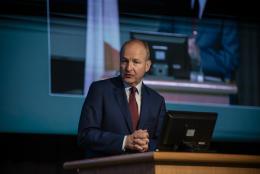
The European Semester must evolve into a more results-oriented framework that promotes sustainable competitiveness and social inclusion while ensuring that reforms and investments deliver tangible benefits for citizens. This is even more crucial given its future link to the next Multiannual Financial Framework. This was the central message from the Annual European Semester Group Conference, held by the European Economic and Social Committee (EESC) in Brussels on 30 June.
As the EU rethinks its priorities in a more hostile geopolitical climate, civil society communicators, policy-makers and journalists will gather in Sofia on 6-7 July for the XVIII Connecting EU Seminar to discuss how Europe can defend its values while responding to pressure on security, competitiveness and democratic trust.
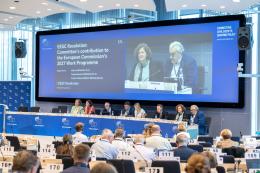
Against a backdrop of growing geopolitical instability, multiple social fractures and an accelerating climate change crisis, the Committee has set out key recommendations for the European Commission, which is expected to adopt its 2027 work programme in October.
Ahead of the UN Water Conference 2026, the European Economic and Social Committee (EESC) held a plenary debate with EU Commissioner for Environment and Water Resilience Jessika Roswall. The EESC calls for water to be treated as a strategic resource for Europe’s economy, security and global role.
The European Economic and Social Committee is calling on the European Union to adopt a long-term, dedicated strategy and increase funding for its eastern border regions, warning that they face security, economic and demographic pressures that exceed the scope of existing policy tools.
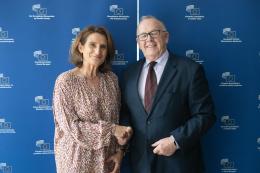
During a plenary debate at the European Economic and Social Committee (EESC), the European Commission Executive Vice-President Teresa Ribera stressed the strategic importance of the Circular Economy Act for Europe’s future.This point was underlined by the EESC members who called for circularity to be put at the heart of Europe’s competitiveness and resilience agenda. It should be seen not only as an environmental objective but also an economic and geopolitical strategy.
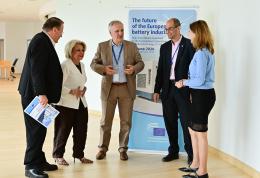
The European Economic and Social Committee (EESC) held a high-level experts’ debate on the European battery industry which called for urgent and coordinated action to strengthen Europe's battery ecosystem and secure its industrial future. By combining strategic investment, innovation, industrial capacity and social responsibility, the battery transition can become a genuine European success story.
Priorities including housing, competitiveness, tech regulation, and better including citizens in democratic decision making among areas of joint work launched.
A week ahead of the EU-Western Balkans summit, the European Economic and Social Committee held a conference in Vienna sending a clear message: civil society is essential for building trust between institutions and citizens and between the European Union and the region.
Der Europäische Wirtschafts- und Sozialausschuss (EWSA) nutzte den Tag der offenen Tür, um Europa zu feiern und den wichtigen Beitrag der organisierten Zivilgesellschaft zu den Errungenschaften der Europäischen Union deutlich zu machen.