
European Economic
and Social Committee
EESC urges urgent action to protect purchasing power and prevent deepening inequality across Europe
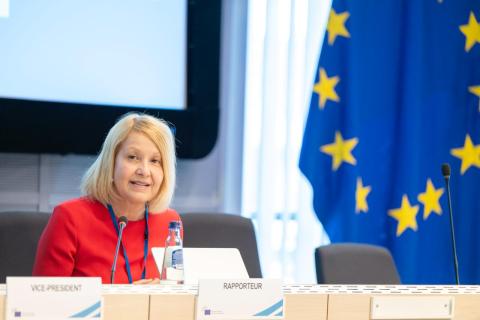
At its June plenary session, the European Economic and Social Committee (EESC) adopted a pivotal opinion addressing the growing threat of social exclusion and marginalisation driven by the erosion of purchasing power. This opinion, part of the EESC’s broader cost-of-living crisis package, focuses on the social dimensions of the crisis and outlines a comprehensive strategy to safeguard vulnerable populations and reinforce Europe’s social fabric.
In total, the EESC’s cost-of-living crisis package will include seven sector-specific opinions, culminating in a comprehensive umbrella opinion in July. Together, these opinions underscore the EESC’s belief that the challenges and uncertainties the EU faces demand not incremental adjustments but a deeper structural challenge that requires a strategic shift in Europe’s economic model. The goal is to provide clear, actionable guidance for EU institutions, national governments, social partners and civil society.
A multidimensional crisis with unequal impacts
In the opinion, the EESC highlights that the cost-of-living crisis—exacerbated by the pandemic, geopolitical instability, and inflation—has disproportionately affected low- and middle-income households, women, children, and other vulnerable groups. In 2023, over 94 million EU citizens were at risk of poverty or social exclusion, with nearly 25% of children affected. Rising housing and energy costs, stagnant real wages, and unequal access to essential services have intensified hardship across the continent.
As the rapporteur, María del Carmen Barrera Chamorro, explains: 'Europe must anticipate future crises. To this end, social partners and civil society actors at all levels have a key role to play in contributing to anti-crisis measures. Strengthening social dialogue, collective bargaining and dialogue with civil society organisations is helping to make Europe more resilient.'
From reactive aid to structural resilience
The Committee calls for a shift from short-term relief to long-term structural solutions. It recommends:
- Strengthening social dialogue and collective bargaining, particularly in countries with low coverage, to ensure fair wages and working conditions.
- Implementing and adjusting minimum wages and incomes in line with inflation and reinforcing the Adequate Minimum Wage Directive and the Council Recommendation on minimum income.
- Investing in public services and social infrastructure, including healthcare, education, housing, and social economy initiatives, to ensure accessibility and affordability.
- Reforming EU energy market rules to prevent speculation and ensure affordable energy, especially for vulnerable households.
Protecting rights and promoting inclusion
The EESC underscores that access to food, housing, water, and sanitation are fundamental human rights. It calls for these to be explicitly recognised and protected across the EU. The Committee also stresses the importance of addressing digital exclusion and ensuring that essential and social services are accessible to all, including through exceptions to internal market rules where necessary.
A call for coordinated European action
While acknowledging the national competence in many social policy areas, the EESC urges the EU to play a stronger coordinating role. It recommends:
- Using the European Semester and Social Convergence Framework to monitor and guide Member States’ responses.
- Applying distributional impact assessments to ensure that policies do not exacerbate inequality, with attention to gender and youth dimensions.
- Learning from the SURE programme and exploring the creation of a permanent financial instrument to stabilise social spending during crises.
A just transition for all
The opinion situates the fight against inequality within the broader context of the EU’s green and digital transitions. It calls for targeted support for those most affected by these transformations and insists that social indicators be treated on par with economic ones in policymaking.
‘We must not allow the cost-of-living crisis to become a social crisis,’ the EESC warns. ‘Europe’s strength lies in its solidarity. Now is the time to act boldly to protect that foundation.’
Read the opinion in full here.
Work organisation
Recommended for you
La creazione condivisa di servizi pubblici nel settore sanitario contribuirà a una democrazia più partecipativa nell'UE
News
L'evento organizzato dal Comitato economico e sociale europeo (CESE) in collaborazione con l'Università di Debrecen ha posto in evidenza l'importanza cruciale della creazione condivisa di servizi di…
Per combattere i cambiamenti climatici, l'UE ha bisogno di maggiori investimenti pubblici nelle infrastrutture energetiche
News
In un parere adottato nella sessione plenaria di settembre, il Comitato economico e sociale europeo (CESE) avverte che, per realizzare gli obiettivi climatici e di transizione energetica, sono…
Energia - Il CESE mette in guardia di fronte al rischio di nuove dipendenze
News
Il Comitato economico e sociale europeo (CESE) assume una posizione ferma in materia di energia in un parere adottato nella sessione plenaria di settembre. La proposta della Commissione, infatti, è…
La transizione digitale deve essere equa: i diritti umani e il controllo umano devono rimanere pilastri fondamentali
News
Il Comitato economico e sociale europeo (CESE) sottolinea le opportunità offerte dalla rivoluzione digitale, ma mette anche in guardia dai rischi: se attuate troppo rapidamente, le soluzioni digitali…
L'UE ha bisogno di un piano d'azione per fornire alloggi dignitosi e a prezzi accessibili
News
Il convegno ad alto livello organizzato a Riga dal Comitato economico e sociale europeo (CESE) ha lanciato l'allarme per la crisi degli alloggi a prezzi accessibili, sottolineando che è il momento…