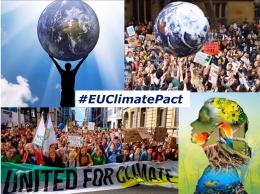
In una delle settimane più importanti per l'azione a favore del clima, dato che non solo ricorre il quinto anniversario dell'accordo di Parigi ed è stata raggiunta un'intesa sul clima in seno al Consiglio europeo, ma il 16 dicembre verrà altresì ufficialmente lanciato il patto europeo per il clima varato dalla Commissione europea, il Comitato economico e sociale europeo (CESE) raccomanda la titolarità e la responsabilizzazione della società civile, quali presupposti indispensabili per la riuscita di questo patto.
Il Comitatoeconomico e socialeeuropeo (CESE) esorta la Commissioneeuropea ad avviare un nuovodibattito per assicurare che la nuovalegislazione si occupianchedegliobiettiviecologici e del miglioramentodelleprestazioni del sistema per la gestione del trafficoaereo.
The European Economic and Social Committee advocates a set of common principles for public services to help ensure full compliance of all Member States with democratic norms and the rule of law.
Durante una conferenza ad alto livelloorganizzata dal Comitatoeconomico e socialeeuropeo, il nuovopattodell'UE sulla migrazione e l'asilo è statooggetto di forticritiche da parte di rappresentantidellasocietàcivile, di gruppi di riflessione e del Parlamentoeuropeo, secondo i quali il testo non introduce i cambiamenti
Nel seminario online organizzatodallasezioneTrasporti, energia, infrastrutture, societàdell'informazione (TEN), i membri del CESEhannosottolineato che il contributodellasocietàcivilesaràfondamentale per il futurodellastrategiadell'UEsull'idrogeno.
La nuovapresidentedellasezioneTrasporti, energia, infrastrutture, societàdell'informazione (TEN) del CESEBaibaMiltoviča ha incontrato il vicepresidenteesecutivodellaCommissioneeuropeaValdisDombrovskis per illustrare il programma di lavorodellasezione per il periodo 2020-2023, tra le cui prioritàspiccal'azione in campo
Holistic strategies and harmonisation of action plans for integration could be the way to go, EESC members explain. EU Member States deal with integration policies in widely different ways, based on their specific circumstances and migration histories. Yet the specific needs of women and children striving to overcome discrimination or obstacles to their integration are not always fully taken into consideration. However, the EESC put forward ways to address these shortcomings in an opinion presented at the October plenary session.
Estimates show that almost half of European adults have low or outdated skills, which makes the need for them to upskill and reskill ever more relevant
In an annual conference held entirely online on 3-4 November, the European Economic and Social Committee (EESC) voiced its determination to help make the Circular Economy Platform a real hub of the collective effort to build a circular economy in Europe.
The EESC warns that EU diversity policies should focus on all aspects of the lives of migrants and ethnic minorities to counter their discrimination, which has been further worsened by the COVID-19 crisis.