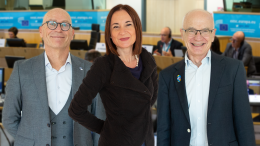
Per motivi economici, fisiologici e socioculturali, le donne rischiano di trovarsi in condizioni di povertà energetica più facilmente degli uomini. Alla luce delle recenti allarmanti statistiche, dal dibattito tematico organizzato dal Comitato economico e sociale europeo (CESE) è emersa un'esortazione all'UE affinché adotti politiche in cui il genere sia considerato un fattore specifico.
XV Connecting EU Seminar
24-25 November 2022
Hotel Dubrovnik| Ljudevita Gaja 1, Zagreb
The European Economic and Social Committee (EESC), in partnership with the Economic and Social Council of Croatia (GSV), is organising its annual Civil Society Communication seminar, #ConnectingEU2022, on 24-25 November 2022, on: Geopolitical turmoil at Europe's door: the perspective of civil society
Il Comitato economico e sociale europeo (CESE) sottolinea che i trasporti pubblici sono essenziali per garantire l'accesso e la continuità dei servizi di base. La pandemia di COVID-19 ha cambiato il comportamento dei cittadini sul piano della mobilità, e l'UE deve dotarsi di una strategia specifica per migliorare la mobilità e renderla realmente rispettosa dell'ambiente e delle persone.
The European Economic and Social Committee (EESC) has held a debate on women's representation and participation in the workforce. The event gathered insights, success stories and best practices from our CCMI members and delegates. The conclusions drawn will make an important contribution to the EESC's ongoing initiative on gender equality.
A coordinated and systematic approach to skills training is needed to ensure that all Europeans can face the challenges of the green and digital transitions, the European Economic and Social Committee(EESC) and the European Centre for the Development of Vocational Training (Cedefop) emphasised at their fourth Policy Learning Forum on 16 November.
The EESC held a debate on gender-based investments in the Member States' national Recovery and Resilience Plans (RRPs). Following on from the European Gender Equality Week, the event gathered policy-makers, experts from organised civil society and academia to discuss, among other things, how EU countries can improve the impact of the measures proposed in their RRPs on gender equality during implementation and monitoring.
In un momento in cui la guerra è tornata nel continente europeo, la cultura deve più che mai diventare un fondamentale veicolo strategico della politica estera dell'UE. Per sfruttarne appieno il potenziale, il CESE chiede l'istituzione di un vero e proprio piano d'azione strategico pluriennale sulla diplomazia culturale.
The European Economic and Social Committee (EESC) recommends that Digital Innovation Hubs be reinforced to boost the EU’s innovation capacity as part of the transition to a sustainable future. DIHs provide valuable infrastructure for small and medium-sized enterprises (SMEs) that might otherwise struggle to become greener and more digital.
In two newly adopted opinions, the European Economic and Social Committee (EESC) gives updated views on the Commission's Annual Sustainable Growth Survey 2022, which outlines the upcoming economic and employment policy priorities for the EU, as well as on the Recommendations on euro area economic policy for 2022. The EESC calls for a balanced approach that does not jeopardise the EU's social and environmental goals.
The EESC is urging the European Commission and Member States to quickly develop a plan to increase the EU's preparedness for emergencies. In particular, the plan should increase the EU’s sovereignty in energy generation, food and water production and the mining of raw materials.