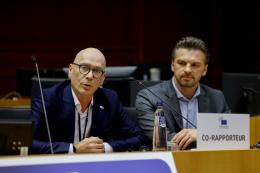
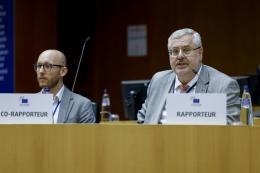
On 13 April 2023, the European Economic and Social Committee (EESC) held a public hearing to address the pressing issue of water poverty and its implications on social policy. The event brought together water experts and stakeholders to mitigate the effects of water poverty, particularly on vulnerable communities. The hearing is part of the EESC's efforts to put water at the top of the EU agenda through a call for an "EU Blue Deal."
At its April plenary, the European Economic and Social Committee (EESC) adopted an exploratory opinion requested by the European Commission to gather input from civil society on the impact of the metaverse on society. The document, which examines the business environment, working conditions and development of civil society, suggests that the metaverse will bring with it both opportunities and risks that the EU must address rapidly to create an ethical, safe, and inclusive virtual environment for all.
Nella sessione plenaria di aprile il Comitato economico e sociale europeo (CESE) ha adottato un parere sui fattori chiave per la transizione verso un sistema di trasporto sostenibile a lungo termine.
On 9 May, the European Union will celebrate Europe Day 2023, a moment to commemorate the Schuman Declaration on 9 May 1950. To mark the special occasion, the EU institutions, including EU delegations and representations worldwide, will organise a wide range of online and on-site activities, providing citizens with the opportunity to discover and experience the European Union.
Da un dibattito organizzato dal Comitato economico e sociale europeo (CESE) è emersa l'importanza cruciale di adeguare il mercato europeo dell'energia elettrica per rimediare al suo punto debole, ossia la forte dipendenza dal gas, così da fornire finalmente ai consumatori e alle imprese dell'UE un approvvigionamento energetico affidabile e a prezzi accessibili.
With populism and authoritarianism on the rise across Europe, civil society organisations face growing hostility. Battling with financial constraints, smear campaigns, political attacks and legal and administrative obstacles, they urgently need reinforced support on all fronts to be able to play their key role of making our societies more open, more accountable and just.
Il Comitato economico e sociale europeo (CESE) suona il campanello d'allarme e avverte che i vantaggi della digitalizzazione del sistema energetico si concretizzeranno soltanto se saranno eliminati gli oneri burocratici, se i consumatori saranno incoraggiati a svolgere un ruolo attivo e se saranno stanziati finanziamenti per migliorare le competenze dei lavoratori.
In its March plenary, the European Economic and Social Committee (EESC) adopted an opinion urging the European Institutions to address the fragmented implementation of foreign policy sanctions across Member States. The EESC is concerned about the inconsistency in standards and in the application of sanctions in national legislation, and is calling for immediate action to protect humanitarian aid and journalists in sanctioned regimes.