L’objectif de l’avis est d’attirer l’attention sur l’incidence de la non-appartenance à l’espace Schengen de la Bulgarie et de la Roumanie et des pays voisins de l’UE sur le marché unique, d’évaluer l’impact de l’adhésion hors Schengen sur la compétitivité de ces pays et les coûts/avantages potentiels de Schengen pour eux, et de proposer des recommandations aux décideurs politiques sur la manière de faire face aux effets négatifs de la de la non-appartenance à l’espace Schengen pour le marché unique.
EESC, JDE 61, Rue Belliard/Belliardstraat 99| 1040 Bruxelles/Brussels | Belgium
The fifth meeting of the EU-Armenia Civil Society Platform (CSP) is scheduled to be held on 15 October 2024 in Brussels.
The meeting will focus on assessing progress in the implementation of the EU-Armenia Comprehensive and Enhanced Partnership Agreement (CEPA), with a strong emphasis on its impact in the Areas of Democracy, Rule of Law, Anti-Corruption, and Human Rights.
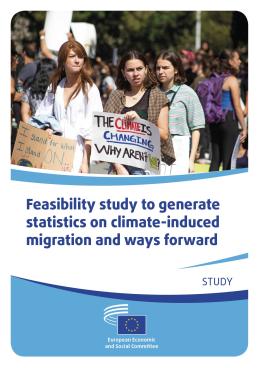
Cette "étude de faisabilité visant à générer des statistiques sur la migration induite par le climat et à envisager des pistes d’action" a pour but de rassembler et examiner les données existantes sur la migration induite par le climat, en se concentrant sur cinq États membres (France, Allemagne, Grèce, Italie et Espagne) et un pays candidat (Turquie), afin d’éclairer une réponse efficace de l’UE. Il n’existe pas de définition universellement acceptée de la migration induite par le climat.
Cette étude examine les solutions politiques en matière de logement durable et abordable dans l’Union européenne, en mettant l’accent sur un certain nombre de facteurs essentiels tout au long du processus de construction: habitabilité, collectivité, accessibilité économique, utilisation efficace des ressources, circularité et résilience face au changement climatique.
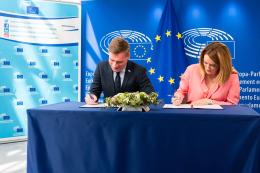
On Tuesday 14 May 2024, the Presidents of the European Economic and Social Committee (EESC), Oliver Röpke, and of the European Parliament (EP), Roberta Metsola, signed a cooperation agreement to strengthen the relations between the two institutions and the overall role of the Committee as policy advisor to the European Parliament.
Cooperation Agreement between the European Parliament and the European Economic and Social Committee
Le 20 février 2024 à Bruxelles, le CESE a organisé une conférence sur la crise du logement en Europe. Cette publication présente l'évaluation des participants sur la situation actuelle et leurs recommandations sur la manière de faire face à la crise actuelle du logement.
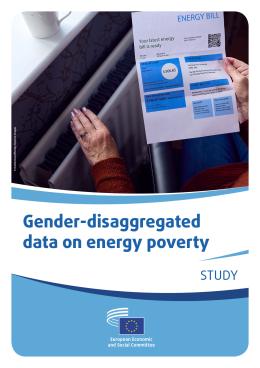
La précarité énergétique a été projetée au premier plan du débat social et politique par les récents chocs économiques dus à la pandémie de COVID-19 et par la crise énergétique qui a touché l’Europe à la suite de l’invasion de l’Ukraine par la Russie. Si les politiques européennes s’attaquent de plus en plus à la précarité énergétique, les questions d’égalité entre les hommes et les femmes sont encore délaissées.