
European Economic
and Social Committee
A new Pact for the Mediterranean
Background
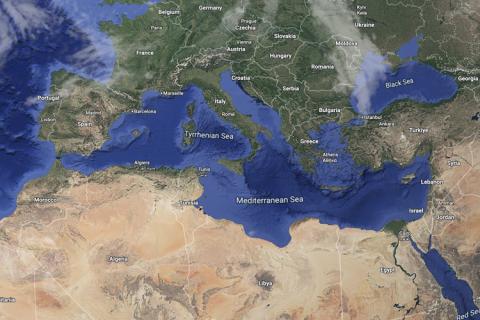
The New Pact for the Mediterranean aims to deepen cooperation between the EU and Southern Mediterranean countries grounded in mutual respect, shared priorities such as energy, climate, trade, migration, education and security. It is designed through a people centered strategic framework, emphasizing inclusive participation and sustainable development.
In the opinion the EESC emphasises the need for all relevant social actors, social partners and CSOs from the EU and the partner countries to be involved in the New Pact on a structured and permanent basis, moving beyond ad hoc consultations towards institutionalised participation at all levels of governance. This should include a permanent steering or advisory body, representation in working groups and project evaluation panels, and guaranteed representation at official events and established follow-up mechanisms. The EESC also calls on the Commission to consider upgrading the existing EESC Euromed Follow-up Committee to an inclusive body with members from the partner countries which will play a role in monitoring and evaluating the Pact.
Key points
In this opinion, the EESC:
- stresses that the Pact should integrate recent ministerial declarations, the Mediterranean Strategy for Sustainable Development 2016–2025, and the Renewed Partnership with the Southern Neighbourhood including its Economic and Investment Plan;
- calls for the Pact to actively promote peace, democracy, good governance, the fight against corruption, the rule of law, inclusive prosperity, civic spaces, and respect for international humanitarian law, as foundations for cooperation in the Mediterranean region;
- recommends that young people from diverse backgrounds must be involved at all policy stages, with robust monitoring and accountability mechanisms to ensure their voices influence the Pact's development;
- proposes that EU programs like Erasmus+ and Interreg should include dedicated civil society funding with simplified applications and long-term financing;
- emphasises that the Pact must incorporate marginalized groups, support social dialogue mechanisms like Economic and Social Councils, and include participatory monitoring and evaluation involving civil society.
Additional Information
EESC section: External Relations (REX)
Opinion number: REX/606-EESC-2025
Opinion type: Exploratory opinion Commission
Rapporteur: Thomas Wagnsonner, (Workers - GR II/ Austria), co-rapporteur: Lidija Pavić-Rogošić, (Civil Society Organisations - GR III/ Croatia)
Date of adoption by the section: 9 July 2025
Date of adoption in plenary: 17-18 September 2025
Result of the vote in plenary: 160 in favour/1 against/2 abstentions
Contact
Millie Tsoumani
Press Officer, Email: amalia.tsoumani@eesc.europa.eu
Andreas Berger
Policy Officer, Email: Andreas.Berger@eesc.europa.eu
Recommended for you
Tetyana Ogarkova: "The day of victory will come but it will not bring normality back"
Agenda
On 24 February 2022, the lives of millions of Ukrainians were turned upside down. Now, when we say the word "victory", we expect that day to be the way things used to be. A normal day, a day of peace…
Lutte contre la précarité énergétique: garantir un approvisionnement énergétique abordable devrait figurer au premier rang des priorités politiques des pays de l’UE
News
Alors que le nombre de ménages qui sont dans l’incapacité de chauffer leur logement va vraisemblablement augmenter dans l’Union, avec une inflation annuelle de l’énergie qui dépasse 40 %, il y a…
Les zones rurales ont le potentiel pour produire davantage de résultats
News
Si l’attrait de la vie à la campagne s’est accru ces toutes dernières années, de nombreuses zones rurales de l’Union restent confrontées à un certain nombre de problèmes qui dissuadent les personnes…
Pour lutter contre le sans-abrisme, il faut une approche globale et une action collective
News
Le 7 octobre dernier, le Comité économique et social européen (CESE) a tenu une conférence sur le sans-abrisme et les moyens d’éradiquer ce phénomène d’ici à 2030, en appliquant le principe du…
Un rôle actif pour la société civile organisée est essentiel à la résilience de l’Union européenne
News
Le CESE a tenu un débat en session plénière sur l’importance croissante de la société civile organisée et des villes pour mettre l’Europe en capacité de faire face aux chocs asymétriques et aux…