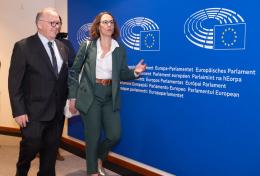
On 24 September, the EESC plenary welcomed Claire Thoury, new elected President of the French Economic, Social and Environmental Council (ESEC), to talk about the priorities of the French ESEC. Read the key messages of the members of the EESC Civil Society Organisations’ Group.
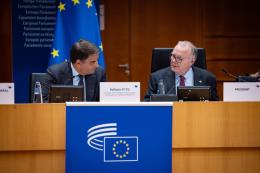
On 23 September, the EESC plenary welcomed Raffaele Fitto, Executive Vice-President of the European Commission for Cohesion and Reforms, to talk about cohesion policy. Read the key messages of the members of the EESC Civil Society Organisations’ Group.
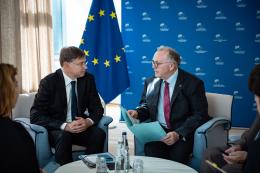
On 23 September, the EESC plenary welcomed Valdis Dombrovskis, European Commissioner for Economy and Productivity; Implementation and Simplification, to talk about better regulation. Read the key messages of the members of the EESC Civil Society Organisations’ Group.
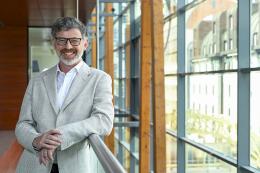
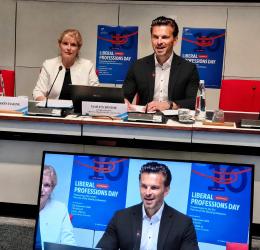
On 29 September 2026, the European Economic and Social Committee celebrated the tenth edition of the Liberal Professions Day. This event, organised annually by the EESC’s Liberal Professions Category, was the first edition under the leadership of category spokesperson Martin Böhme. The theme of this edition was ‘Preparedness in the EU: the role of the liberal professions’.
Europe’s response to terrorism and violent extremism must combine effective security measures with prevention, democratic resilience and the systematic involvement of civil society. This is the central message of an opinion adopted by the European Economic and Social Committee (EESC), which warns that security measures alone cannot address the complex and interconnected threats facing the EU.